

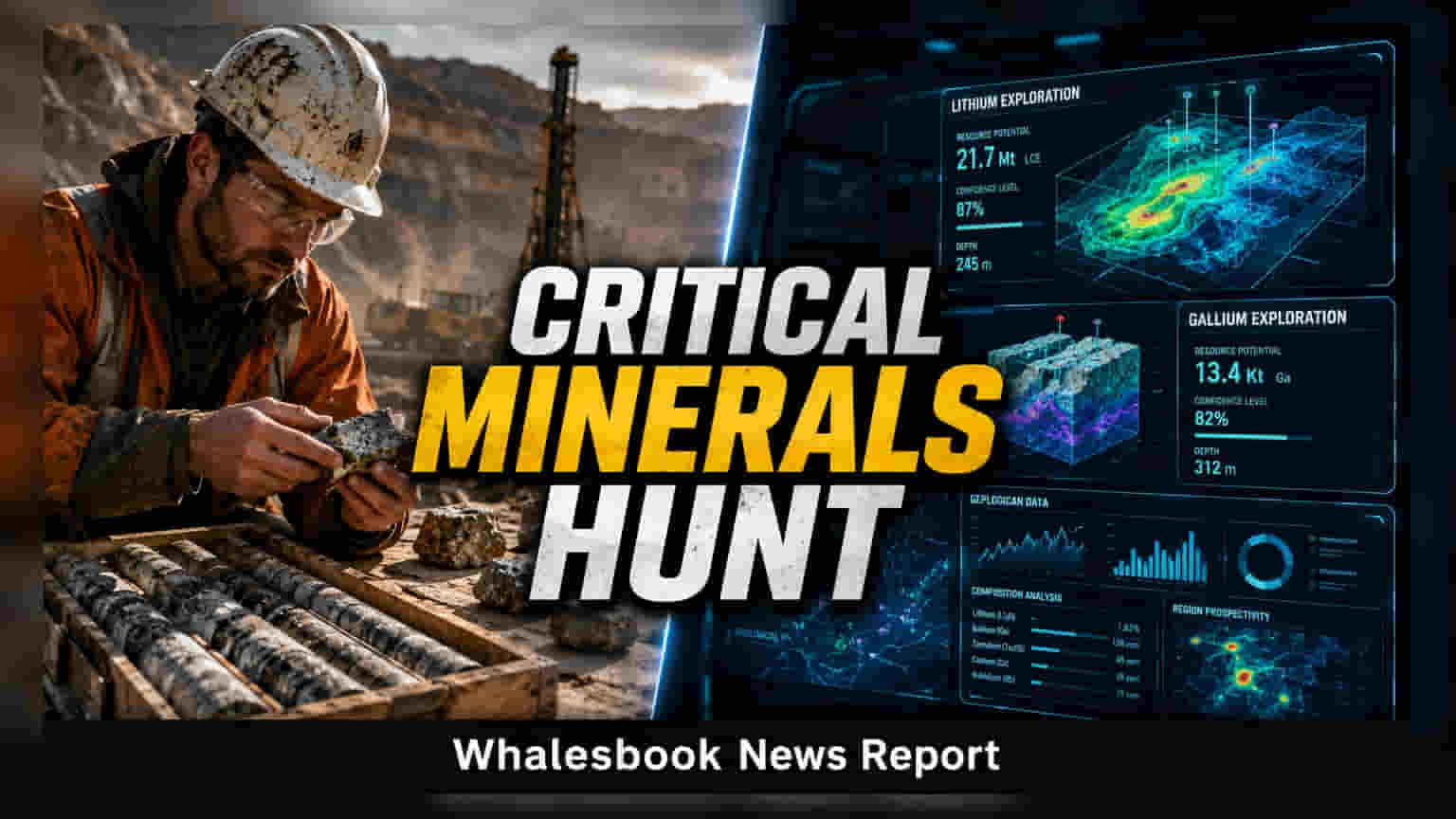
The Andhra Pradesh government has partnered with CSIR-NGRI to explore lithium and gallium deposits in the Kadapa Basin, funded by the National Mineral Exploration Trust. This early-stage research aims to identify potential reserves, though successful commercial mining will depend on proving economic and technical viability.
The Andhra Pradesh government has launched an initiative to explore critical minerals, signing two key agreements on August 12, 2026, to advance mining research in the state. The move focuses on identifying lithium and gallium deposits, which are vital components for modern electronics and electric vehicle batteries.
Under the first agreement, the state will collaborate with the Council of Scientific & Industrial Research-National Geophysical Research Institute (CSIR-NGRI) to conduct an extensive survey in the Kadapa Basin, specifically in the Vempalle area. This project is backed by a budget of Rs 140 crore, funded by the National Mineral Exploration Trust. Preliminary studies in the region have suggested lithium concentrations of up to 1,000 parts per million (ppm) and gallium concentrations of up to 250 ppm. While these figures indicate potential, they remain at the exploration stage, and further drilling and analysis are required to determine if these reserves are large enough for commercial extraction.
A second agreement was signed with IIT (ISM) Dhanbad-TEXMiN to establish a Centre of Excellence for mining in Andhra Pradesh. This center is intended to improve research, introduce new mining technologies, and develop a skilled workforce to support the state’s mineral resource sector.
From a development perspective, the state is also attracting interest in other mining segments, such as a separate proposal from the Adani Group for a Rs 16,000-crore titanium project in the Srikakulam district. These moves indicate a broader strategy by the state to tap into its mineral wealth to attract industrial investment.
For readers monitoring this sector, it is important to distinguish between exploration and commercial mining. Finding mineral traces does not guarantee that a site will be profitable or even possible to mine. Extraction of these specific minerals often requires specialized technology, and the costs associated with processing must be lower than the market value of the minerals to make a project viable. Additionally, any future mining operations will likely face significant environmental and regulatory scrutiny, including challenges related to land acquisition, water usage, and local community impact, which have historically slowed down mining projects in various regions of India.
The next steps for this project will involve the completion of the geophysical survey and subsequent reporting on whether the identified mineral concentrations are technically and economically recoverable. Investors and industry observers will track these findings as the government moves from the research phase toward any potential feasibility studies.