

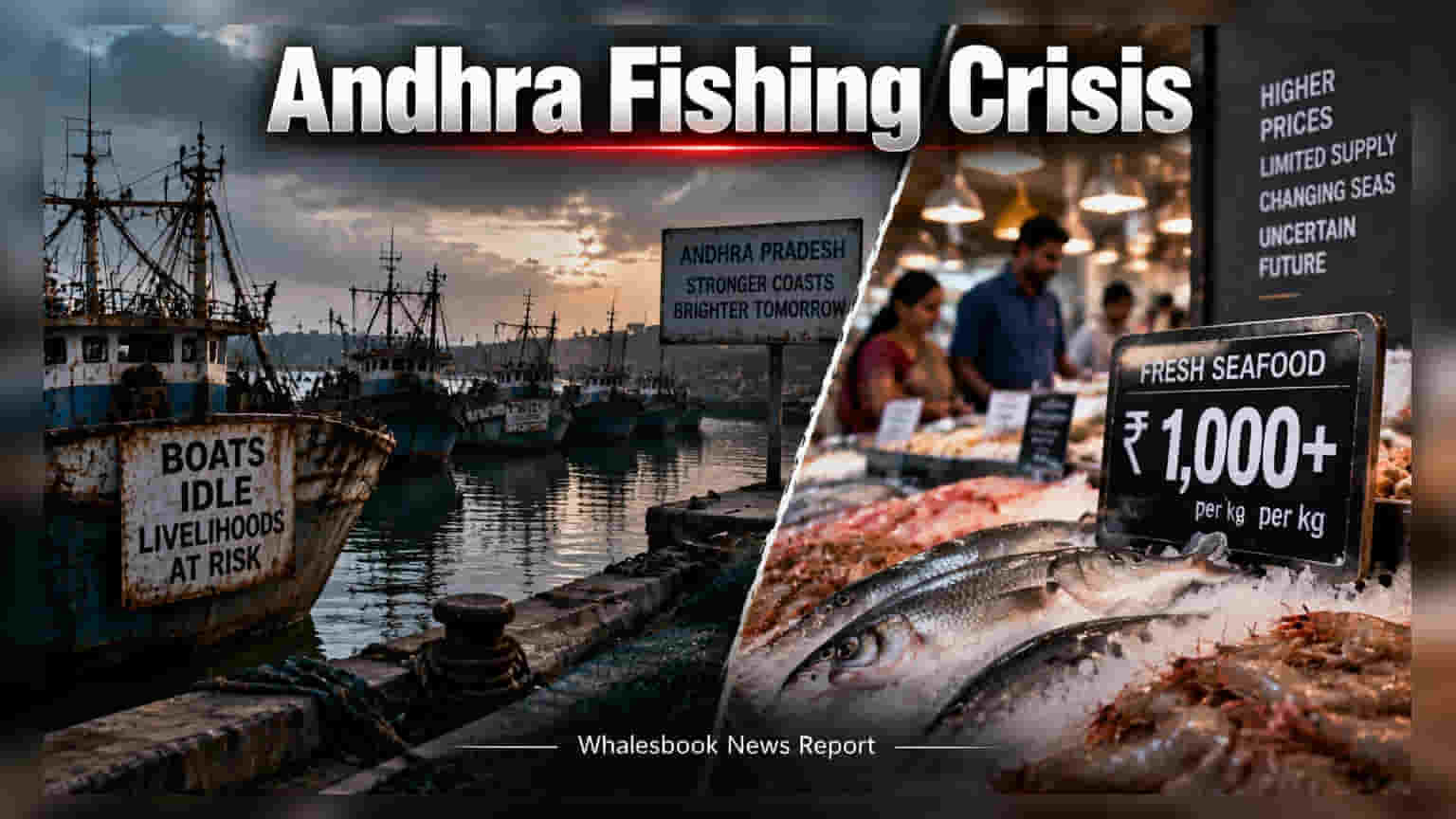
A severe crisis in Andhra Pradesh has forced 70% of fishing vessels to remain docked due to climate-driven migration of marine life and rising operational costs. The resulting supply crunch is pushing up local seafood retail prices and creating economic stress within the coastal supply chain.
The fishing industry in Andhra Pradesh is facing a major structural challenge, with approximately 70% of mechanized fishing vessels currently remaining idle. This significant reduction in operational capacity is driven by a combination of climate-related environmental shifts and sharp increases in operating expenses, leading to instability across the regional seafood supply chain.
Changing marine dynamics in the Bay of Bengal are a primary contributor to this situation. Rising ocean temperatures are altering the migratory patterns of fish stocks, forcing traditional species to relocate to deeper or cooler waters. This change forces local fishers to travel significantly further from the shore to maintain catch volumes. However, this expansion into deeper, more hazardous waters has made fishing trips economically unviable for many small-scale operators. Operational costs, particularly for fuel, have surged, with vessels requiring substantially more resources to reach these new, less predictable fishing grounds.
The financial strain on local operators is becoming pronounced. Many fishers are heavily leveraged, with individual debts often reaching between Rs 6 lakh and Rs 10 lakh per vessel. The current business model, which relied on predictable, near-shore catches, is struggling to cover these debt obligations and rising fuel costs. Even when vessels do land a catch, the revenue often fails to offset the expenses required for specialized gear and high fuel consumption, leading to a cycle of debt and reduced incentive for owners to send their boats out to sea.
This crisis carries broader implications for the regional economy and food supply. The disruption of standard marine spawning grounds, combined with industrial effluent issues and oxygen-depleted 'dead zones' near the coast, has further restricted the availability of high-quality human-grade seafood. A notable consequence is that what limited supply remains is often diverted to the aquaculture industry as low-value feed rather than being sold in the retail market for human consumption. This reallocation limits the availability of fresh produce for consumers and contributes to rising retail seafood prices, which have seen significant spikes in local markets.
For those monitoring regional commodities and food inflation, this situation highlights a growing risk to supply chain consistency. The lack of reliable, high-quality yields from the Bay of Bengal threatens to increase price volatility for seafood products in the region. Investors and market observers should monitor retail price trends, government policy updates regarding coastal support, and the recovery rate of mechanized fishing activity, as these factors will determine the duration and severity of the current supply shortage.