

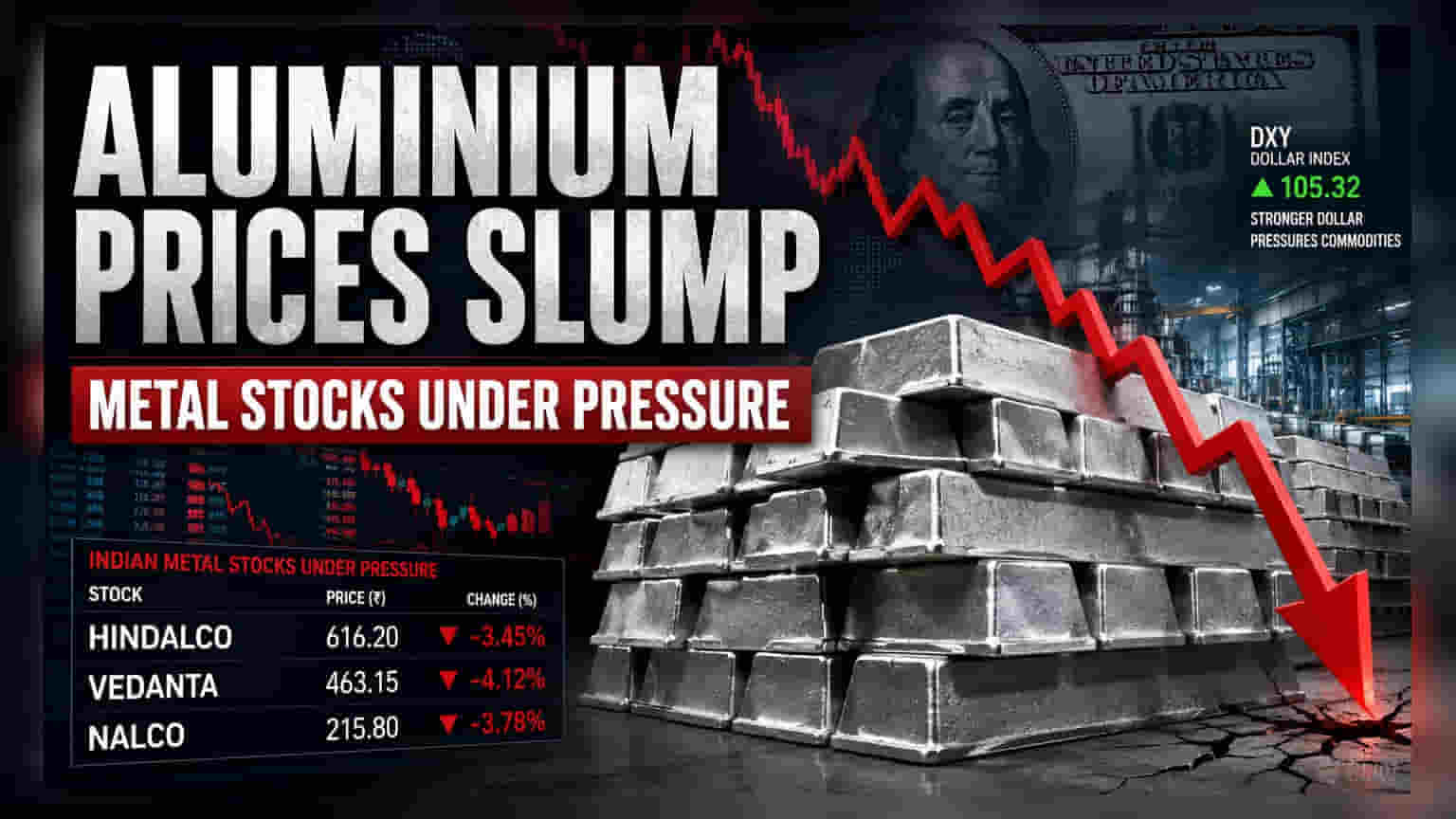
Aluminum prices dropped to $3,060 per ton as the U.S. dollar strengthened and geopolitical tensions eased. For Indian investors, the trend is important because major producers like Hindalco, Vedanta, and Nalco often link their local selling prices to global market rates. A sustained decline in prices could put pressure on profit margins if input costs remain high.
What Happened
Aluminum prices have fallen to their lowest level since mid-February, trading at $3,060 a ton on the London Metal Exchange. The metal experienced a sharp 16% decline in June, marking its most significant monthly drop since 2008. This price correction is primarily driven by a stronger U.S. dollar, which makes commodities more expensive for global buyers, and reduced geopolitical tension in the Middle East, which has calmed supply fears.
Why It Matters For Indian Investors
Major Indian metal companies such as Hindalco Industries, Vedanta, and National Aluminium Company (Nalco) are highly sensitive to global aluminum price movements. These companies typically set their domestic selling prices based on the London Metal Exchange rates. When global prices fall, it can lead to lower revenue for these producers. Investors often watch these price trends because they act as a leading indicator for the quarterly financial performance of these companies.
The Margin Squeeze Risk
The impact on a company’s profit is not determined by the metal price alone. Investors focus on the difference between the selling price of aluminum and the cost of production, such as electricity, coal, and bauxite. If global aluminum prices fall, but raw material costs for these companies stay high, profit margins often shrink. This creates a challenging environment where companies have to work harder to maintain their profitability.
Broader Commodity Weakness
The pressure on aluminum is part of a larger trend in the commodity market. Prices for other industrial metals like copper and iron ore have also faced downward pressure. Some market trends suggest that investors are shifting capital away from commodities and moving it toward equities, which can further weigh on the prices of metals. This broader sector weakness means that metal producers are currently facing a challenging global pricing environment.
What Investors Should Track
As the industry navigates this price decline, the key monitorable for investors will be how companies manage their operational costs. In the coming quarterly results, management commentary regarding realization prices, cost-cutting initiatives, and inventory management will be important. Investors may also track whether global interest rate policies continue to support a strong dollar, as this could keep prices for industrial metals under continued pressure. Finally, watching the demand from key markets like China will remain essential to understanding if this price dip is a temporary trend or a longer-term shift.