

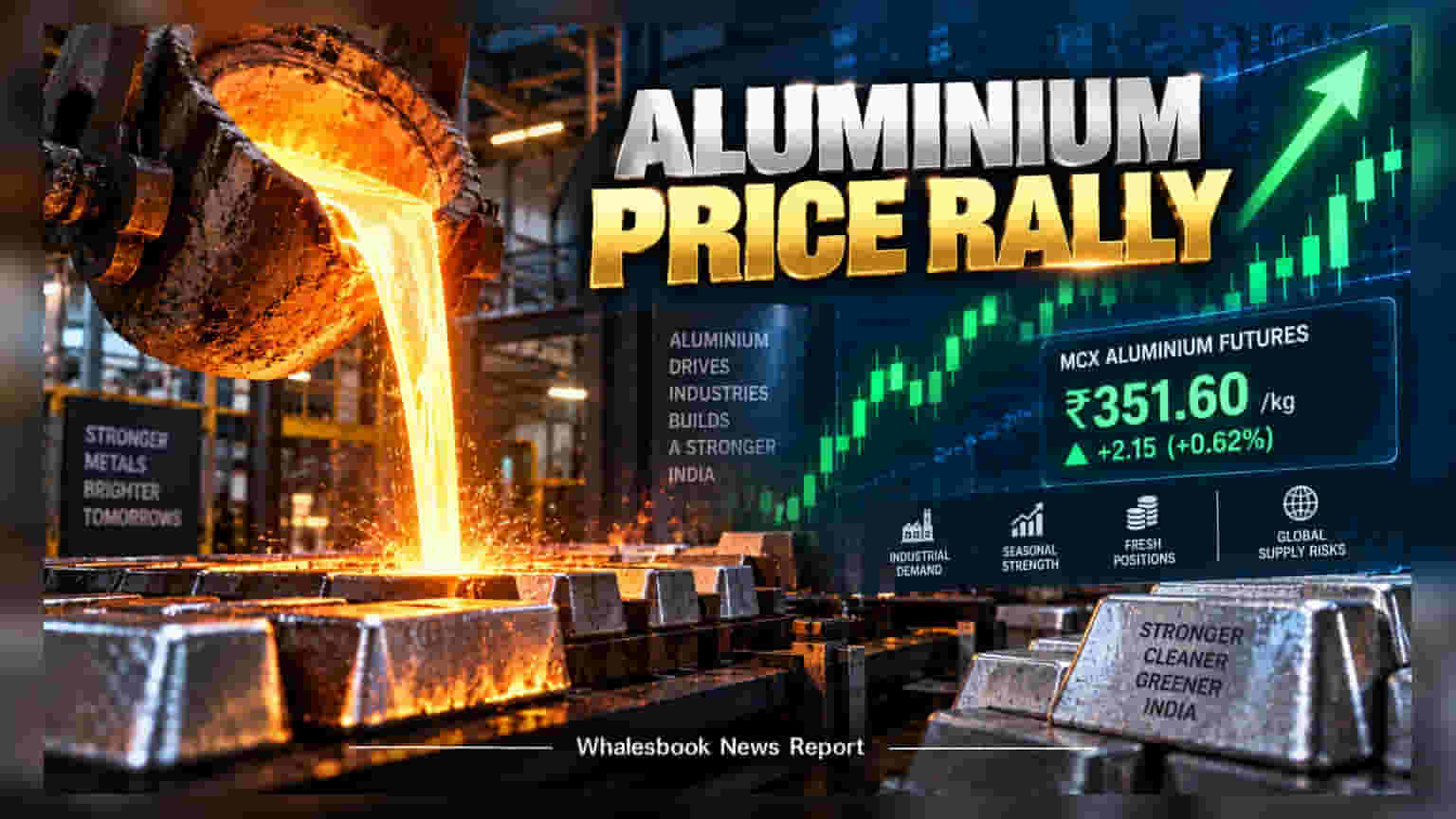
Aluminium futures on the Multi Commodity Exchange rose to ₹351.60 per kg, supported by strong seasonal demand and fresh buying interest. This price trend is relevant for investors tracking metal producers like Hindalco and NALCO, as their profitability is often sensitive to commodity price changes. However, concerns regarding a potential global supply surplus and broader economic risks remain key factors to monitor.
Aluminium futures on the Multi Commodity Exchange (MCX) are showing a steady upward trend, trading at ₹351.60 per kg. As of September 8, 2026, the contract recorded a gain of ₹2.15, or approximately 0.62%, reflecting renewed confidence in the commodity. The current market movement is largely driven by robust demand from domestic industries, which is typical during the September peak season, alongside an increase in fresh speculative positions.
For Indian investors, these price fluctuations are significant because they directly impact the business performance of major domestic aluminium producers. Companies like Hindalco and NALCO are key players in this space, and their financial results are often closely tied to the prices of aluminium in both global and domestic markets. Generally, when prices stay strong, it can support better revenue and profit margins for these producers, provided that their operating costs, such as energy and raw materials, remain stable.
While the current momentum is positive, it is important to look at the broader context of the metals sector. Analysts and industry observers have noted that while demand remains healthy for now, there is a risk of a global market surplus emerging in the 2026-2027 period. A supply surplus could naturally put downward pressure on prices, potentially offsetting the gains seen in the short term.
Furthermore, the commodities market is also influenced by external economic factors. Decisions by central banks regarding interest rates can affect global growth and, consequently, the demand for industrial metals. Other challenges, such as energy constraints and geopolitical uncertainties, continue to influence supply chain stability. Additionally, rising inventory levels of aluminium billets in some markets serve as a specific metric that industry participants watch closely to gauge whether supply is beginning to outpace consumption.
The future direction of aluminium prices will depend on the balance between this seasonal demand strength and the longer-term concerns regarding supply availability. Investors tracking the sector may continue to watch for updates on global inventory levels and any changes in the production output of major global players, as these factors will shape the price trend in the coming months.