 Whalesbook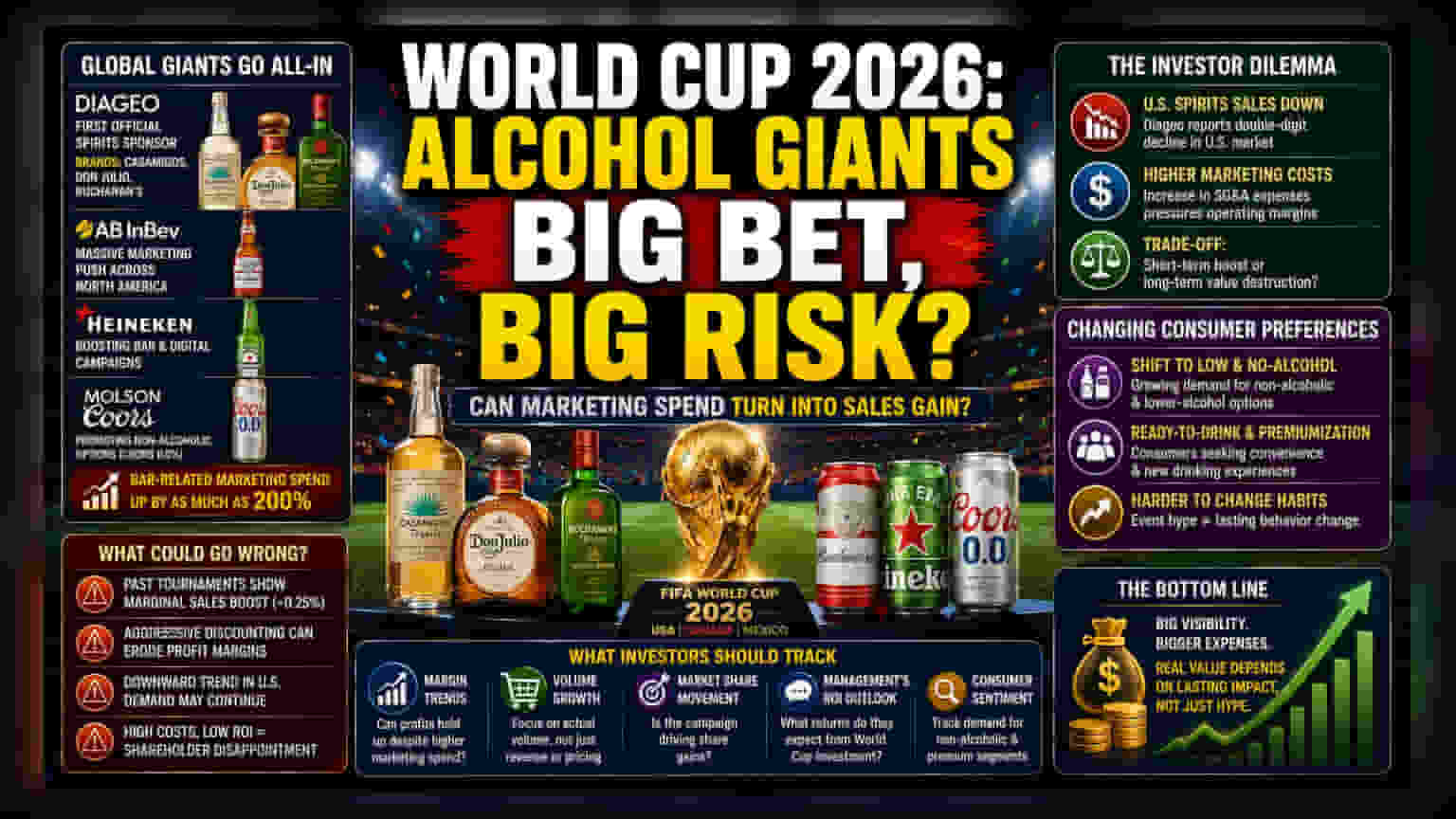


What Happened
Global alcohol companies, including major players like Diageo, Anheuser-Busch InBev, Heineken, and Molson Coors, are using the upcoming 2026 FIFA World Cup as a primary strategy to combat sluggish demand. With the tournament set to be held across North America, these companies are launching massive marketing campaigns. Notably, Diageo has secured a position as the first official spirits sponsor for the tournament, aiming to push brands like Casamigos, Don Julio, and Buchanan’s Scotch Whisky to a global audience. Similarly, beer makers are ramping up their advertising presence, with reports indicating that some firms are increasing their bar-related marketing spend by as much as 200%.
Why This Matters For Investors
The central issue for investors is the trade-off between marketing expense and actual sales conversion. These alcohol companies are facing a challenging period in the United States, a critical market for global revenue. Diageo, for instance, has reported a double-digit decline in US spirits sales, reflecting a broader trend where consumers are cutting back on discretionary spending or shifting their preferences. When companies significantly increase marketing costs—often referred to as 'selling, general, and administrative' expenses—it can directly pressure operating margins. Investors need to monitor whether these tournament-linked investments generate a lasting increase in sales or provide only a short-term, temporary spike that fails to offset rising costs.
The Shifting Consumer Preference
The move by companies like Molson Coors to promote non-alcoholic options, such as Coors 0.0%, highlights a significant change in the industry. Demand is not just cooling; it is evolving. Consumers are increasingly moving toward lower-alcohol or non-alcoholic alternatives, as well as ready-to-drink spirits. The decision by major brands to align with a massive global sporting event is an attempt to stay relevant in a market where traditional volume growth has been difficult to achieve. However, changing long-term consumer habits with temporary marketing campaigns is a difficult challenge.
What Could Go Wrong
There is a historical risk associated with relying on short-term events to drive financial performance. Data from past global tournaments suggests that the volume boost to beer and spirits sales is often marginal, sometimes estimated at around 0.25%. While the 2026 World Cup offers high visibility, there is no guarantee that it will alter the overarching downward trajectory of US alcohol demand. Furthermore, if these companies engage in aggressive price discounting or heavy promotional activity to capture market share during the event, it could compress profit margins further, which would be a negative signal for shareholders.
What Investors Should Track
Investors should look beyond the tournament's excitement and focus on the fundamentals in the coming quarterly results. Key indicators to monitor include whether the companies can maintain their profit margins despite the higher marketing outlays. It is also important to track volume growth trends in the US, rather than just revenue figures, as revenue can sometimes be inflated by price hikes. Finally, management commentary regarding the 'return on investment' from these specific World Cup marketing efforts will be critical. If the spending does not lead to a recovery in market share, the market may take a cautious view on the efficiency of this capital allocation.