

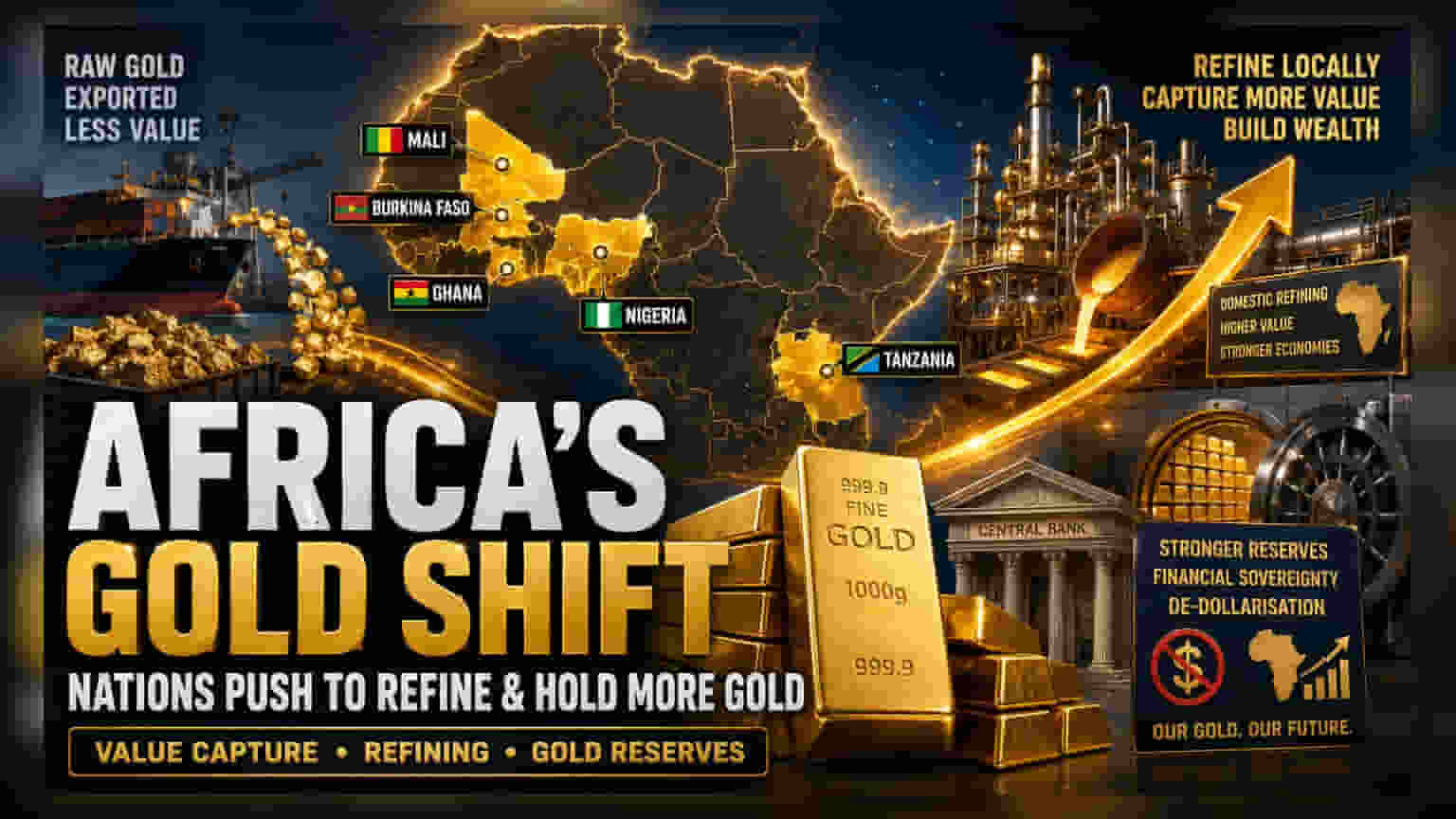
African nations are increasingly focusing on domestic gold refining and expanding central bank reserves to boost economic stability. This shift from exporting raw ore to value-added production could alter global gold trade flows. For Indian investors, the trend highlights potential changes in long-term supply dynamics and the importance of monitoring geopolitical factors in commodity markets.
What Happened
Countries across Africa, including Ghana, Nigeria, Tanzania, Mali, and Burkina Faso, are taking steps to retain more value from their gold production. Historically, these nations exported raw gold ore to global hubs, primarily in the United Kingdom, for refining and trading. Now, these governments are prioritizing the development of domestic refining capacity and increasing central bank accumulation of gold. This strategy aims to strengthen local financial positions, reduce reliance on foreign currencies, and build strategic reserves in a global economy facing shifting trade patterns.
The Shift in Value Capture
The gold industry is essentially a value chain where the most significant profits are made during refining and trading. By keeping these processes within their borders, African nations are attempting to move up the value chain. This is not just about keeping the metal; it is about building the industrial capacity to process it. The move is also tied to the broader trend of "de-dollarisation," where central banks in the Global South are choosing to hold gold instead of foreign currencies to hedge against inflation and financial uncertainty.
Supply Chain and Regulatory Risks
While the push for economic sovereignty is a long-term goal, it brings specific risks that investors should understand. The primary challenge is the requirement for massive investment in infrastructure, technical skills, and certified refining facilities.
Analysts have noted that "resource nationalism"—where governments tighten control over mining—can sometimes be a double-edged sword. While it aims to capture more national wealth, it can also create uncertainty. If countries implement policies that are inconsistent or unclear, it may deter the foreign investment required to actually build the mines and refineries. For global supply chains, any sudden change in export laws or refinery operations could influence the availability and cost of gold in the international market, which is closely watched by major consumers like India.
The Execution Hurdle
It is important to remember that transitioning to a domestic refining model is a complex, long-term project. Many large-scale mines in the region are currently operated by foreign companies. For these projects to succeed, nations need to balance their desire for control with the need to maintain an environment where investors feel their capital is secure. If the regulatory environment becomes too unpredictable, production levels could suffer, creating volatility in global gold supply.
What Investors Should Track
Investors tracking the commodities market should keep an eye on a few key areas. First, monitor any official changes in export policies from major gold-producing African nations, as these can impact the flow of gold to global refineries. Second, track central bank gold buying trends, as this influences global gold demand. Finally, watch for reports on new refining infrastructure projects in the region. Progress in these areas will indicate whether these nations are successfully building a sustainable gold industry or if the shift will remain a challenging, slow-moving process.