

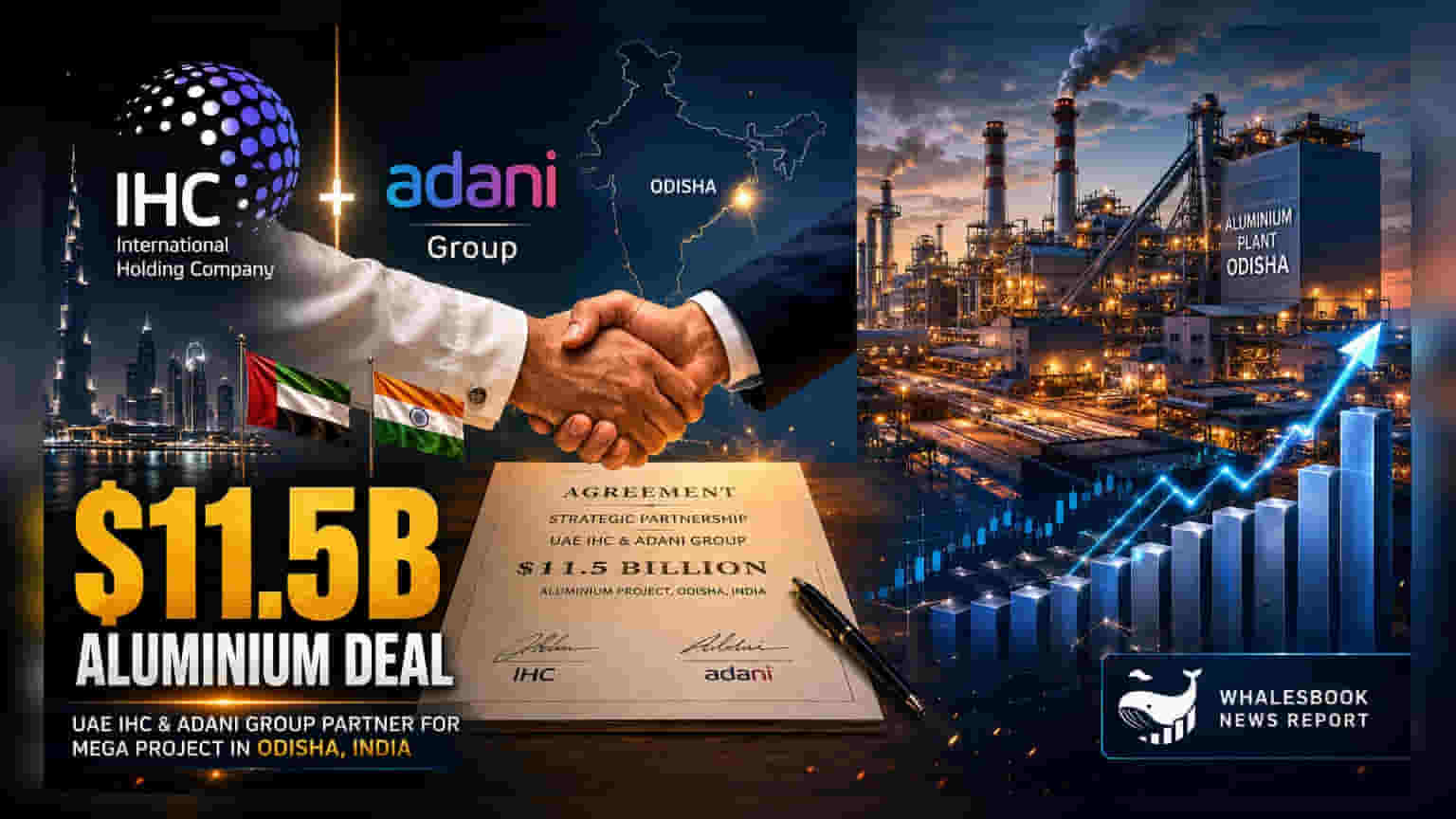
Adani Group and UAE’s International Holding Company (IHC) have signed a pact for an $11.5 billion integrated aluminium project in Odisha. The 50-50 joint venture aims to scale up domestic production. Investors should track the funding strategy, execution timelines, and potential debt impact of this large-scale project.
What Happened
The Adani Group and Abu Dhabi’s International Holding Company (IHC) have officially signed a Memorandum of Understanding (MOU) to develop a massive, integrated aluminium complex in Odisha. The project, valued at $11.5 billion, will be structured as a 50-50 joint venture. The proposed facility is set to be comprehensive, covering a refinery, a smelter, a captive power plant, and a downstream aluminium manufacturing park. This agreement marks one of the largest foreign investments in the Indian metals industry to date.
The Strategic Scale
The project is designed with significant capacity targets, including 4 million metric tons per year (MTPA) for alumina and 2 MTPA for aluminium. By setting up this complex in Odisha, which is a key hub for bauxite reserves and contributes over half of India’s current aluminium output, the partners aim to boost domestic production. The primary goal is to help India reduce its reliance on imported high-value aluminium products, aligning with broader industrial growth in sectors like transport, infrastructure, and renewable energy.
Financial and Execution Realities
While the project promises to scale up domestic operations, it requires massive capital spending over an extended period. Projects of this size typically have a long gestation period, meaning the company will be spending cash for years before the facility becomes operational and starts contributing to profit. Investors should note that significant capital investment often involves debt. The ability to manage this debt and maintain healthy interest coverage ratios will be an important factor in the project's long-term viability.
Commodity and Market Risks
Aluminium is a globally traded commodity, and its price is highly sensitive to international market trends. Even with advanced production capabilities, the project's profitability will depend on global aluminium prices, which can be volatile. If global prices fall, profit margins may come under pressure. Additionally, like any massive infrastructure project, there are inherent risks regarding environmental clearances, land acquisition, and construction delays. Any unforeseen increase in construction costs or regulatory hurdles could affect the project’s internal rate of return.
Peer and Sector Context
This move puts the Adani Group in direct competition with established domestic players like Vedanta and Nalco, who currently dominate the Indian aluminium landscape. Success in this sector requires not just scale, but also efficient sourcing of raw materials like bauxite and low-cost power. Investors should monitor how the joint venture manages these operational inputs compared to its experienced peers.
What Investors Should Track
The most important details for investors to look for in future disclosures include the specific funding mix—how much will be raised through equity versus debt—and the detailed project timeline. Other critical monitorables include progress on government and environmental approvals, the specific commissioning dates for each phase, and any management commentary regarding the group’s overall debt exposure following this investment.