

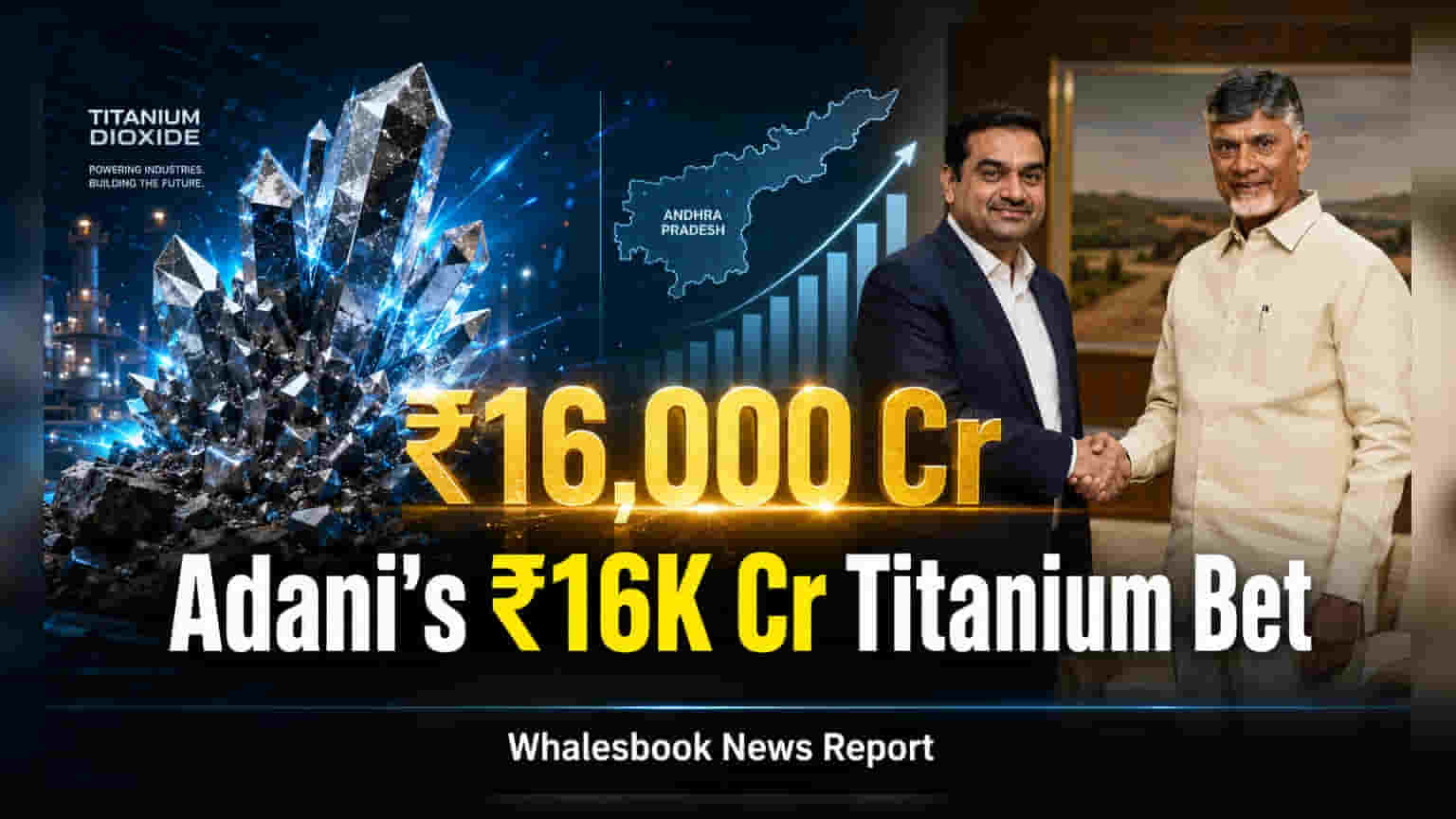
The Adani Group has proposed a ₹16,000 crore titanium manufacturing facility in Srikakulam, Andhra Pradesh. This investment aims to process beach sand minerals into high-value products, such as titanium dioxide, to reduce import reliance. The conglomerate also detailed plans for data centers and healthcare infrastructure in Visakhapatnam. Investors may watch for project timelines and regulatory clearances.
The Adani Group is looking to expand its industrial footprint in Andhra Pradesh with a proposed investment of ₹16,000 crore for a titanium manufacturing plant. The proposal was presented by Karan Adani, Managing Director of Adani Ports and Special Economic Zone Ltd, during a meeting with Chief Minister N. Chandrababu Naidu in Amaravati. The project, planned for the Srikakulam district, intends to move beyond basic mineral extraction by focusing on value-added processing.
Moving Up the Value Chain
The core of the proposal involves processing beach sand minerals, such as ilmenite, into advanced industrial products including titanium slag, titanium dioxide, and titanium sponge. Titanium dioxide is a critical material used extensively in the production of paints, coatings, cosmetics, plastics, and various UV-protection products. By manufacturing these goods domestically, the group aims to reduce India's dependence on imported rare earth minerals. This aligns with the state government's goal of developing an integrated value chain for local mineral resources, rather than selling them as raw materials.
Beyond the titanium project, the conglomerate presented a master plan for infrastructure development in Visakhapatnam. This includes the establishment of an IT park, a data center, Adani University, an international school, and a 1,000-bed hospital named Adani Aarogya Mandir, along with a medical college.
Financial and Operational Context
For investors, a project of this scale represents a significant capital investment. While the Adani Group has focused on reducing its leverage and has reported an improvement in its net debt-to-EBITDA ratio to approximately 3.3x as of fiscal year 2026, large-scale infrastructure projects require careful execution. Investors typically monitor how such substantial investments are funded and whether they can generate stable returns in the long term, especially given the cyclical nature of commodity and mineral markets.
Large industrial and mining projects in India are subject to strict regulatory and environmental compliance. Obtaining the necessary clearances for beach sand mining and chemical processing is often a complex process that can impact project timelines. Furthermore, the volatility in global prices for titanium-based products can influence the operational margins of such a facility. The group will need to navigate these regulatory requirements and market fluctuations to ensure the project remains viable.
The next important steps for investors to track include formal announcements regarding project land acquisition, the status of environmental and regulatory approvals, and the definitive timeline for construction. These updates will provide clarity on the actual deployment of funds and the expected commissioning dates for these facilities.