

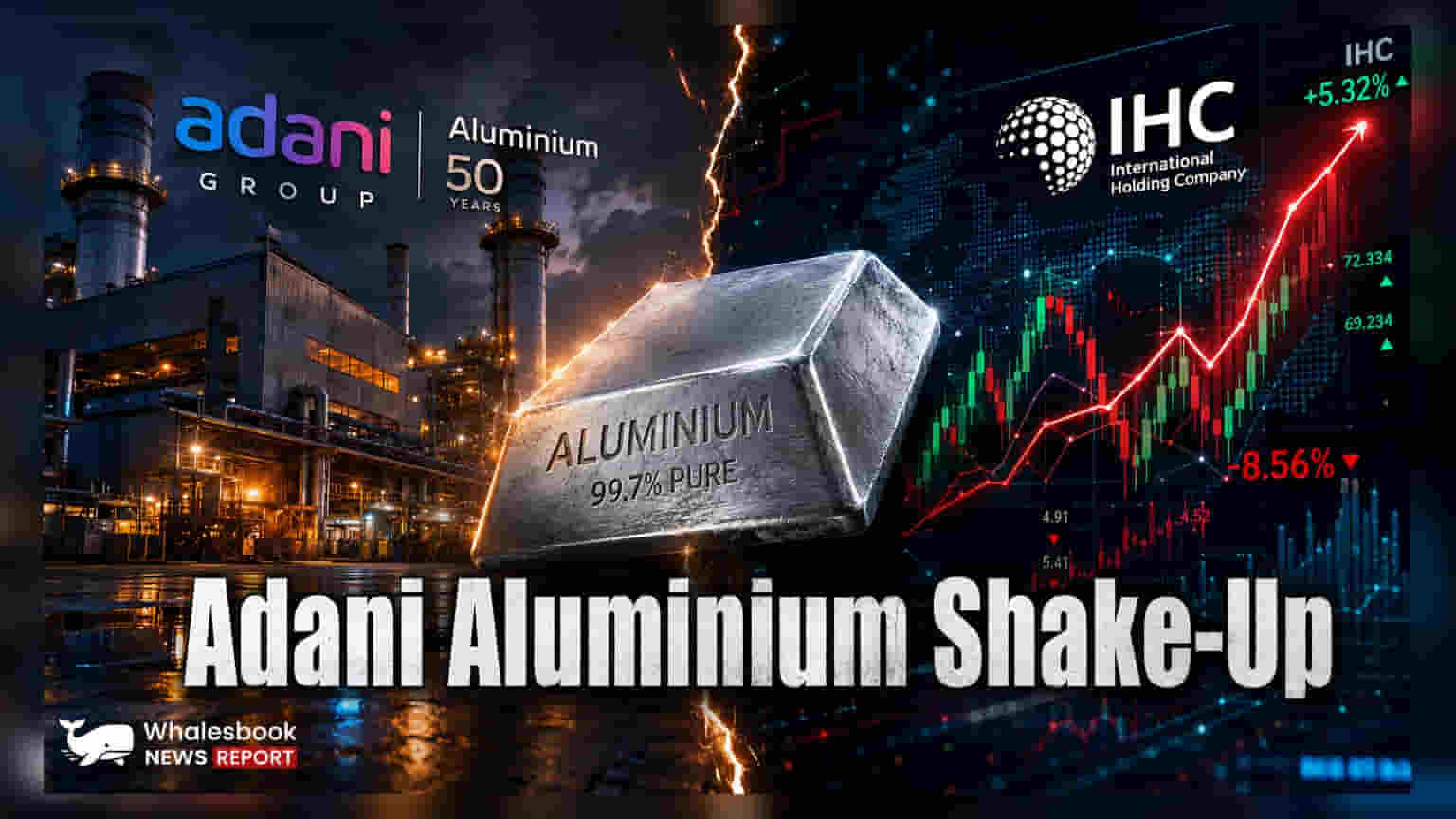
Adani Group and Abu Dhabi’s IHC have announced an $11.5 billion investment to build a major aluminum smelting complex in Odisha. This project aims to boost domestic production by 2 million tonnes, challenging the existing market dominance of Hindalco and Vedanta.
What Happened
Adani Group has officially entered the aluminum sector through a partnership with International Holding Company (IHC) of Abu Dhabi. The venture involves an investment of approximately $11.5 billion (roughly ₹96,000 crore) to build a massive aluminum production complex in Odisha. The project is designed with a 2-million-tonne annual smelting capacity, which would significantly increase India’s total production. The facility will include an alumina refinery, a captive power plant, and a downstream aluminum park. The project is expected to be completed in phases over the next five years.
The Business Strategy and Funding
The project is structured with 70% debt and 30% equity, split equally between Adani Enterprises and IHC’s subsidiary, International Resources Holding. The company plans to leverage low-cost captive power to manage the high energy requirements inherent in aluminum smelting. The location in Odisha is strategic, as the state holds a large share of India's bauxite reserves, the raw material required for aluminum production. The refinery will be located in Rayagada, while the smelter is planned for the Sundargarh region, covering a total area of over 7,000 acres.
Competitive Landscape and Market Context
Currently, Hindalco Industries and Vedanta Aluminium control nearly 90% of the domestic market. While India is a major global producer of the metal, it remains a net importer due to rising internal demand driven by manufacturing and infrastructure development. Both incumbent players have their own capacity expansion plans underway. The entry of a new, large-scale producer may intensify competition, but the company’s management has indicated that domestic demand growth is expected to rise by at least 50% by the end of the decade, suggesting space for multiple players.
Execution, Debt and Raw Material Risks
Investors should consider that this is a capital-intensive project with a multi-year execution timeline. Large infrastructure projects of this scale often face risks related to land acquisition, environmental clearances, and potential cost overruns. Additionally, as the company will rely on debt for 70% of the funding, the project will increase the group's total debt load. The long-term viability will depend on the company’s ability to secure and maintain a consistent supply of bauxite and efficiently manage the volatility of global aluminum prices, which are linked to international commodity markets.
What Investors Should Track
Moving forward, the primary monitorables include the progress on land acquisition and environmental permits, which are critical for timely execution. Investors will also track the impact of the high debt levels on the group’s overall balance sheet and credit profile. Additionally, any updates regarding the procurement of bauxite mining rights and the actual commissioning timeline will be important for assessing the project's long-term contribution to earnings.