

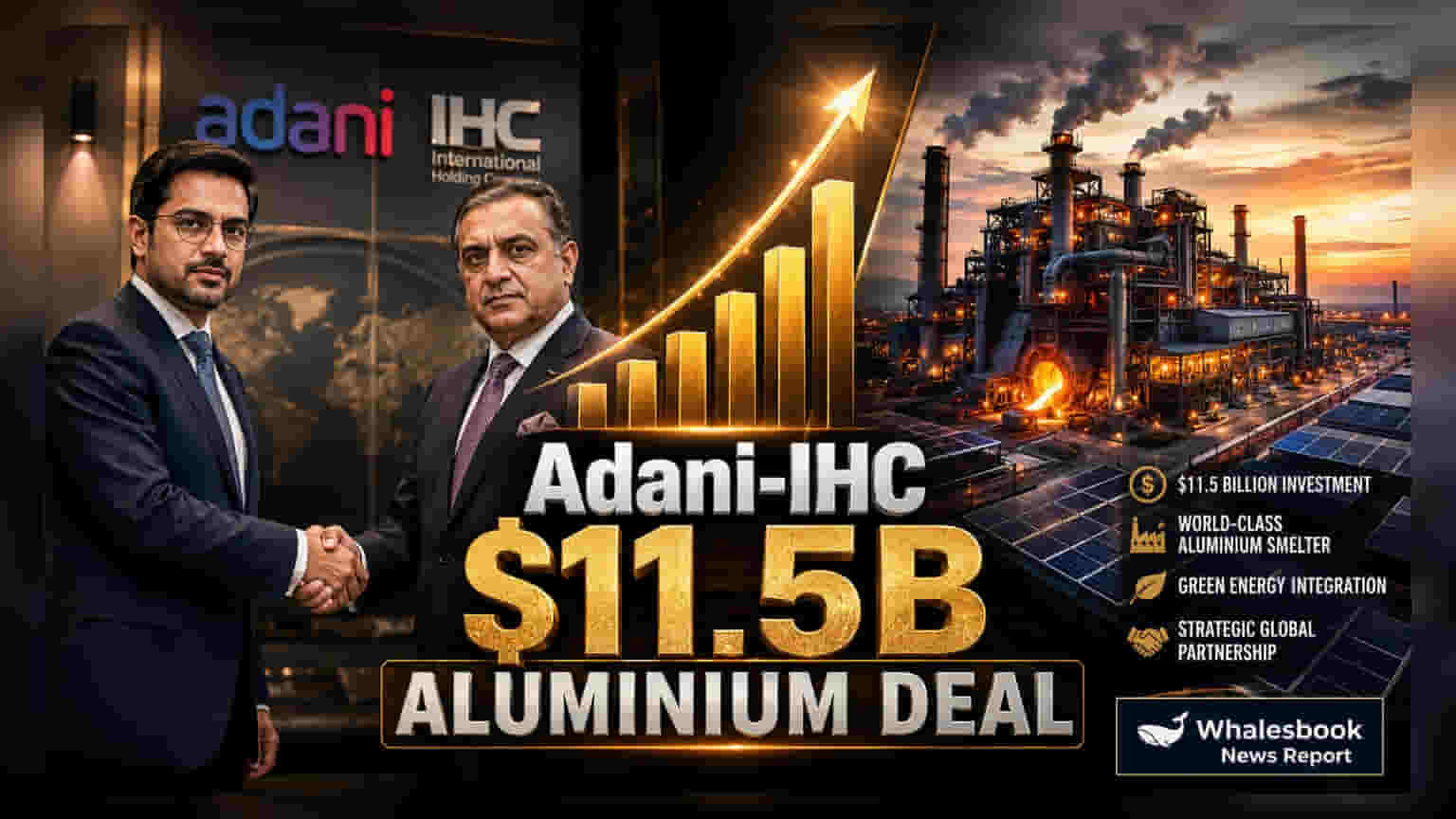
Adani Enterprises and Abu Dhabi-based IRH have signed a $11.5 billion (approximately Rs 1.08 lakh crore) agreement for a massive aluminium project in Odisha. This 50:50 joint venture aims to build an integrated complex from refining to manufacturing, but the project's success will depend on long-term capital allocation and execution, given the high cost and industry cyclicality.
What Happened
Adani Enterprises Ltd (AEL) and Abu Dhabi’s International Resources Holding (IRH) have signed a memorandum of understanding with the Odisha government to invest $11.5 billion (about Rs 1.08 lakh crore) in an integrated aluminium project. The two companies have formed a 50:50 joint venture to develop this greenfield complex. The project is planned in two phases, with an initial investment of Rs 66,000 crore followed by Rs 44,000 crore in the second phase. The facilities will include an alumina refinery, an aluminium smelter, and a downstream aluminium park, supported by a 4,000-megawatt captive power plant and 400-megawatt renewable energy capacity.
Strategic Shift Into Metals
This agreement marks a significant move by the Adani Group to establish a large-scale presence in the metals and mining sector. By creating an integrated ecosystem—from refining bauxite to manufacturing finished aluminium products—the company aims to control costs and supply chain risks. The inclusion of a downstream aluminium park suggests a strategy to move toward higher-value products rather than just selling raw aluminium. For investors, this represents a major capital allocation decision, shifting the company’s business focus toward long-gestation, heavy-asset infrastructure.
The Scale And Execution Risk
An investment of this magnitude requires careful financial management. While the project promises scale, investors should consider the typical risks associated with such massive infrastructure developments. Large-scale aluminium projects are highly sensitive to energy costs, and the project's reliance on a captive 4,000-megawatt power plant underlines this power intensity. The company will need to manage risks related to land acquisition, environmental clearances, and the time required to bring such a massive complex to full production. Any delay in these areas could lead to cost increases and pressure on the project's return on investment.
Commodity Cyclicality and Competition
Aluminium is a cyclical commodity, meaning its price depends heavily on global demand, energy costs, and economic growth. Profit margins in the aluminium sector can be volatile. Furthermore, the company will be entering a space with established competitors like Vedanta and Hindalco, which already have significant operations in India and the expertise to manage the complexities of bauxite mining and smelting. Success will likely depend on the company's ability to achieve cost efficiency and scale production effectively in a market where established players are also expanding.
What To Watch Next
Investors should monitor the project's progress through several key milestones. Important updates will include the start of land acquisition, the timeline for securing regulatory and environmental clearances, and details on how the company plans to fund its share of the Rs 1.08 lakh crore investment. Future management commentary regarding debt levels and project timelines will also be essential to understanding how this massive capital spending plan fits into the company's broader financial health.