

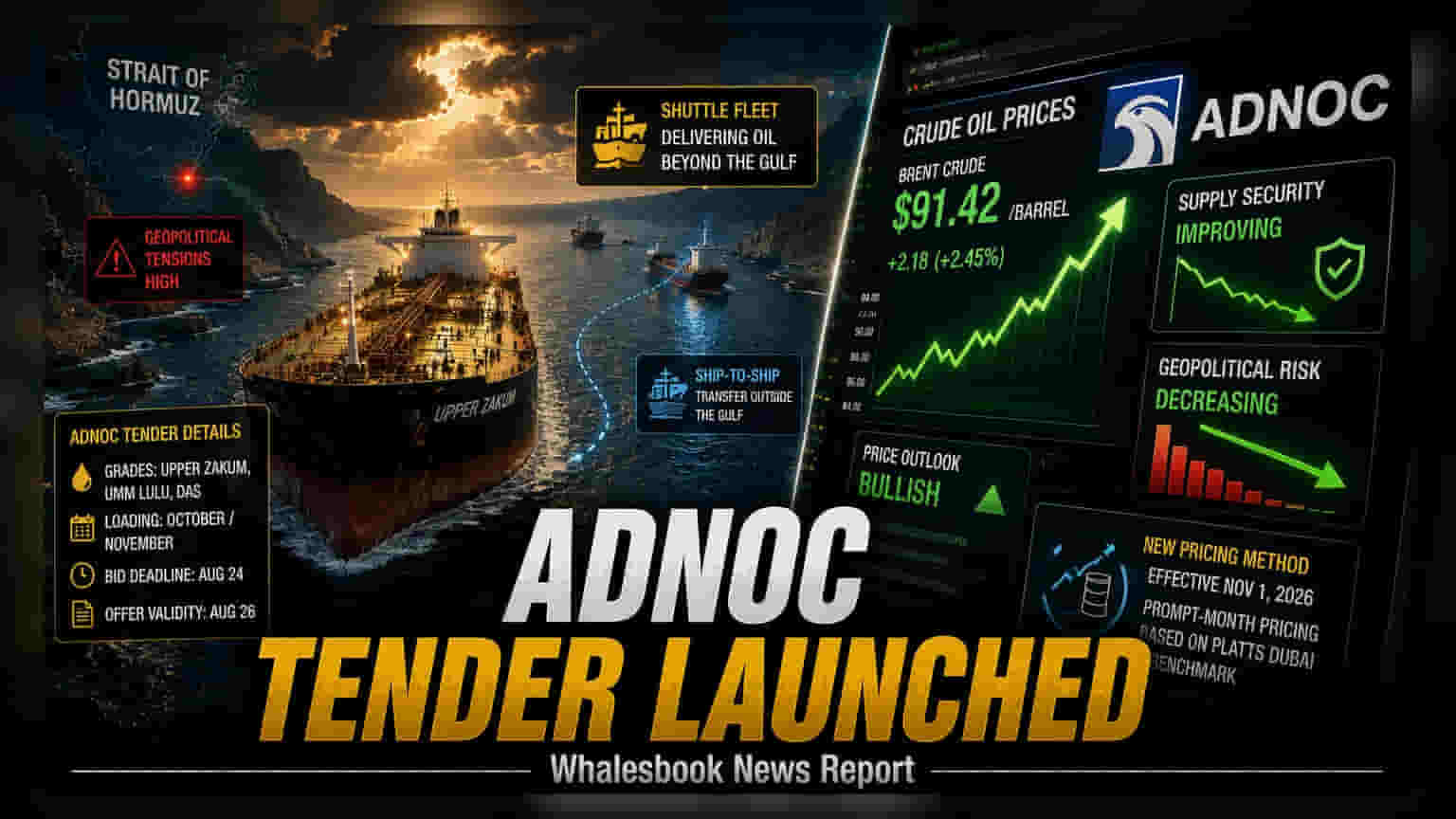
Abu Dhabi National Oil Company has opened its ninth spot crude tender since June, offering Upper Zakum, Umm Lulu, and Das oil grades. The sale is part of a strategic initiative to export oil while avoiding the Strait of Hormuz, using a shuttle fleet to reduce supply chain risks. Bids for the October and November loadings are due by August 24.
The Abu Dhabi National Oil Company (ADNOC) has launched its ninth spot crude oil tender since June, continuing its strategy to maintain export flow while avoiding the Strait of Hormuz. The tender includes Upper Zakum, Umm Lulu, and Das crude grades, with loading scheduled for October and November. Interested buyers are required to submit bids by August 24, with the offers remaining valid until August 26.
This move is part of a broader logistical strategy by the UAE state oil giant to ensure its oil reaches international markets even if regional chokepoints face disruptions. To achieve this, ADNOC has been utilizing a shuttle fleet of tankers to transport oil to locations outside the Gulf, where it is then transferred onto larger vessels via ship-to-ship operations. This workaround, while effective for maintaining supply, introduces additional operational steps and costs compared to standard direct loading.
For investors and market participants, this activity highlights the ongoing logistical adjustments required in the energy sector due to heightened regional instability. The company is absorbing complex logistical arrangements to secure its export market share, which is a critical factor for maintaining volume in an uncertain geopolitical environment.
ADNOC is also making significant changes to how it prices its oil. Starting November 1, 2026, the company will transition to a prompt-month pricing methodology based on the Platts Dubai benchmark. This shift is intended to improve pricing transparency and bring it more in line with immediate market conditions, moving away from older pricing models.
While these tenders facilitate consistent revenue generation, investors often track the impact of these logistical workarounds on profit margins. The cost of operating a shuttle fleet is higher than direct transport, meaning the company must carefully balance export volumes against these additional operational expenses. Furthermore, regional conflict remains a key monitoring point. Any escalation that threatens critical energy infrastructure—such as past incidents involving local processing facilities—could influence operational continuity or cause further logistical complications.
The next important step for market observers is the conclusion of the tender bidding process on August 24. Investors will likely watch for management commentary on how the new pricing methodology influences realized margins in the coming quarters and whether the use of shuttle fleets remains a necessary long-term operational expense.