

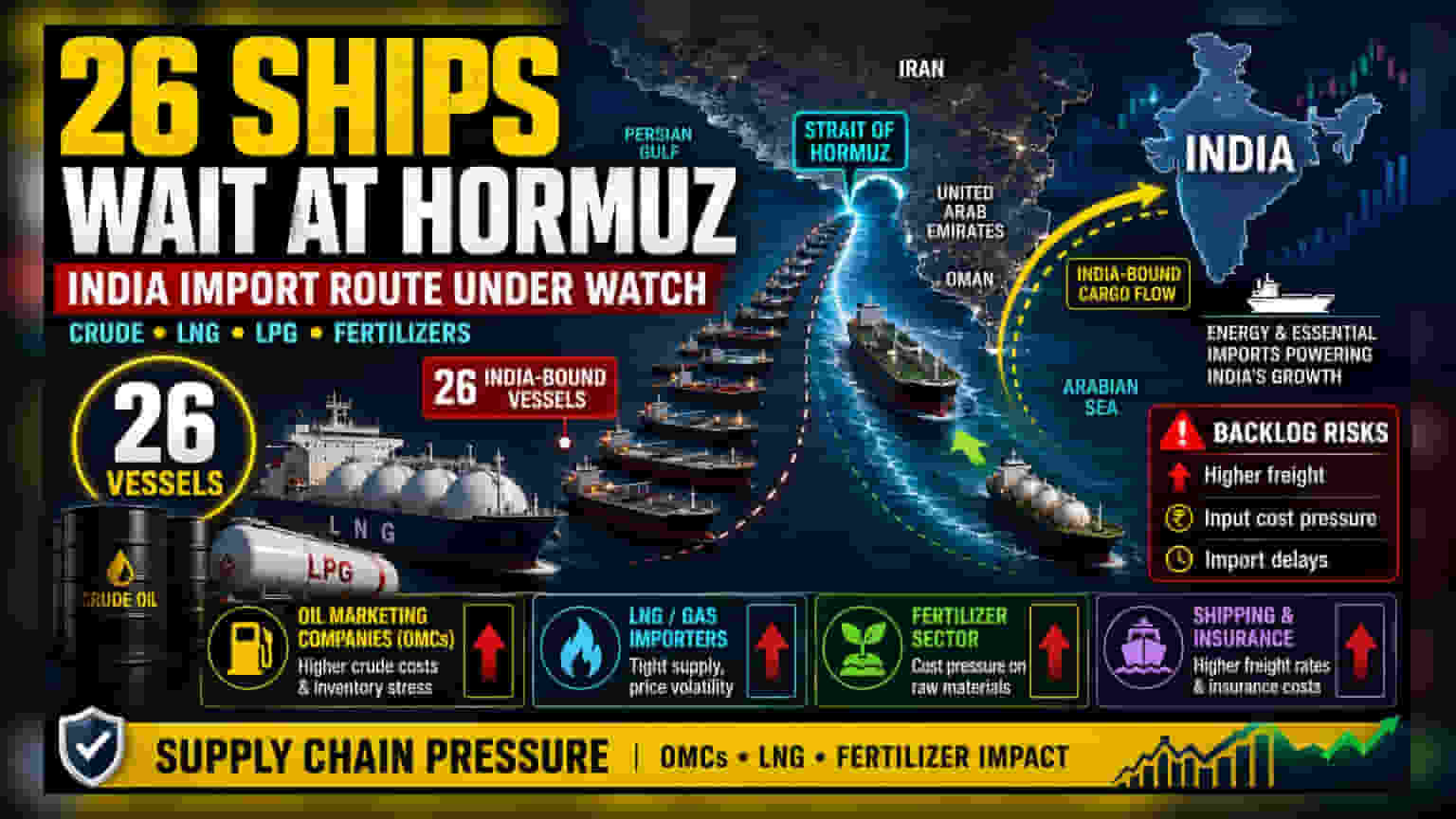
Twenty-six vessels carrying vital energy and fertilizer supplies to India are currently waiting to transit the Strait of Hormuz. This critical maritime chokepoint has seen increased traffic pressure due to regional tensions, raising concerns about potential supply delays and cost increases for energy-dependent Indian companies.
What Happened
As of June 25, 2026, twenty-six vessels bound for India are currently awaiting passage through the Strait of Hormuz, a critical maritime corridor connecting the Persian Gulf to the Arabian Sea. This follows a period where 30 India-bound ships, including tankers carrying crude oil, Liquified Petroleum Gas (LPG), and Liquified Natural Gas (LNG), have successfully navigated the strait since the recent escalation of US-Iran tensions in late February. While traffic has continued, the accumulation of waiting vessels highlights the logistical challenges currently facing trade routes essential to India's energy imports.
Energy And Commodity Import Risks
The Strait of Hormuz is one of the world's most important energy chokepoints. For India, a large importer of crude oil and natural gas, any prolonged disruption or delay in this region carries significant operational risks. The vessels currently awaiting transit are carrying a mix of essential cargo, including energy resources and fertilizers. For companies that rely on a steady supply of these raw materials, delays can lead to inventory management challenges. If transit times remain high, it could potentially affect the working capital cycles of importers who must manage stock levels amid uncertain arrival timelines.
Potential Impact On Indian Sectors
Several sectors in the Indian market are closely linked to these imports. Oil Marketing Companies (OMCs) like Indian Oil Corporation, Bharat Petroleum, and Hindustan Petroleum, along with gas importers such as Petronet LNG, depend on secure passage through these waters to maintain regular operations. Additionally, the fertilizer industry, including companies like Rashtriya Chemicals and Fertilizers, relies on international imports for raw materials. While companies often have diversified sourcing and inventory buffers, sustained uncertainty at major transit points can create pressure on global shipping rates and insurance premiums, which may eventually feed into input costs.
Understanding The Supply Chain Pressure
Maritime trade routes are sensitive to regional geopolitical developments. When tensions rise, shipping lines may face higher operational costs due to increased insurance premiums or the need to adjust shipping schedules. Even if the ships are not directly blocked, the process of navigating these tensions can cause delays. For India, which aims to keep energy and fertilizer costs stable to support domestic inflation and industrial growth, the smooth flow of goods through this corridor is essential. The fact that ships are still moving suggests that the supply line has not been cut, but the number of vessels waiting indicates that the flow is not as smooth as usual.
What Investors Should Track
Investors may monitor developments in the Persian Gulf region, as any further escalation could impact global crude oil prices and shipping logistics. The key monitorable for the coming weeks is whether the backlog of vessels clears or if wait times for Indian imports continue to rise. Additionally, company management commentary in upcoming quarterly results regarding supply chain stability, raw material procurement costs, and any impact on inventory levels will be useful for understanding how these businesses are managing the situation.