 Whalesbook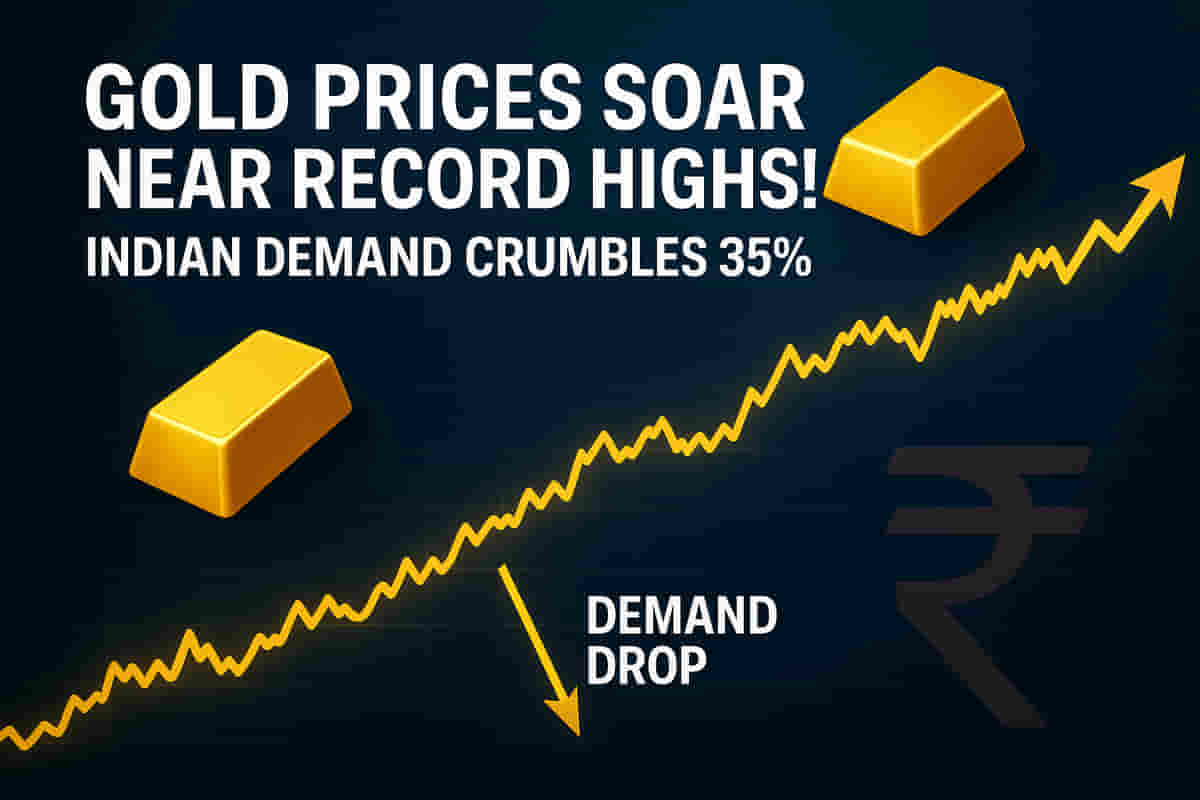
Gold Prices Soar, Nearing All-Time Highs
Gold prices are on a significant upward trajectory, approaching historical peaks on both international exchanges and within India. On December 12, the spot market price for gold hovered just above $4,271 per ounce. Domestically, the futures market saw prices for 10 grams of 24-carat gold close at ₹1,32,549, marking an approximate 2.13 percent increase from the previous trading day.
Financial Implications of Price Surge
While the metal itself is experiencing a bullish run, the rising prices are having a starkly contrasting effect on consumer demand in India. Reports indicate that gold sales experienced a substantial drop of 35 percent year-on-year during November. This significant decline is primarily attributed by analysts to the elevated cost of the precious metal, making it less accessible for many.
Market Dynamics and Investor Sentiment
The yellow metal reached its performance peak in India on October 17, achieving ₹1,35,024 per 10 grams of 24-carat purity. This surge was notably influenced by US tariff impacts. In the current week, gold has gained 1.77 percent, and over the past month, it has risen by 1.73 percent, signaling a consistent upward trend and renewed investor interest.
Expert Analysis on Market Drivers
Analysts suggest that a confluence of global economic factors is fueling gold's ascent. The US Federal Reserve's recent decision to implement a 25 basis points cut in its lending rate is a key catalyst. Lower interest rates typically make assets like gold more attractive compared to cash deposits or short-term bonds. Furthermore, ongoing geopolitical instability worldwide is enhancing gold's reputation as a safe-haven asset, drawing more investment.
Future Outlook for Gold
Gold is expected to maintain its steady trading momentum as it continues its push towards all-time highs on both domestic markets and COMEX. The cautious stance of the US central bank regarding interest rates is a significant contributing factor. However, the future trajectory of gold prices will heavily depend on upcoming economic data. Key releases include US job and inflation figures for November, followed by a detailed report on economic growth for the third quarter.
Potential Price Movements
Analysts warn that if gold prices fail to sustain their current levels and fall below $4,200 (approximately ₹1,29,000), the market could witness further sell-offs. Such a scenario might push prices down towards the $4,100 mark (around ₹1,24,500).
Impact
This sustained rise in gold prices has a dual impact. For consumers, particularly in India, it curtails discretionary spending on jewelry and other gold-based products, as evidenced by the sharp drop in sales. For investors, gold's performance offers a hedge against inflation and geopolitical risks, potentially boosting investment portfolios. However, it also signals broader economic caution.
Impact Rating: 8
Difficult Terms Explained
- Spot market: A marketplace where financial instruments or commodities are traded for immediate delivery.
- Futures market: A public market where participants trade financial contracts for the delivery of a commodity or asset at a specified future date at a price agreed upon today.
- Basis points (bps): A common unit of measure for interest rates and financial percentages. One basis point is equal to 0.01% (1/100th of a percent).
- Dovish estimate: An economic outlook suggesting a preference for lower interest rates, often associated with central bank policies aimed at stimulating economic growth.
- Safe-haven demand: Increased buying of assets considered to be relatively safe during times of market volatility or economic uncertainty.
- Geopolitical instability: A situation characterized by unrest, conflict, or unpredictable political developments between nations or regions.
- COMEX: Commodity Exchange, Inc., a division of the New York Mercantile Exchange (NYMEX) where precious metals are traded.