

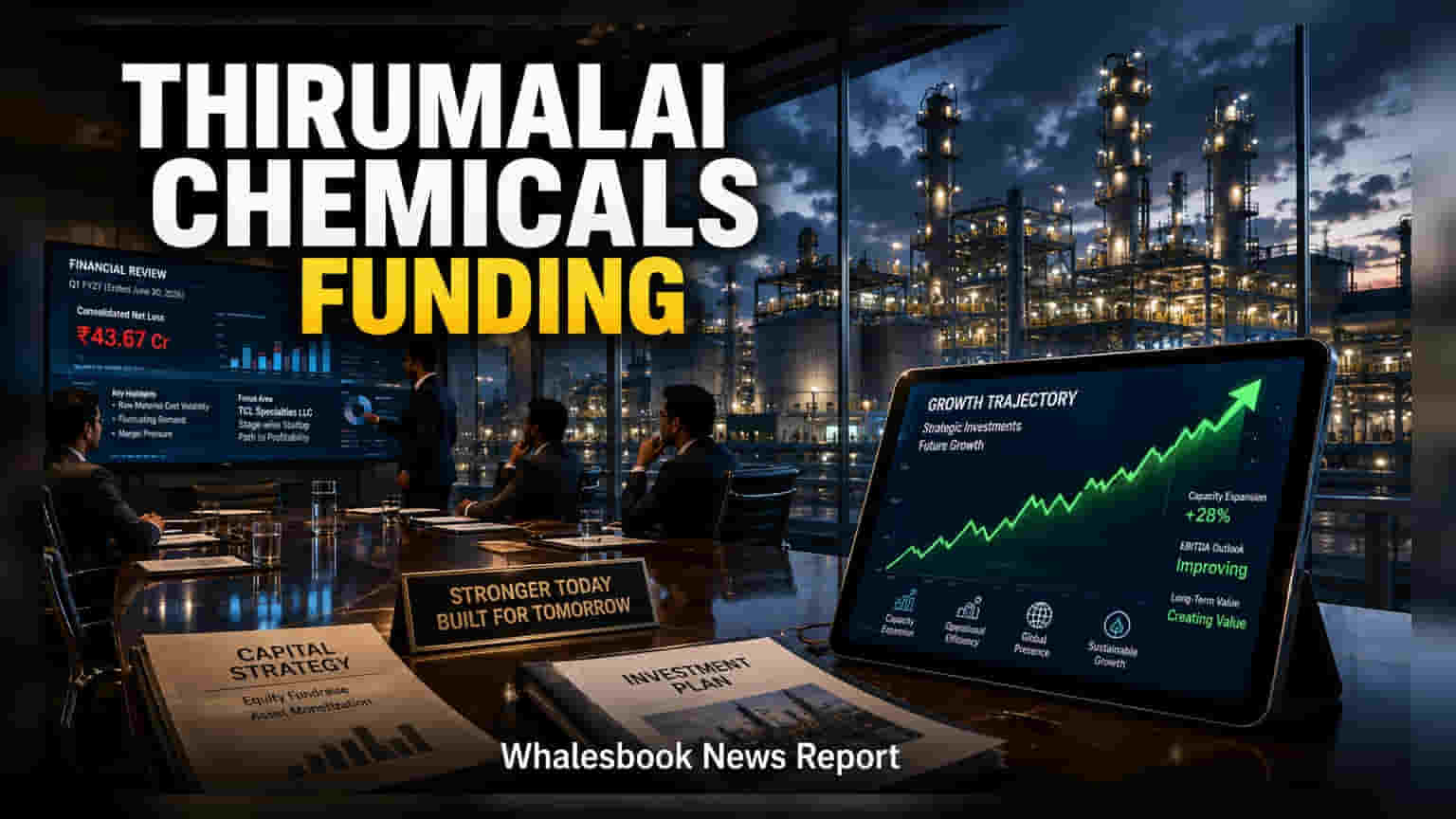
Thirumalai Chemicals is in the spotlight amid market discussions about potential fundraising plans. This comes as the company reported a net loss of ₹43.67 crore for the June 2026 quarter, with credit rating agencies highlighting persistent pressure on debt and margins.
Thirumalai Chemicals has become a topic of market discussion regarding potential capital infusion strategies to support its ongoing investment cycle. While reports have circulated about plans to raise funds through equity and asset sales, investors are closely assessing the company's financial health as it navigates a period of operational challenges.
The need for liquidity and capital management is underscored by the company’s recent performance. In the quarter ended June 30, 2026, Thirumalai Chemicals reported a consolidated net loss of ₹43.67 crore. This financial performance reflects broader industry pressures, including volatile raw material costs and fluctuating demand, which have impacted operating margins across the sector.
Financial and Operational Context
The company’s board held a meeting on August 4, 2026, to deliberate on financial results and proposals concerning fund management. This meeting followed the company’s 53rd Annual General Meeting held on August 7, 2026, where the management’s long-term strategy was a key point of discussion. Central to the company's future liquidity and growth prospects is the performance of its US-based subsidiary, TCL Specialties LLC. The unit is currently in a stage-wise startup phase, and its ability to achieve independent cash flow and profitability is critical for the group’s overall financial stability.
Credit Outlook and Investor Risks
Financial stability remains a primary monitorable for shareholders. Credit rating agency ICRA currently maintains a 'BBB / Negative' outlook on the company’s debt facilities as of June 2026. This rating reflects concerns regarding the company's coverage metrics and the pressure on its financial covenants during this expansionary phase. The negative outlook indicates that any delay in improving profitability or managing debt levels could further impact the company's financial flexibility.
Investors should be aware that the chemical sector is currently facing headwinds, including high raw material cost volatility and competitive pressures that challenge profit margins. Additionally, any potential equity-based fundraising—if pursued—would be monitored for its impact on shareholder value, particularly regarding dilution.
Looking ahead, the most important updates for investors will be official exchange filings regarding any concrete fundraising decisions. Beyond capital decisions, the company's ability to turn around the performance of its US subsidiary and manage its debt levels amidst a challenging demand environment will be key to long-term financial health.