 Whalesbook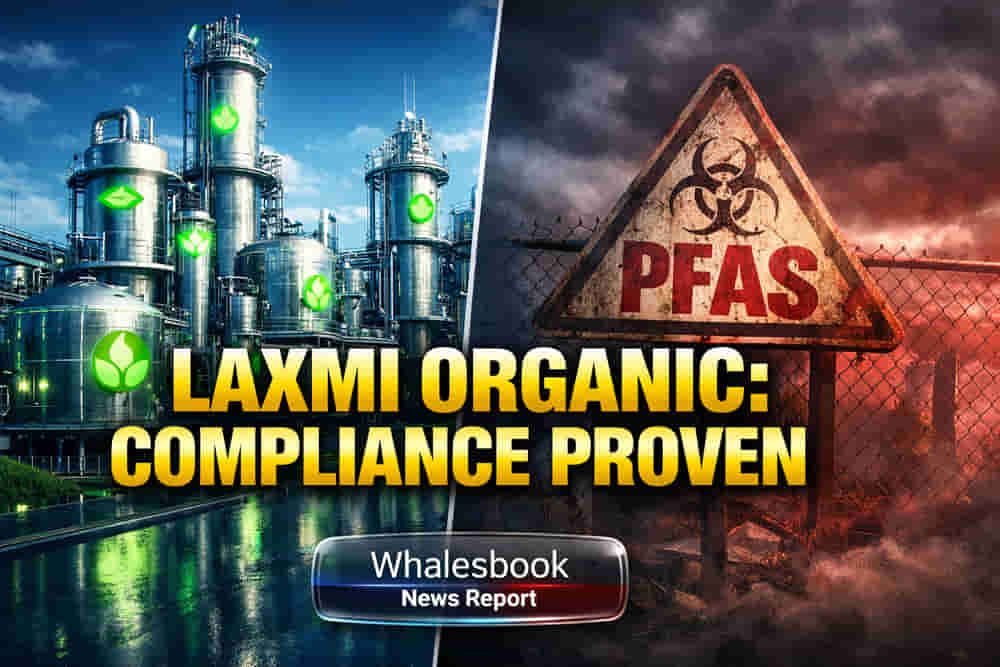
Laxmi Organic Industries Rejects Environmental Hazard Allegations
Laxmi Organic Industries Ltd (LOIL) has issued a strong rebuttal against recent allegations concerning the discharge of hazardous effluents from its manufacturing facility located in the Lote Parshuram Maharashtra Industrial Development Corporation (MIDC) zone. The diversified chemicals producer categorically stated that its operations are fully compliant with all applicable Indian environmental, safety, and regulatory requirements, having secured all necessary statutory approvals since its inception.
The Core Issue: Addressing Misleading Comparisons
The company specifically addressed media reports that drew parallels between its Lote operations and those of the erstwhile Italian company Miteni S.p.A. Laxmi Organic Industries stated that such comparisons are inaccurate and misleading, particularly regarding their effluent treatment and disposal practices, as well as their product portfolio. The Miteni incident, which led to the company's closure in 2018 after decades of producing Pfas, involved management trials for contaminating water resources in a densely populated area.
Miteni S.p.A.: A Stark Contrast
Laxmi Organic Industries highlighted the fundamental differences between its operations and the Miteni case. The Miteni incident was characterized by the direct discharge of wastewater into rivers over several decades, resulting in significant environmental damage and public health impacts. In contrast, LOIL emphasized that its practices are not only different but also align with India's stringent regulatory framework. This framework mandates rigorous environmental clearances, continuous monitoring, and strict compliance standards, none of which were adequately met in the Miteni scenario.
Laxmi Organic's Environmental Safeguards Detailed
The company detailed its robust environmental management system at the Lote manufacturing facility, located in Chiplun. It confirmed that all process emissions and effluents undergo scientific treatment and are appropriately disposed of at a State government-approved facility. LOIL stated there is absolutely no discharge of hazardous effluents into the environment from its Lote site. The facility operates using advanced closed-loop systems, meticulously designed to prevent the release of any harmful substances. Hazardous waste and effluents generated are systematically sent to a common hazardous waste treatment, storage, and disposal facility, authorized by the State government, where they are scientifically managed, including processes like incineration.
Furthermore, Laxmi Organic Industries underscored its adherence to standardized procedures for hazardous waste management, ensuring full digital traceability. This is supported by sophisticated safety systems, high-capacity effluent treatment infrastructure, effective containment measures, and the use of impervious flooring, all contributing to strict regulatory compliance and the prevention of any harmful environmental impact.
Product Portfolio: Essential for Modern Industries
Laxmi Organic's Lote site is described as a multi-technology and multi-product facility, producing both fluorinated and non-fluorinated chemicals. These products are identified as essential components for numerous critical and emerging industries. This includes sectors such as semiconductors, defence, power grids, electric vehicles, medical devices, electronics, agrochemicals, and pharmaceuticals. The company also stressed that the production of fluorinated products, both in India and globally, is conducted responsibly and at scale.
Commitment to Transparency
Laxmi Organic Industries reiterated its steadfast commitment to transparency and continuous engagement with all relevant stakeholders and government authorities. This proactive stance aims to ensure clarity and maintain trust amidst public scrutiny.
Impact
This announcement directly addresses potential investor concerns regarding environmental compliance and operational risks for Laxmi Organic Industries. By providing detailed explanations and contrasting its practices with past incidents, the company aims to reassure stakeholders. Strong environmental credentials are increasingly vital for investor confidence and long-term valuation in the chemicals sector. Continued adherence to these standards will be critical for maintaining its reputation and market position.
Impact Rating: 6/10
Difficult Terms Explained
- Effluents: Liquid waste discharged from industrial processes or facilities.
- MIDC: Maharashtra Industrial Development Corporation, a government body responsible for promoting industrial development in the Indian state of Maharashtra.
- Statutory Approvals: Formal permissions or licenses required by law from government or regulatory bodies before a company can operate or undertake specific activities.
- Pfas: Per- and polyfluoroalkyl substances, a group of man-made chemicals known for their persistence in the environment and human body, often referred to as 'forever chemicals'.
- Incineration: A waste treatment process that involves the controlled burning of waste materials at high temperatures to reduce their volume and convert them into ash, gas, and heat.
- Closed-loop systems: Manufacturing or industrial processes designed to continuously recycle and reuse materials within the system, minimizing or eliminating the need for external inputs and reducing waste discharge.
- Digital traceability: The ability to electronically track and record the origin, movement, and status of materials, products, or processes throughout their lifecycle.
- Impervious flooring: Flooring materials that are impermeable to liquids, preventing them from seeping into the ground or structure, thus helping to contain spills and prevent contamination.