

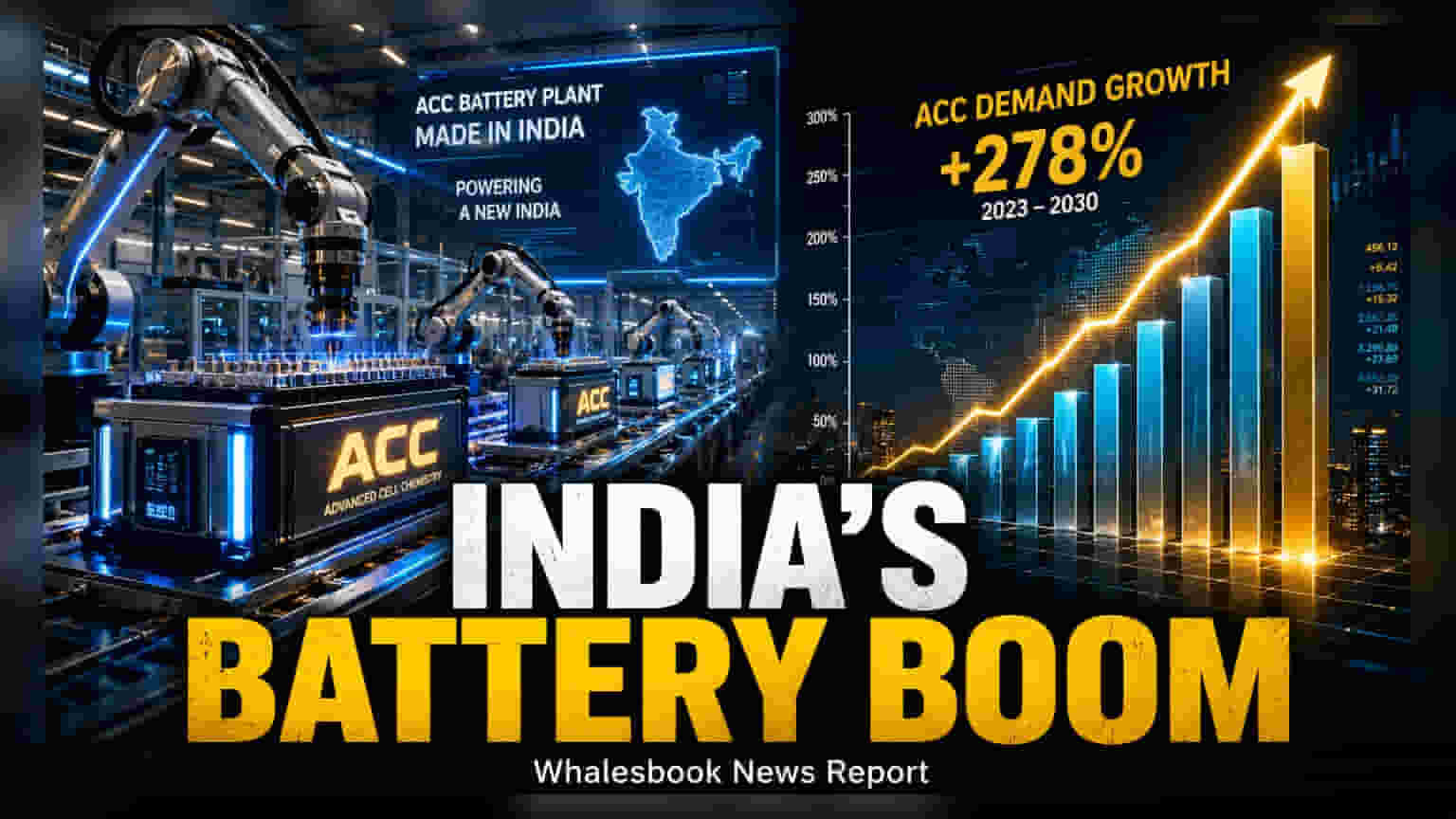
India’s advanced chemistry cell market is projected to grow at a 39% annual rate through 2030, driven by rising EV adoption and renewable energy storage needs. This shift is fueling demand for domestic battery chemical production as the country aims to reduce import dependence. Investors are monitoring how local material suppliers scale capacity to meet this long-term growth.
Detailed Coverage
India is rapidly transitioning from a net importer of battery raw materials to building a domestic ecosystem for advanced chemistry cells (ACC). According to industry projections, demand for these cells is expected to grow at a compound annual growth rate of 39% between 2025 and 2030, potentially reaching a total of 700 GWh. This growth trajectory is supported by the expanding electric vehicle sector and a significant increase in the need for large-scale energy storage solutions.
Energy Storage as a Growth Catalyst
While electric vehicles remain a primary focus for battery demand, battery energy storage systems are emerging as a major contributor to this growth. Projections indicate that the demand for energy storage, which is vital for managing India's renewable energy output, could see an annual growth rate of 78% through 2030. This demand is creating a ripple effect, necessitating a robust supply chain for essential battery chemicals including lithium iron phosphate, graphite, and various electrolyte materials.
Government Incentives and Domestic Capacity
The government’s production-linked incentive scheme, worth ₹18,100 crore, has been a central pillar in encouraging local manufacturing. This policy aims to build 50 GWh of dedicated domestic cell capacity. Currently, the industry has seen announcements from over 10 manufacturers targeting a total of 178 GWh of production capacity. Simultaneously, the National Critical Mineral Mission is working to improve the local exploration and processing of minerals like lithium and nickel. These efforts are part of a broader strategy to decrease reliance on expensive imports and create a self-sustaining value chain.
Risks and Future Monitoring
Despite the clear growth opportunity, investors should track several practical challenges that may affect profitability and execution. The sector currently relies heavily on imported raw materials for cathode and anode production, which can expose manufacturers to global price volatility and supply chain disruptions. Furthermore, while the transition toward lithium iron phosphate chemistry is currently favored for its safety and cost, technological advancements in sodium-ion or solid-state batteries could shift material requirements over the next decade. Success for domestic players will largely depend on their ability to move beyond assembly and successfully manufacture high-value chemical components locally. The next key monitorable for the industry will be the actual commissioning timelines for the announced 178 GWh of capacity and the extent to which domestic players can secure stable supply chains for critical minerals.