

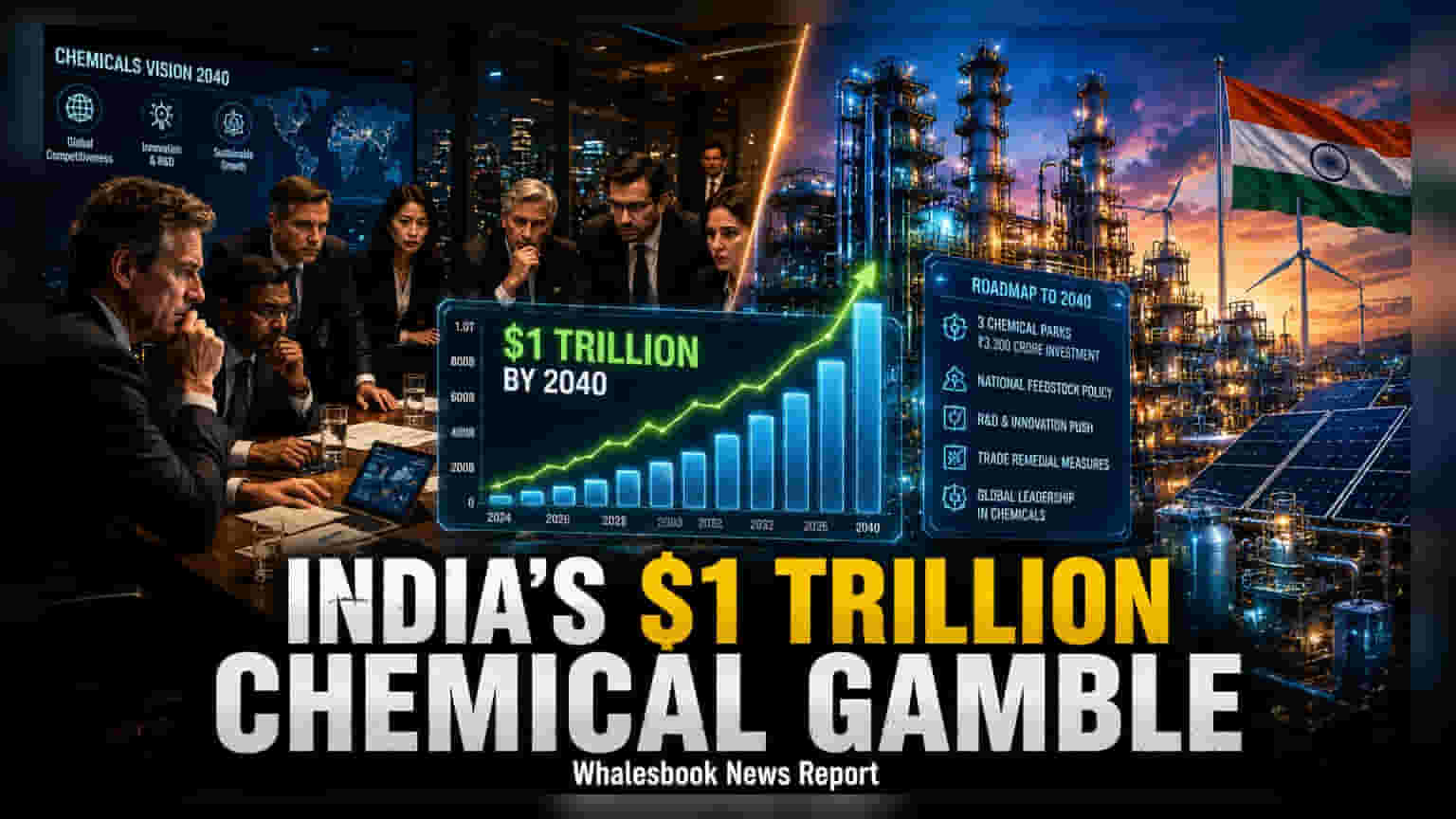
India aims to grow its chemical industry to $1 trillion by 2040, following a high-level roundtable chaired by Union Minister J.P. Nadda. The plan focuses on boosting manufacturing, innovation, and reducing supply chain risks. Investors should track progress on dedicated chemical parks, policy updates on financing, and how companies manage raw material price volatility.
Union Minister of Chemicals and Fertilizers J.P. Nadda recently convened a high-level roundtable with over 100 leaders from domestic and global chemical companies to outline a roadmap for transforming the industry into a $1 trillion sector by 2040. The session, organized with Invest India, focused on creating a supportive ecosystem for long-term growth and large-scale manufacturing.
The Indian chemical industry currently contributes approximately 7% to the nation’s GDP and is valued between $220 billion and $250 billion. To bridge the gap between the current size and the 2040 target, the government has already committed ₹3,300 crore to develop three dedicated chemical parks. These parks are designed to offer plug-and-play utilities, which aim to reduce the time and capital required for companies to set up operations.
During the meeting, industry representatives from major corporations such as Reliance, UPL, BASF, Dow Chemicals, and SABIC highlighted specific requirements to accelerate growth. Key requests included stronger support for research and development, a national feedstock policy to secure raw material supplies, and better financing mechanisms for capital-intensive infrastructure projects. Executives also urged the government to implement trade remedial measures to protect domestic manufacturers from unfair global dumping practices.
While the long-term vision aims to leverage the China+1 strategy and rising domestic demand, the sector faces several structural hurdles. One of the primary risks for investors is high import dependency for critical raw materials, such as Maleic Anhydride. This reliance makes the industry vulnerable to supply chain disruptions and global price volatility. Furthermore, companies in the specialty chemicals segment have recently dealt with weak export demand and pricing pressure, which can impact profit margins.
Geopolitical disruptions, particularly in West Asia, remain a significant concern, as they directly affect energy costs and raw material availability. Investors should monitor how the government addresses these challenges through policy frameworks. The success of this ambitious goal will largely depend on the effective execution of infrastructure projects, such as the promised chemical parks, and the industry’s ability to move up the value chain from basic chemicals to high-value, specialized products.
Going forward, the key monitorable for the industry will be the rollout of time-bound project clearances and the specific details of the national feedstock policy. Monitoring how chemical companies manage debt levels in relation to new capital spending and their ability to hedge against volatile input costs will be essential for assessing future performance.