 Whalesbook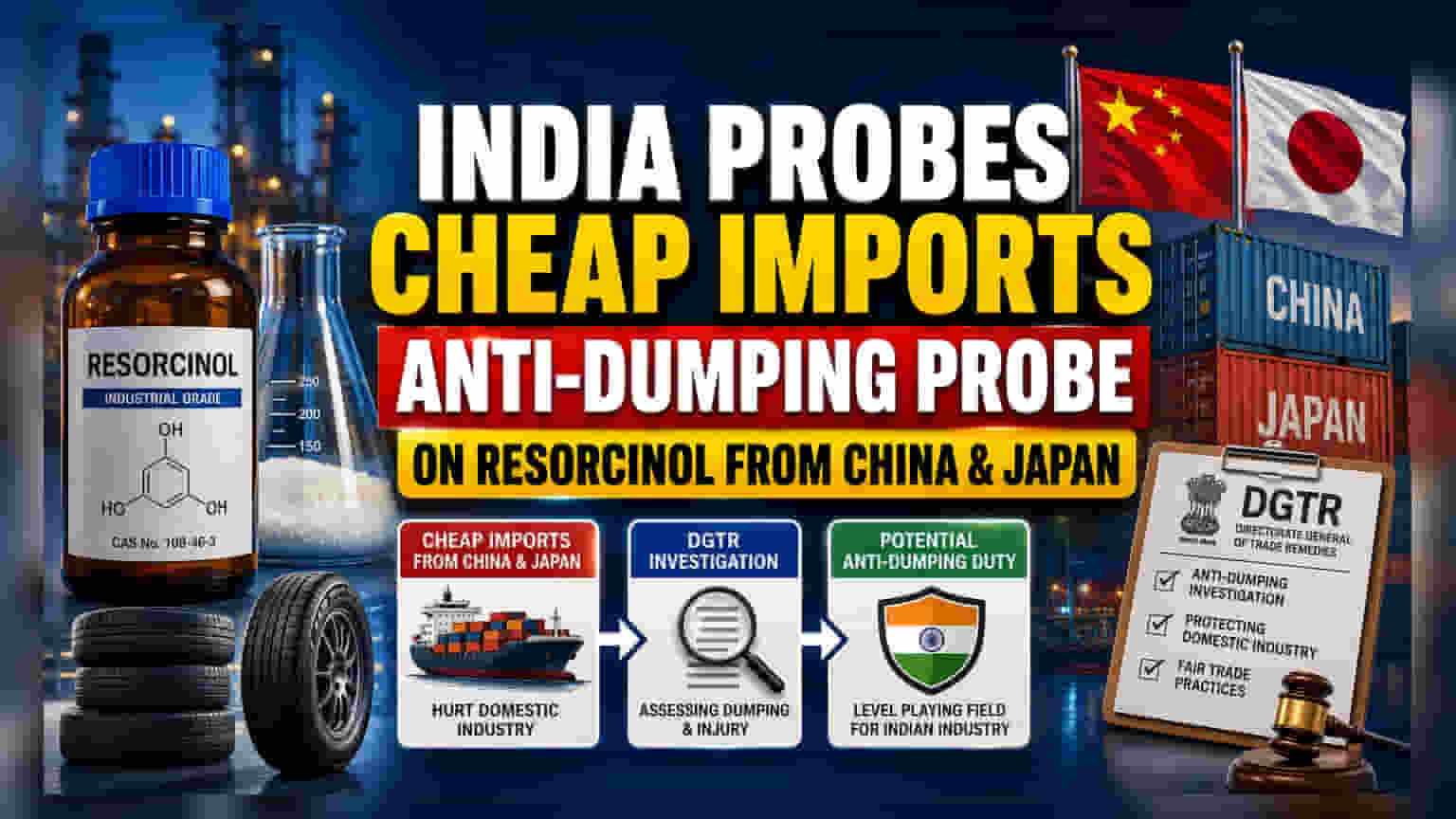
India’s trade regulator has started an anti-dumping probe on Resorcinol, a chemical used in tyre manufacturing, following a complaint from Atul Ltd. The investigation targets imports from China and Japan to determine if they are being sold at unfairly low prices. If duties are imposed, it could help local manufacturers protect their profit margins. However, the process is lengthy, and duties are not guaranteed.
What Happened
The Directorate General of Trade Remedies (DGTR), India's trade investigation body, has started an anti-dumping probe into imports of 'Resorcinol' from China and Japan. This action follows a formal complaint by Atul Ltd, a major Indian chemical manufacturer. Resorcinol is an essential chemical used in the rubber and tyre industry, specifically to help rubber bond better. It is also used in wood adhesives, dyes, and some pharmaceutical products.
Atul Ltd has alleged that cheap imports from these countries are causing material injury to the domestic industry. In trade terms, 'dumping' happens when a country exports a product at a price lower than its normal value, which can hurt the ability of local companies to compete fairly.
Why This Matters For Investors
For chemical manufacturers like Atul Ltd, this investigation is a significant step toward safeguarding profit margins. When cheaper imports flood the market, domestic companies often have to lower their prices to stay competitive, which reduces their earnings. If the investigation confirms that dumping is occurring and that it is hurting local producers, the government may impose anti-dumping duties. These duties act as a tax on the cheaper imports, making them more expensive and allowing domestic products to compete on a level playing field.
How Investors May Read This
While this news is a positive step for the company's protection, investors should not expect an immediate impact on the stock or earnings. Anti-dumping investigations are long, complex legal processes that can take several months or even a year to conclude. The DGTR first assesses the claim, then looks for evidence of injury to local business, and finally recommends duties. The actual decision to enforce these duties lies with the Ministry of Finance, which may choose to accept or reject the recommendation.
There is also a broader business context. If duties are eventually imposed, it could make the raw material more expensive for downstream users, such as tyre companies. Investors should watch how the supply and demand balance shifts if these potential trade barriers are put in place.
The Bigger Business Context
Atul Ltd is a well-established player in the chemical sector with a diverse product portfolio. The company operates in a cyclical industry, meaning its performance is often linked to global commodity prices and demand from user industries like automotive and construction. Because chemical prices are often volatile, companies in this sector are highly sensitive to import competition. Protectionist measures like anti-dumping duties are one of the tools companies use to defend their market share during periods of weak pricing power.
What Could Go Wrong
The outcome of this investigation is not guaranteed. There have been past instances in various sectors where investigations did not lead to duty imposition if the required evidence of 'material injury' was not sufficient. Furthermore, if global prices for Resorcinol drop further, even an anti-dumping duty might not be enough to shield local margins. Additionally, the tyre and rubber industry, which relies on this chemical, may provide feedback to the government opposing such duties if they feel it increases their manufacturing costs.
What Investors Should Track
Investors should look for updates in three main areas. First, monitor any official notifications from the DGTR regarding the timeline of the investigation. Second, keep an eye on management commentary in future quarterly results for their view on chemical pricing and import pressure. Finally, watch for the Ministry of Finance's final decision whenever the investigation reaches its conclusion, as that is the moment when any potential financial impact on the company’s pricing power would become clear.