

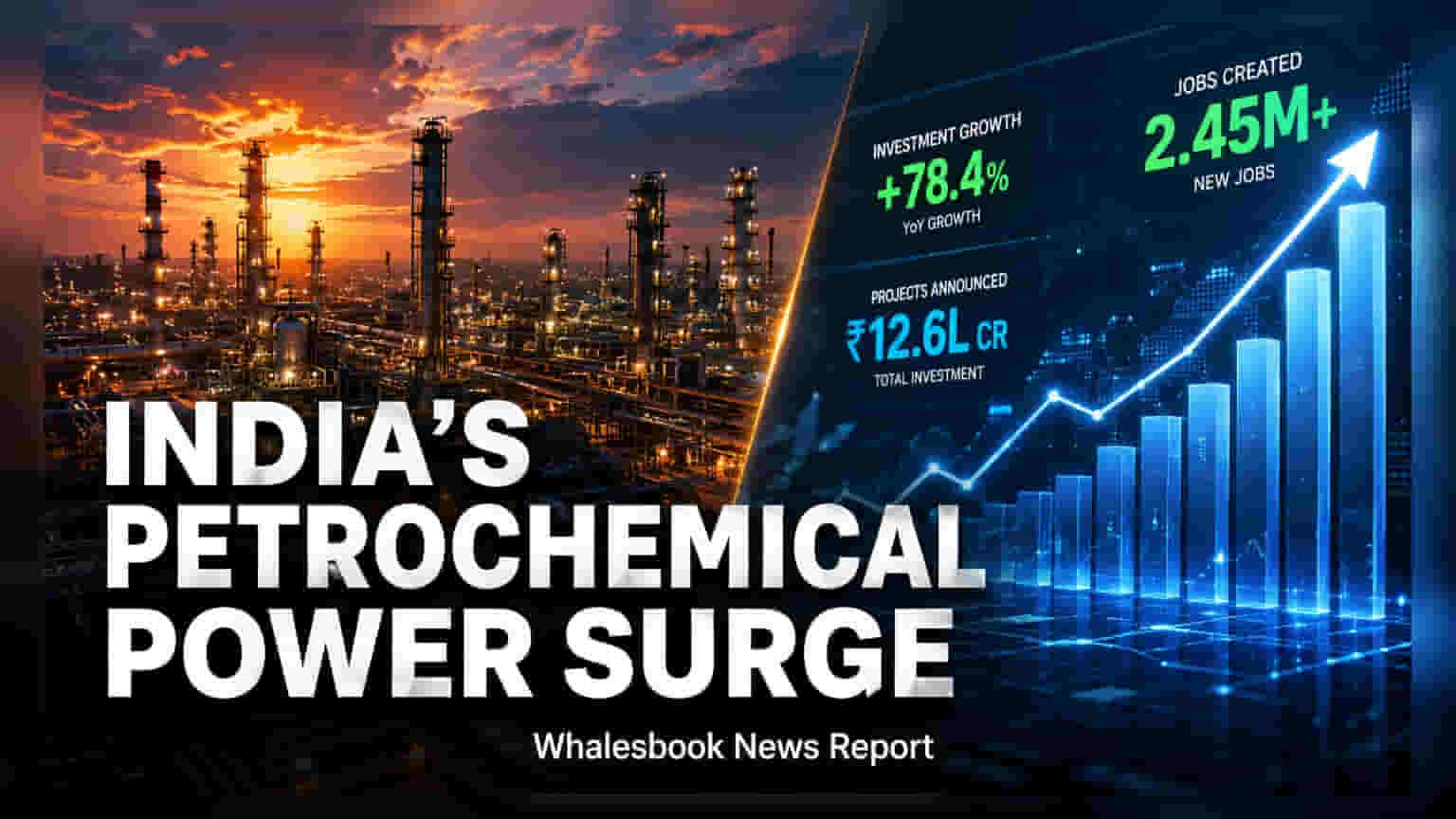
India's petrochemical sector has seen ₹3.4 lakh crore in investments over the last 12 years, driving the creation of 3.7 lakh jobs. To accelerate this growth, the government has launched the 'BHAVYA Rasayan' scheme with a ₹3,030 crore outlay. Investors are assessing how this new 'plug-and-play' infrastructure model may impact the operational efficiency and margins of chemical companies facing stiff global competition.
The Indian petrochemical sector has recorded investments of ₹3.4 lakh crore over the past 12 years. This capital inflow has supported the establishment of over 2,200 manufacturing units and the creation of 3.7 lakh jobs. Key industrial regions in Dahej, Visakhapatnam-Kakinada, and Paradeep have served as the primary centers for this expansion, benefiting from government efforts to build infrastructure and specialized industrial zones since 2014.
New Policy Push for Chemical Parks
To further accelerate growth, the Union Cabinet has approved the 'BHAVYA Rasayan' scheme. With an outlay of ₹3,030 crore, this initiative plans to develop three new chemical parks between FY 2026-27 and FY 2030-31. The scheme uses a cluster-based, plug-and-play model, designed to reduce the time and upfront capital required for companies to start manufacturing. By offering ready-to-use infrastructure, the government aims to lower entry barriers and improve the competitiveness of domestic chemical manufacturers.
Financial and Sector Risks
While the expansion of infrastructure is a positive step, the sector faces several structural challenges. Investors often monitor the impact of global supply chain disruptions, particularly those linked to crude oil and gas prices in West Asia, which directly influence feedstock costs for Indian chemical companies. Furthermore, increased production capacity from global competitors, especially China, has created a situation of global oversupply. This overcapacity often puts pressure on the profit margins of domestic players, as they must compete with lower-priced imports that enter the Indian market.
Additionally, companies in the sector are facing stricter regulatory requirements regarding carbon emissions and sustainability. Transitioning to greener, more efficient chemical processes requires significant capital spending, which can temporarily affect cash flows and return ratios. The final impact on company profitability will depend on how effectively domestic firms utilize the new infrastructure to offset these costs and whether the new chemical parks can help reduce the current reliance on high-cost imported materials.