

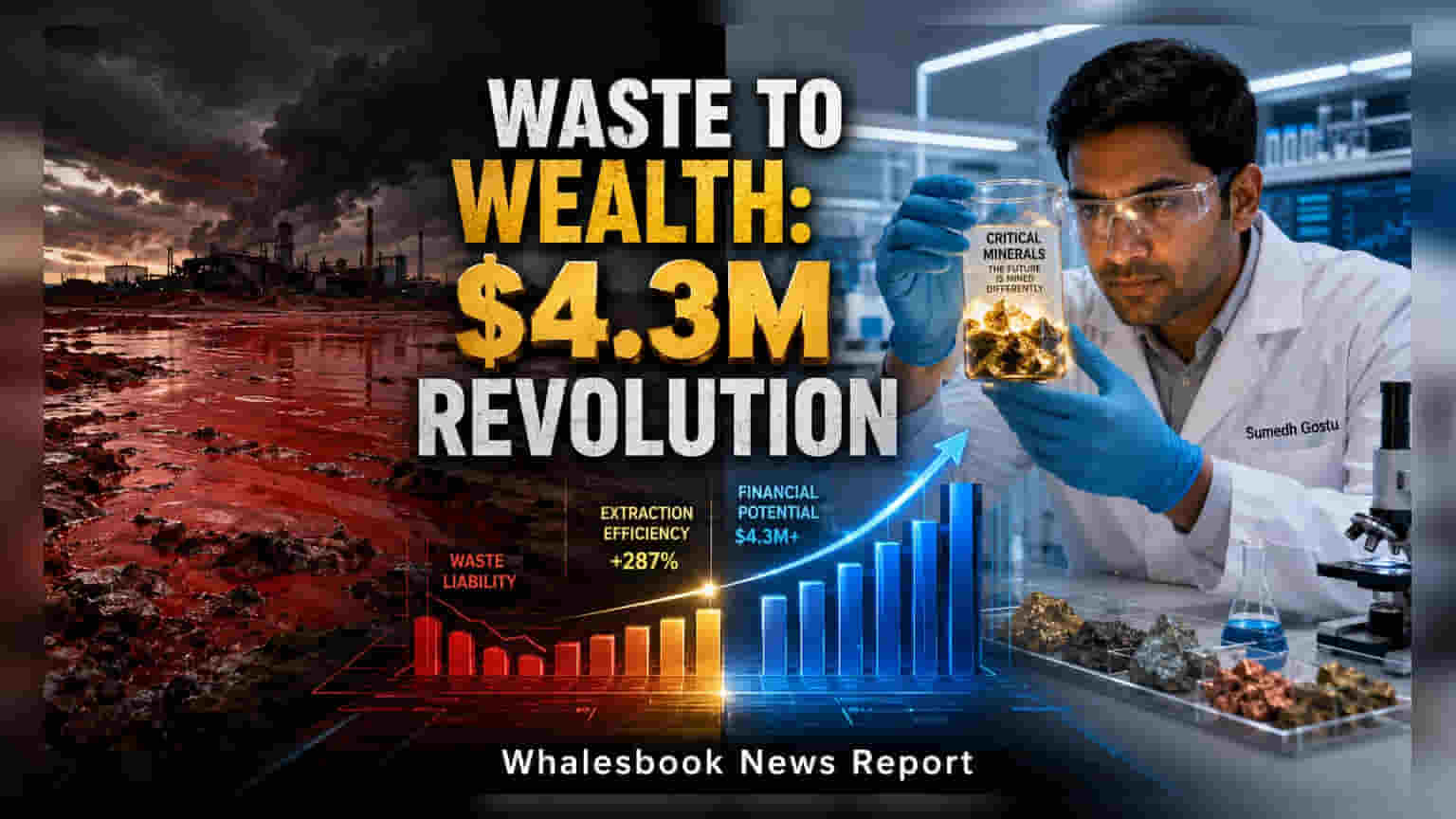
Fast Metals has secured $4.3 million in pre-seed funding to commercialize a process for extracting titanium and rare earth elements from aluminum refining waste. The startup aims to turn red mud into a source of profit by using a second industrial waste stream for cost-effective mineral separation. Investors should track the company’s ability to scale this process from its initial contract of one ton per week to full commercial production.
Fast Metals has secured $4.3 million in pre-seed funding to advance its technology for extracting critical minerals from red mud, a common waste byproduct of aluminum production. The funding round included participation from New Climate Ventures, Azolla Ventures, Astor Swiss, and the Founders Factory accelerator backed by Rio Tinto. This investment is directed toward scaling a proprietary chemical process that aims to recover valuable materials like titanium and rare earth elements from industrial stockpiles.
The Economic Model of Waste Recovery
Red mud is produced in massive quantities globally during the refining of bauxite into aluminum. The material is primarily composed of iron oxide, which gives it a distinctive red color. Extracting individual minerals from this substance has historically been difficult and expensive, leading to billions of tons being stored in landfills. Fast Metals aims to change this by incorporating a second industrial waste stream into its separation process. According to the company, the iron recovered during this process helps cover operating costs, while the high-value minerals like titanium and scandium contribute to overall profitability.
Scaling Operations and Commercial Contracts
The company, founded by Sumedh Gostu, has established a commercial agreement with mineral processor Metalox. Under this contract, Fast Metals plans to start processing one ton of red mud and refinery waste per week later this year. This pilot phase is a critical step for the firm to prove that its laboratory-developed methods can function effectively at a larger industrial scale.
Risks and Investor Considerations
While the technology addresses a significant environmental and resource challenge, the transition from pilot testing to large-scale commercialization involves execution risks. Potential investors should note that the success of this model depends on the startup's ability to maintain low operating costs while ensuring consistent, high-purity output of titanium and rare earth elements. Furthermore, the company will need to manage the logistics of sourcing enough red mud and secondary waste to maintain continuous operations. Future updates on the project's output, cost management, and the success of the Metalox partnership will be important indicators of the company’s path toward becoming a scalable mineral supplier.