

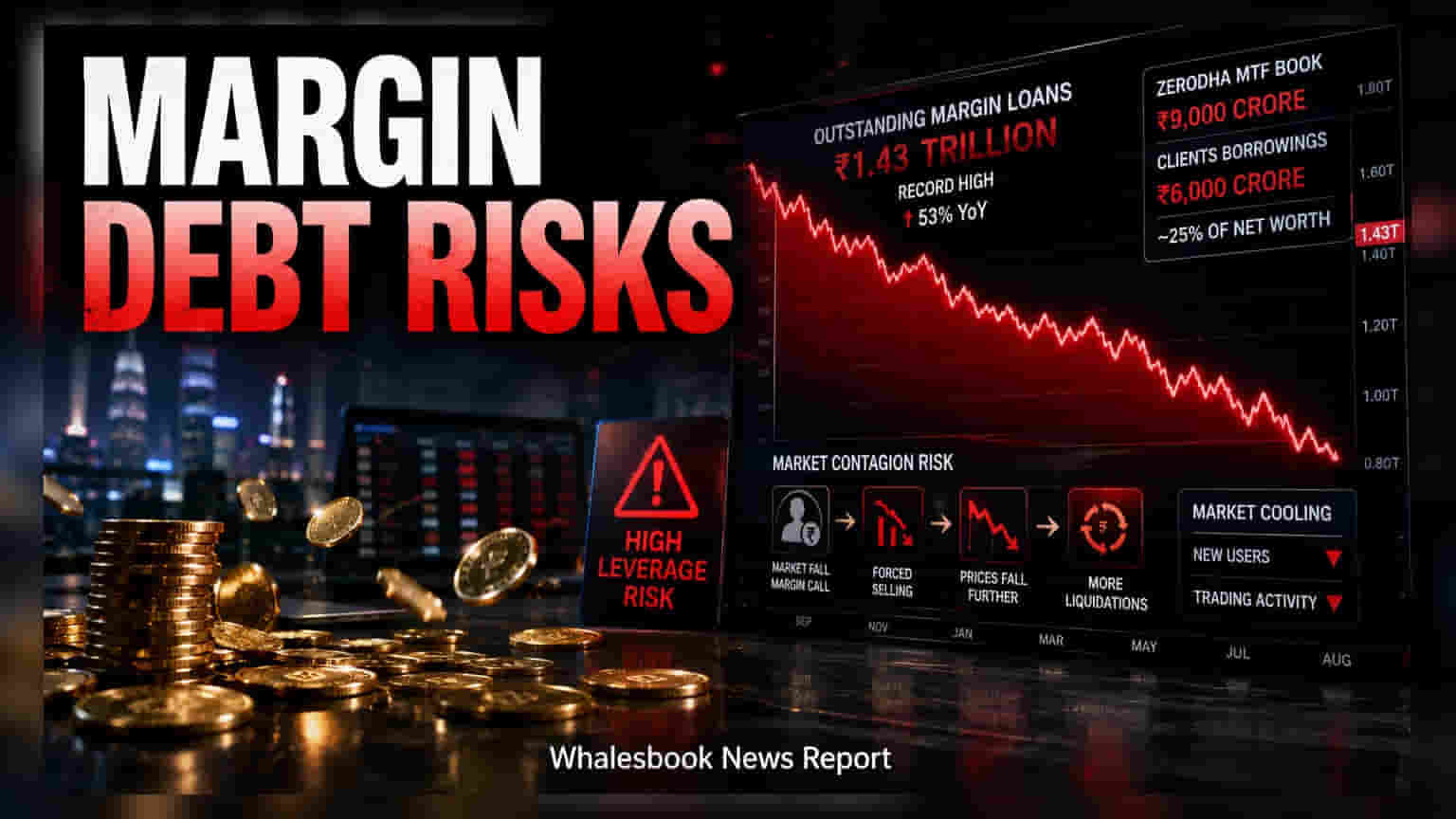
Zerodha founder Nithin Kamath has warned that the rapid rise in margin trading could lead to systemic contagion. With industry-wide margin loans hitting ₹1.43 trillion, Kamath highlighted the dangers of leveraged positions as market activity cools. Zerodha's own margin trading book now equals 25% of its net worth, raising concerns about potential forced selling if markets face a sharp correction.
Nithin Kamath, the founder of India’s largest retail brokerage Zerodha, has issued a public warning regarding the systemic risks tied to the rapid growth of Margin Trading Facilities (MTF). In a recent letter marking the firm’s 16th anniversary, Kamath identified the increasing reliance on borrowed money for stock trading as a worrying development that could threaten financial stability if market conditions turn volatile.
The concern arises as outstanding margin loans across the Indian stock market have soared to a record ₹1.43 trillion, marking a 53% surge over the previous year. Margin trading allows investors to buy more stocks than their current cash balance permits, with the brokerage providing the additional funds. While this generates interest income for brokers, it creates hidden dangers for the broader market.
At Zerodha, the margin trading book has grown to approximately ₹9,000 crore, with clients borrowing around ₹6,000 crore. This borrowed amount represents roughly 25% of the brokerage's total net worth. Although this business segment currently contributes about 10% to Zerodha's revenue, Kamath emphasized that it is not a suitable tool for the average retail investor, as leverage can magnify losses just as easily as it amplifies gains.
The primary risk highlighted by the brokerage chief is the potential for a chain reaction, often called market contagion. In a rising market, leverage helps traders earn more, but during a sharp market crash, it can lead to disaster. If the value of the pledged shares drops, brokers must demand more cash from clients to cover the difference. If clients cannot pay, the broker is forced to sell those shares immediately to protect their capital.
If a significant number of leveraged investors are forced to sell their holdings simultaneously, it can push stock prices down further, triggering a cycle of more forced liquidations. This feedback loop can spread financial stress from individual portfolios to the wider market, regardless of the underlying quality of the companies being sold.
Beyond the risks of debt, Kamath noted a definitive cooling in the Indian stock market. The aggressive influx of new users and the high trading activity that defined the industry over the past few years have begun to moderate. As the market enters a calmer phase, the focus for brokerages is shifting from chasing growth to managing the risks built up during the bull run.
For investors, the key monitorable will be how brokerages and their clients handle potential market volatility. The danger remains that portfolios built on high leverage may be unable to survive a sustained downturn without triggering widespread selling, a factor that market participants are increasingly cautious about as valuations remain high.