

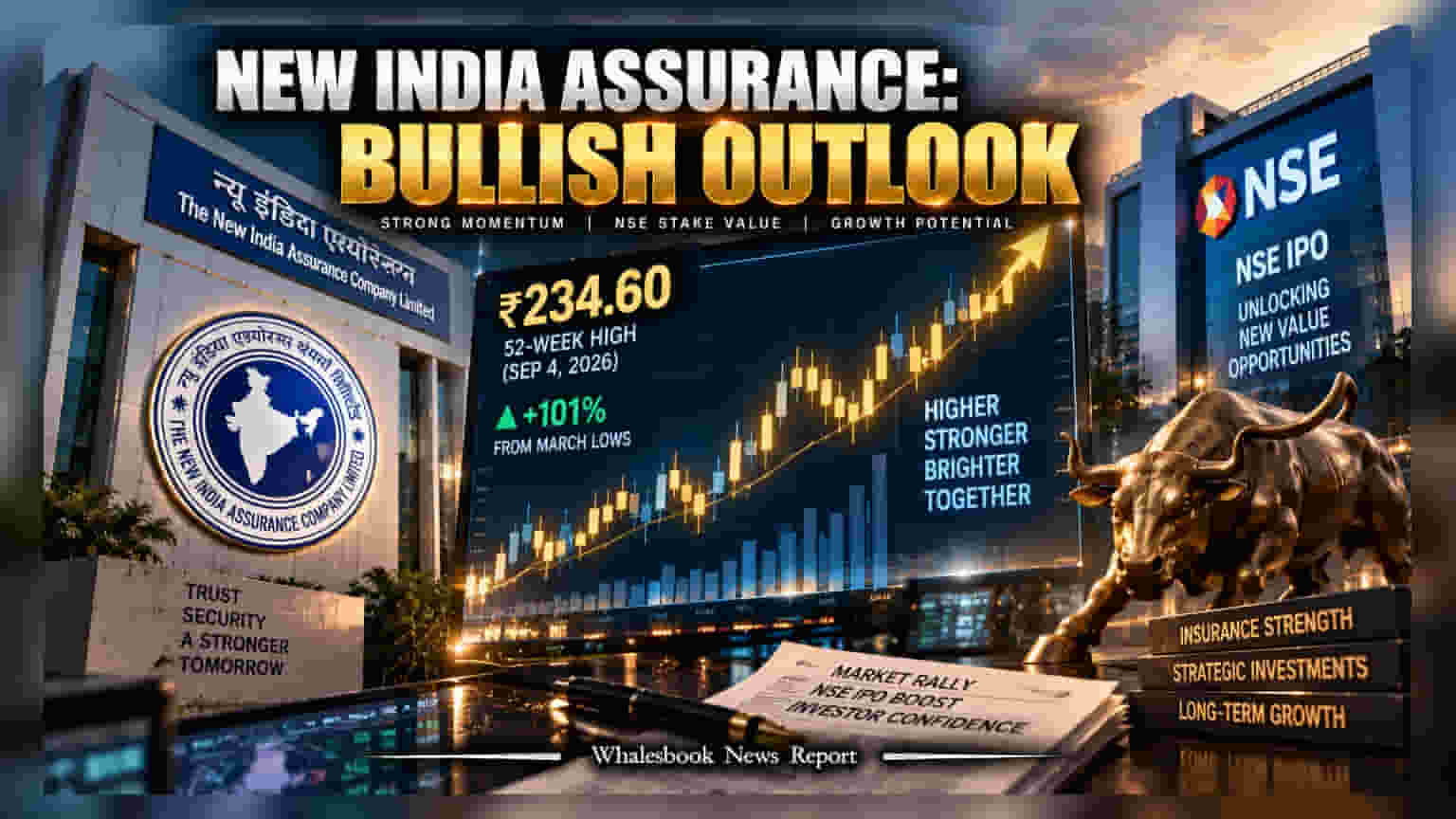
The New India Assurance Company shares recently touched a 52-week high of ₹234.60, driven by investor optimism over its 1.42% stake in the National Stock Exchange (NSE). While the prospect of an NSE IPO has fueled the stock, investors should note the company’s recent Q1 loss and the risks linked to the IPO's timing.
The New India Assurance Company has seen a sharp rally in early September 2026, with the stock price hitting a 52-week high of ₹234.60 on September 4. This movement marks a significant turnaround, as the share price has climbed roughly 101% from its lows earlier in March 2026. This sudden interest from the market is primarily linked to the company’s investment in the National Stock Exchange of India (NSE).
The NSE Connection and IPO Expectations
The driving force behind the recent market enthusiasm is the insurer's 1.42% equity stake in the NSE. As the NSE prepares for its much-anticipated public listing, investors are betting on the potential value this stake could unlock for The New India Assurance. The company is set to participate as a selling shareholder in the NSE’s offer for sale. For shareholders, this means a potential cash windfall if the NSE goes public at a high valuation. This speculative sentiment has dominated the recent trading volumes, drawing attention to the stock’s growth potential relative to its long-term investment portfolio.
Financial Performance vs. Market Sentiment
While the excitement surrounding the NSE listing is clear, it is important for investors to look at the insurer's operational performance. In its financial results for the first quarter of the 2026-2027 fiscal year, the company reported a net loss of ₹242.65 crore. This loss highlights that while the company's investment portfolio—specifically the stake in the NSE—is generating positive sentiment, the core insurance business continues to face significant operational challenges. A company’s long-term stock performance is typically tied to its ability to generate profit from its primary business, and the current gap between market optimism and these financial results is a key factor to watch.
Market Risks and Investor Monitorables
The current price movement is heavily tied to the NSE IPO. This creates a specific risk for investors: if the IPO is delayed, or if the market conditions result in a lower-than-expected valuation for the exchange, the primary reason for the current rally could fade. Furthermore, as a government-promoted entity with the state holding approximately 86% of the equity, the company is also subject to broader regulatory pressures and market volatility inherent in the public sector insurance space.
Investors may want to focus on three key updates in the coming months. First, the official filing and timeline regarding the NSE IPO will be the most critical trigger for the stock's valuation. Second, the company’s ability to improve its core operational margins and move toward profitability in upcoming quarterly results will determine its fundamental strength, regardless of the one-time gain from the NSE stake. Finally, watching for any changes in the regulatory environment for insurance companies will be essential, as these can affect the overall health and investment portfolio value of the firm.