 Whalesbook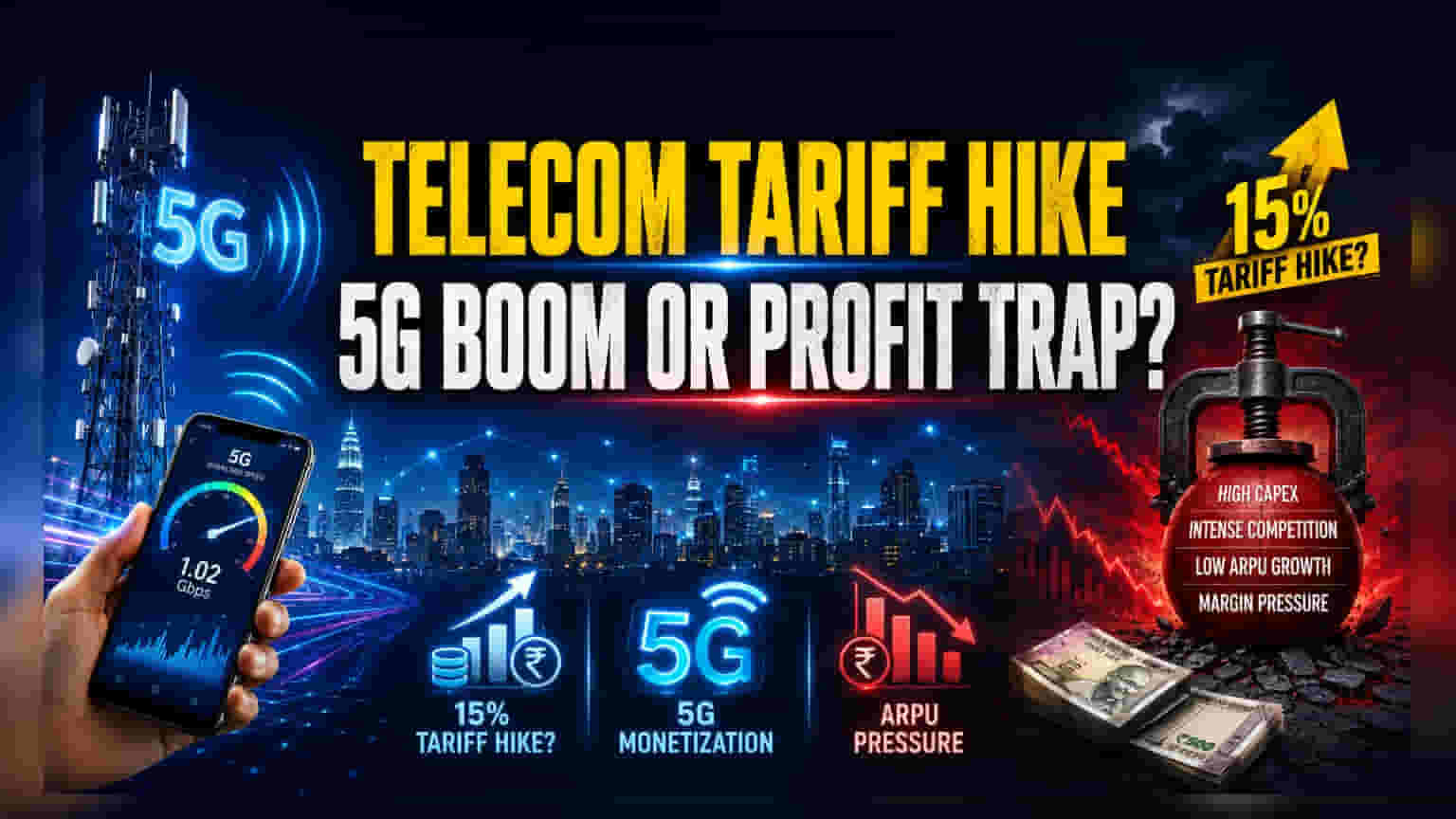


The Valuation Gap and Tariff Expectations
The Indian telecommunication sector stands at a critical juncture as of June 2026. While brokerage firms anticipate a 15% tariff hike by the second quarter of the fiscal year to revitalize stagnant growth, market participants remain cautious. The sector, dominated by Bharti Airtel (P/E ~38) and Reliance Industries (P/E ~22), has struggled to translate massive capital expenditure into commensurate earnings growth. Despite Bharti Hexacom trading at a higher valuation (P/E ~43), the broader industry is facing a reality check: the era of aggressive, subsidized data expansion is hitting a wall of diminishing returns.
The 5G Monetization Bottleneck
The narrative surrounding 5G has shifted from rollout speed to the harsh reality of monetization. While India has achieved near-universal 5G coverage with over 5 lakh base stations, operators are trapped in a competitive deadlock. For the past two years, 5G services have been offered as an undifferentiated upgrade to 4G, effectively cannibalizing the potential for premium pricing. Industry data suggests that the push for 5G monetization via network slicing and enterprise solutions remains in its infancy. Major players are now forced to transition toward outcome-oriented governance, yet the absence of high-paying premium subscribers limits the impact of these strategies on Average Revenue Per User (ARPU).
Structural Weaknesses and The Bear Case
A cynical view of the sector reveals deep-seated risks. Unlike more efficient, capital-light industries, telecom remains a capital-intensive game where the largest operators are forced to keep pace with astronomical infrastructure maintenance costs. Regulatory uncertainty further complicates the outlook, as the Telecom Regulatory Authority of India (TRAI) continues to deliberate on net neutrality and network usage fee policies. Vodafone Idea, despite intermittent relief on adjusted gross revenue dues, continues to struggle with a shrinking subscriber base and limited ability to compete on network quality, highlighting the potential for a two-tier industry where smaller players are gradually pushed to the periphery.
Future Outlook and Sector Resilience
Looking toward late 2026 and beyond, the focus will stay on pricing discipline. If operators successfully implement a 15% hike without significant churn, the sector may see double-digit revenue growth. However, if the current hesitation to break the cycle of 'free unlimited' 5G persists, margins will likely face continued compression. Investors should monitor the gap between subscriber growth and actual data monetization, as the industry's ability to pivot from volume-based metrics to value-based profitability will define long-term performance.