

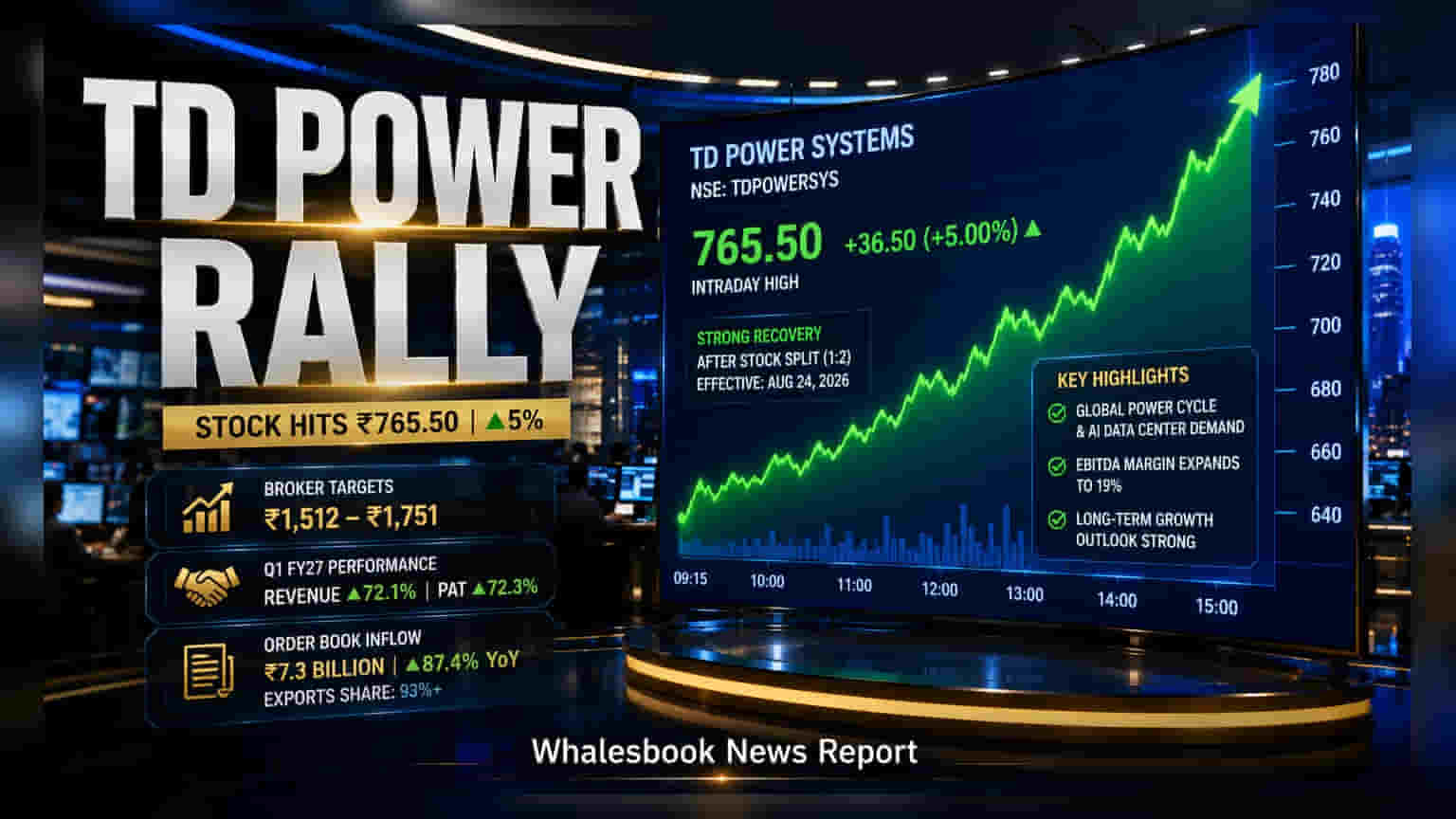
TD Power Systems shares rose 5% on Thursday as analyst sentiment remained positive following strong quarterly results. The stock, which recently underwent a 1:2 split, is gaining attention for its position in the global AI data center power market. Investors are tracking the company's export-led order growth despite potential execution risks.
TD Power Systems shares gained 5% during Thursday's trading session, reaching an intraday high of Rs 765.50 on the National Stock Exchange. This movement marks a recovery from the previous two sessions and comes shortly after the company implemented a 1:2 stock split, which became effective on August 24, 2026, adjusting the share price to a new range.
Brokerage Outlook and Market Sentiment
Recent reports from brokerages have highlighted an optimistic view of the company’s future earnings potential. Monarch Networth Capital has revised its price target for the stock to Rs 1,512, citing the company’s strategic role in the global power cycle, particularly for AI data centers. While some analyst reports maintain a cautious 'Hold' rating, the consensus remains focused on the firm's growth trajectory. Another brokerage, Anand Rathi, has also provided a favorable 'Buy' rating with a target price of Rs 1,751, underscoring broader confidence in the business model.
Strong Financial Performance
The company’s financial health for the first quarter of fiscal year 2027 shows significant growth. Revenue increased by 72.1% year-on-year to Rs 6,401 million, while profit after tax climbed 72.3% to Rs 863 million. A key driver for these numbers has been the expansion of EBITDA margins to 19%, helped by operating leverage. The order book remains a focal point for the market, with the company reporting a Rs 7.3 billion inflow for the quarter, an 87.4% increase from the previous year. Exports account for over 93% of these inflows, highlighting the company’s reliance on international markets rather than domestic demand.
Strategic Position and Risks
TD Power is currently benefiting from the rising global demand for gas engines and turbines, which are critical for the power generation needs of data centers and grid stabilization. However, investors should be aware of specific business risks. The company operates with long project manufacturing cycles, typically spanning 18 to 20 months, which introduces execution and delay risks. Additionally, operational data indicates working capital pressure, notably due to a build-up in trade receivables.
Looking ahead, the market will monitor how the company manages these long-cycle projects and whether it can maintain its 19% profit margins amidst fluctuating commodity prices. Sustained export demand, particularly for AI-related infrastructure, remains the primary monitorable for long-term growth.