

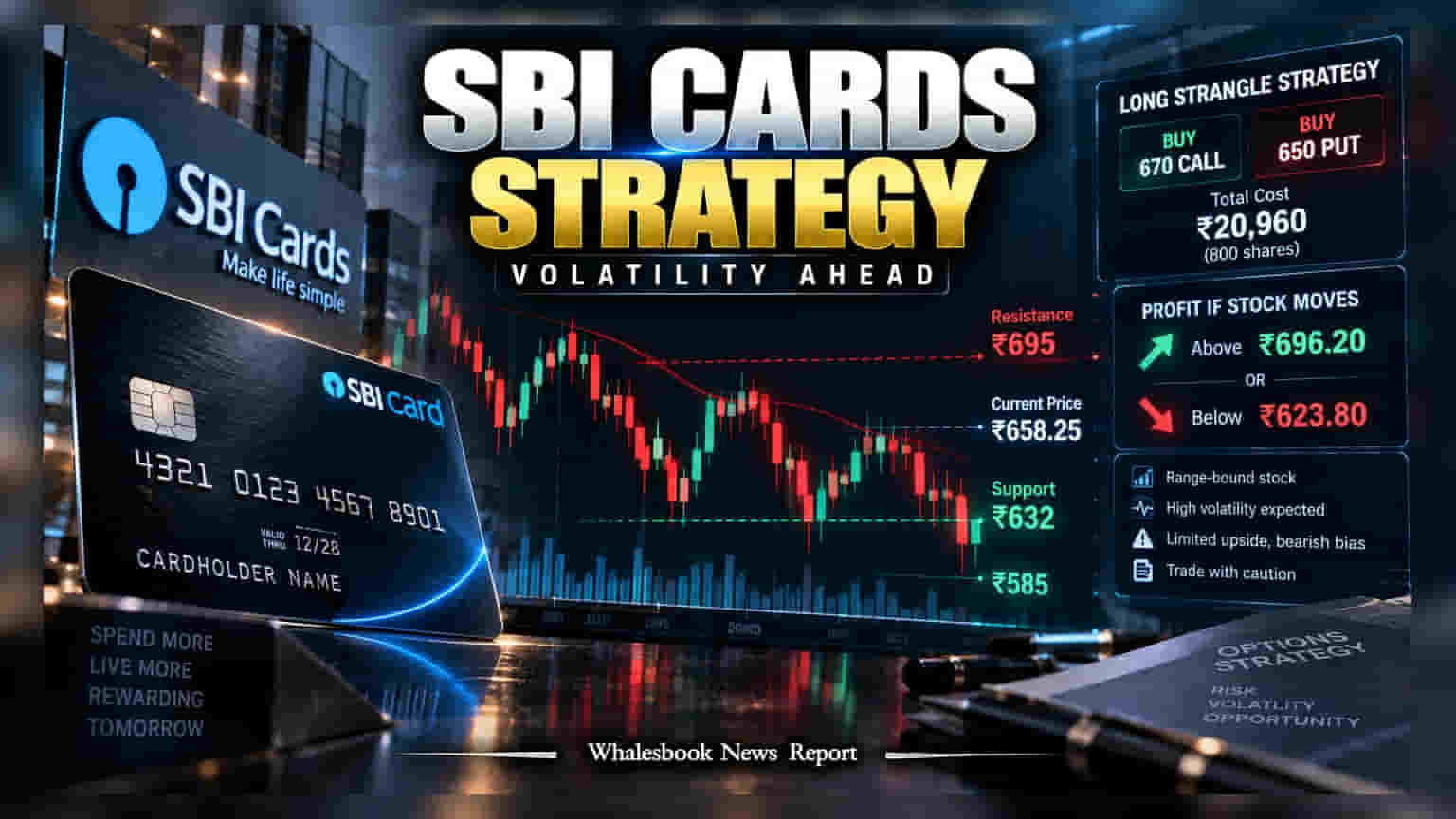
Analysts have suggested a 'long strangle' options strategy for SBI Cards as the stock faces bearish technical pressure at the ₹658.25 level. This strategy aims to profit from potential price swings, with a capped risk of ₹20,960 per lot. Investors are closely monitoring key breakout levels following recent corporate updates, including the cancellation of a scheduled analyst meeting.
SBI Cards and Payment Services is currently trading in a range-bound phase, with recent technical analysis highlighting bearish pressure on the stock. At a current price of ₹658.25, market analysts have proposed a 'long strangle' options strategy as a way to potentially profit from anticipated volatility. This strategy involves buying both a call option and a put option simultaneously. The goal is for the stock price to move sharply in either direction—either rising significantly above a specific resistance level or falling below a support level—to generate profit.
The proposed strategy involves purchasing a 670-call and a 650-put. For a market lot size of 800 shares, the cost to initiate this position is ₹20,960. This amount represents the maximum potential loss for the trader if the stock price remains trapped between the strike prices until the contract expires. For the trade to become profitable, analysts point to the need for the stock to breach the upper threshold of ₹696.20 or drop below the lower support level of ₹623.80. If the stock remains within the current, narrow trading range, the strategy may result in a loss of the capital paid for the options.
Investors are observing this technical setup against a backdrop of recent company news. SBI Cards officially notified the stock exchanges regarding the cancellation of an analyst and investor meeting previously scheduled with Morgan Stanley for August 28, 2026. While company-specific developments like this can influence sentiment, the stock has also shown reduced trading activity, with open interest dropping from 2.24 crore shares to 2.15 crore shares over the last ten days. Additionally, the company recently reported an improved ESG score of 80.2 for the fiscal year 2026, up from 79.7 in the previous year, though market participants remain focused on the stock's short-term price trend.
Technical indicators suggest that while the stock has immediate support at ₹632 and a stronger floor at ₹585, upside movement appears limited with resistance anchored at ₹695. The risk for traders utilizing this strategy is that options trading involves high leverage and the possibility of losing the entire premium paid if the expected breakout does not occur. Given the bearish technical posture and recent market volatility, the primary monitorable for investors will be whether the stock sustains a clear directional breakout beyond the identified resistance or support levels in the coming two weeks.