

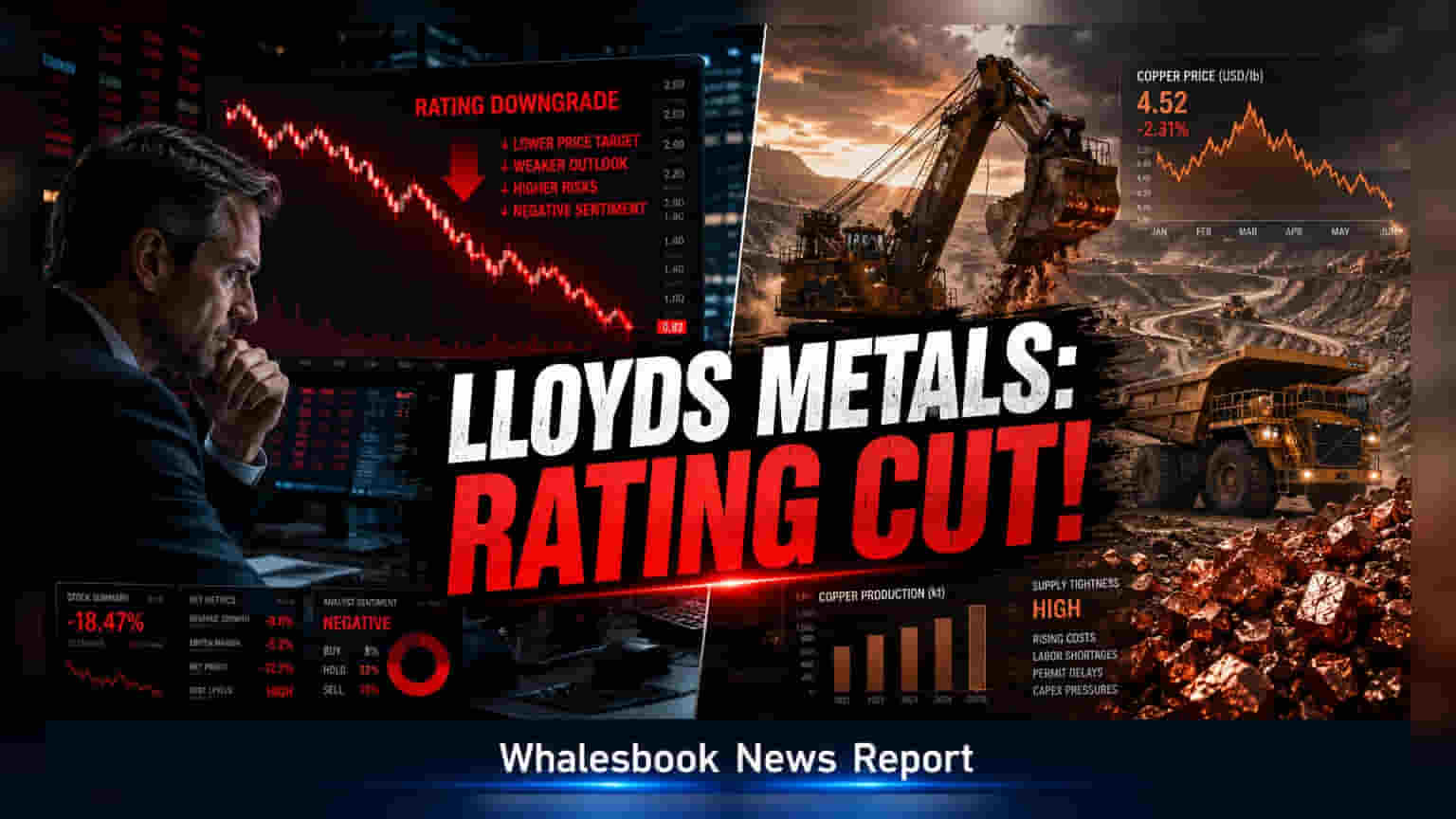
Nomura has downgraded Lloyds Metals and Energy from 'Buy' to 'Neutral', citing that current stock valuations have already priced in much of the expected growth. The brokerage reduced its price target to ₹1,950. While the company reported a strong first quarter driven by iron ore operations, rising operational costs and scaling challenges in its copper segment led the firm to adjust its outlook.
Shares of Lloyds Metals and Energy saw selling pressure on August 12, 2026, dropping 4-5% during intraday trade after Nomura downgraded the stock rating to 'Neutral' from its previous 'Buy' rating. The brokerage firm noted that the stock's recent price appreciation suggests that market expectations for future growth are now largely priced in, limiting the potential for significant further upside in the near term.
Nomura’s decision includes a reduction in the company's price target to ₹1,950, down from the previous ₹2,050. This change follows a revision in the valuation multiple for the company’s non-ferrous business, which was trimmed from 14x to 12x. The brokerage firm lowered its EBITDA estimates for the fiscal years 2027 through 2029 by 2-3% to account for updated commodity price assumptions.
Despite the downgrade, the company’s core business performance remains robust. In the first quarter of fiscal year 2027, Lloyds Metals reported a consolidated EBITDA of ₹27.8 billion, a 9% increase over the previous quarter, beating broker estimates by 10%. Growth in this segment was supported by higher iron ore realisations and a 58% year-on-year surge in iron ore volumes to 5.46 million tonnes. The company has also successfully shifted its product mix, with higher-margin value-added products now contributing 41% of the total, compared to 28% in the preceding quarter.
However, the non-ferrous and copper business segment has faced operational hurdles. While commercial production has commenced, the copper division reported an EBITDA loss of $2.6 million for the quarter. This was driven by an EPT shutdown and rising expenses for key inputs like diesel and sulphuric acid, which the brokerage attributed to broader supply chain impacts resulting from the crisis in West Asia.
The future performance of the stock will depend on the company’s ability to manage these operational challenges. Investors may track the pace of the copper mine ramp-up, as successful scaling and commissioning of these assets remain key factors for the company’s long-term growth. Additionally, volatility in commodity prices will continue to influence profitability, and shareholders will be monitoring whether the company can control costs and improve margins in its newer business segments.