

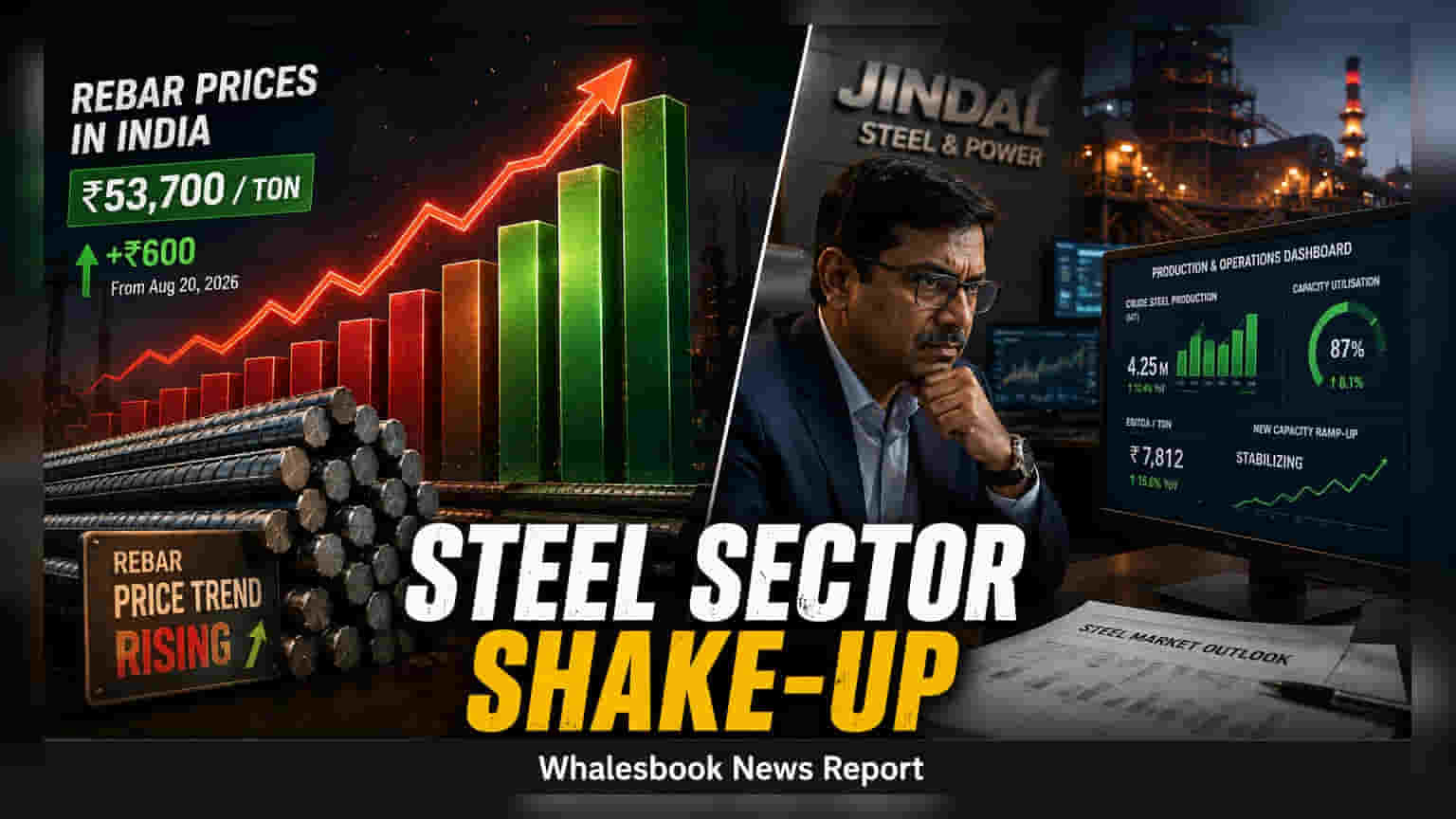
Brokerage firm Nomura has identified Jindal Steel & Power as a tactical investment opportunity, citing a recent recovery in domestic rebar prices. The firm maintains its positive stance on the Indian steel sector, keeping 'Buy' ratings on Tata Steel and JSW Steel due to their growth prospects and ability to manage operational costs.
Nomura Research has issued a fresh outlook on the Indian steel sector, highlighting Jindal Steel & Power as a preferred tactical pick. The brokerage suggests that recent trends in domestic steel prices, particularly for long products like rebar, create a favorable setup for the company. This view is supported by the expectation that the company's operational efficiency will improve as its newly commissioned capacities stabilize.
Why Jindal Steel Stands Out
Nomura’s focus on Jindal Steel as a tactical opportunity stems from its significant exposure to long steel products, which are heavily used in construction and infrastructure. As of August 21, 2026, domestic rebar prices showed signs of recovery, rising by Rs 600 per ton to reach Rs 53,700 per ton. Similarly, hot-rolled coil (HRC) prices increased by Rs 500 per ton to Rs 58,550 per ton. While Jindal Steel previously saw higher operating costs due to the timing of its capacity expansions, the brokerage expects these metrics to normalize, allowing the company to benefit from better operational leverage.
Outlook for Tata Steel and JSW Steel
While Jindal Steel is highlighted for its tactical potential, Nomura remains broadly positive on other major industry players. The brokerage has maintained its 'Buy' ratings on both JSW Steel and Tata Steel. JSW Steel is viewed as having the strongest volume growth potential, with projections pointing toward steady growth in both its standalone and consolidated operations through the current fiscal year. Tata Steel, meanwhile, is expected to maintain stable costs and moderate volume growth, positioning it as a steady participant in the sector.
Sector Trends and Investor Risks
Nomura believes the Indian steel industry is well-positioned to navigate near-term challenges. The brokerage anticipates that steel producers will implement planned price hikes late in the current fiscal year or early next year. These increases are expected to be sufficient to offset potential cost pressures, such as those arising from supply chain complexities related to the West Asia crisis.
However, investors should remain aware of potential risks. The steel industry is sensitive to global commodity price fluctuations, particularly in the cost of coking coal and iron ore, which directly impact profit margins. Additionally, the sector remains vulnerable to global market volatility and potential changes in government trade policies or import duties. For companies like Jindal Steel, a key monitorable remains the successful and timely ramp-up of new production capacity. Investors may also track how efficiently these companies manage their debt levels while pursuing expansion, as well as the actual impact of future price increases on demand.