

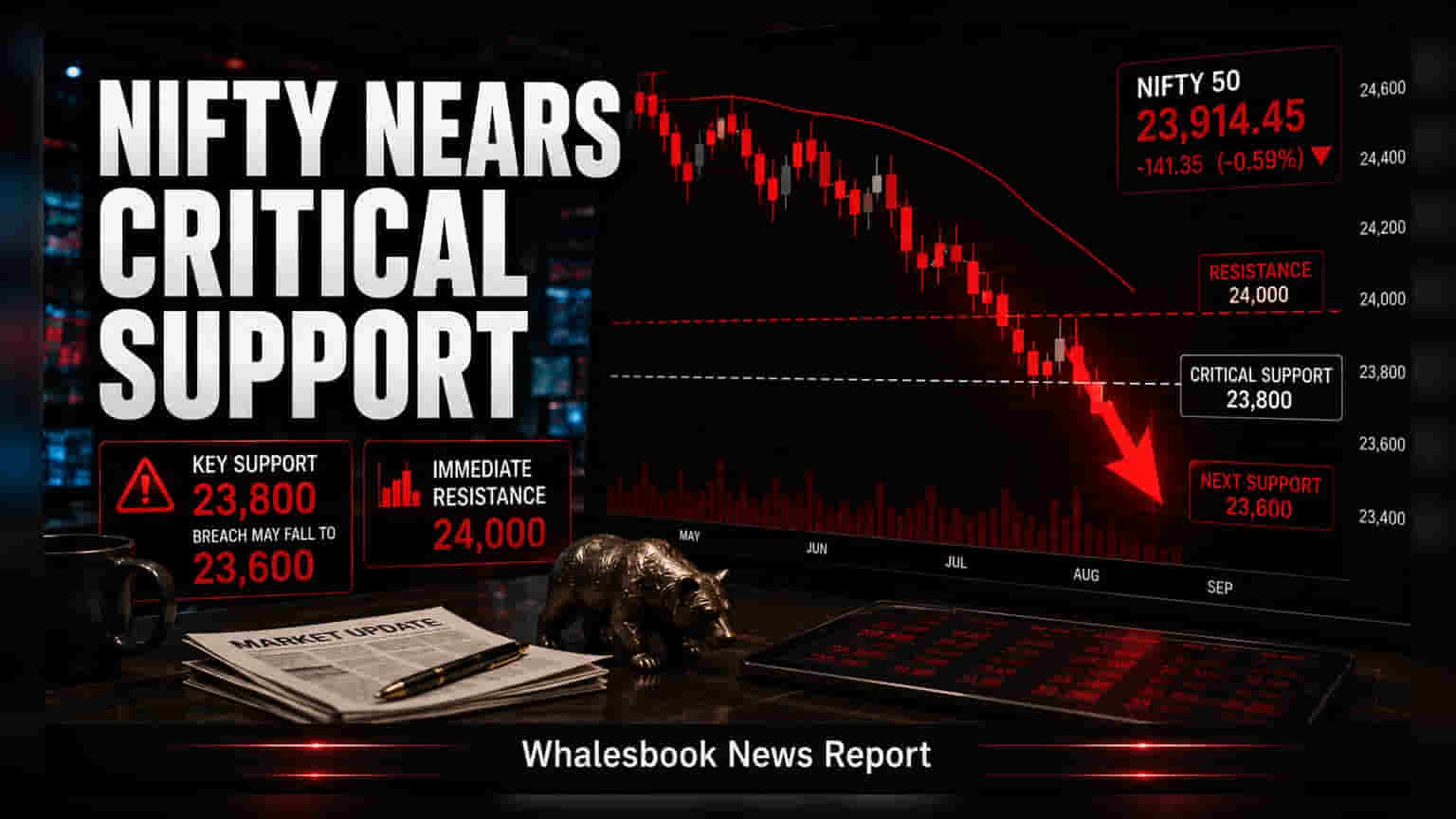
The Nifty 50 closed at 23,914 as geopolitical tensions in West Asia pushed Brent crude prices toward $95 per barrel. Investors are now watching the 23,800 support level, which market analysts say is critical to prevent further decline toward 23,600.
Indian equity markets faced a sharp correction on Wednesday, with the Nifty 50 closing at 23,914.45 as global investor sentiment soured due to escalating tensions in West Asia. The rise in geopolitical instability has caused Brent crude oil prices to climb toward the $95 per barrel mark, renewing fears that higher energy costs will fuel inflation and limit the scope for interest rate cuts in the near term.
Critical Support Levels to Watch
Market participants are currently focused on technical support levels to gauge the next direction of the index. Analysts have highlighted 23,800 as a crucial threshold. If the Nifty fails to maintain this level, technical data suggests the index could face further pressure, potentially testing the 23,600 mark. Conversely, any attempt at recovery will likely face immediate resistance near the 24,000 level.
Economic Impact of Rising Oil Prices
For the Indian economy, crude oil is a major import cost. When prices rise significantly, it impacts the country’s trade balance and can weigh on the profit margins of companies that rely heavily on fuel or logistics. This macro pressure, combined with a broader 'risk-off' environment, has led to selling in sectors that had previously led the market rally, including Information Technology, Auto, and Banking. The widespread nature of the sell-off indicates that investors are currently choosing to prioritize cash and safer assets rather than adding to positions in growth-oriented sectors.
Sectoral Divergence and Market Sentiment
The defensive shift in market sentiment is evident from the contrast between different sectors. While growth sectors faced heavy selling, the energy sector showed relative resilience, as oil companies often benefit from higher crude prices. However, the overall decline in small-cap and mid-cap indices suggests that investors are becoming more cautious about liquidity and valuation risks. The next phase of the market trajectory will depend heavily on whether the geopolitical situation stabilizes and how crude oil prices react in the coming days.
Investors should monitor the 23,800 support level closely as the primary indicator of whether the current selling trend will continue or if the index can find a base.