 Whalesbook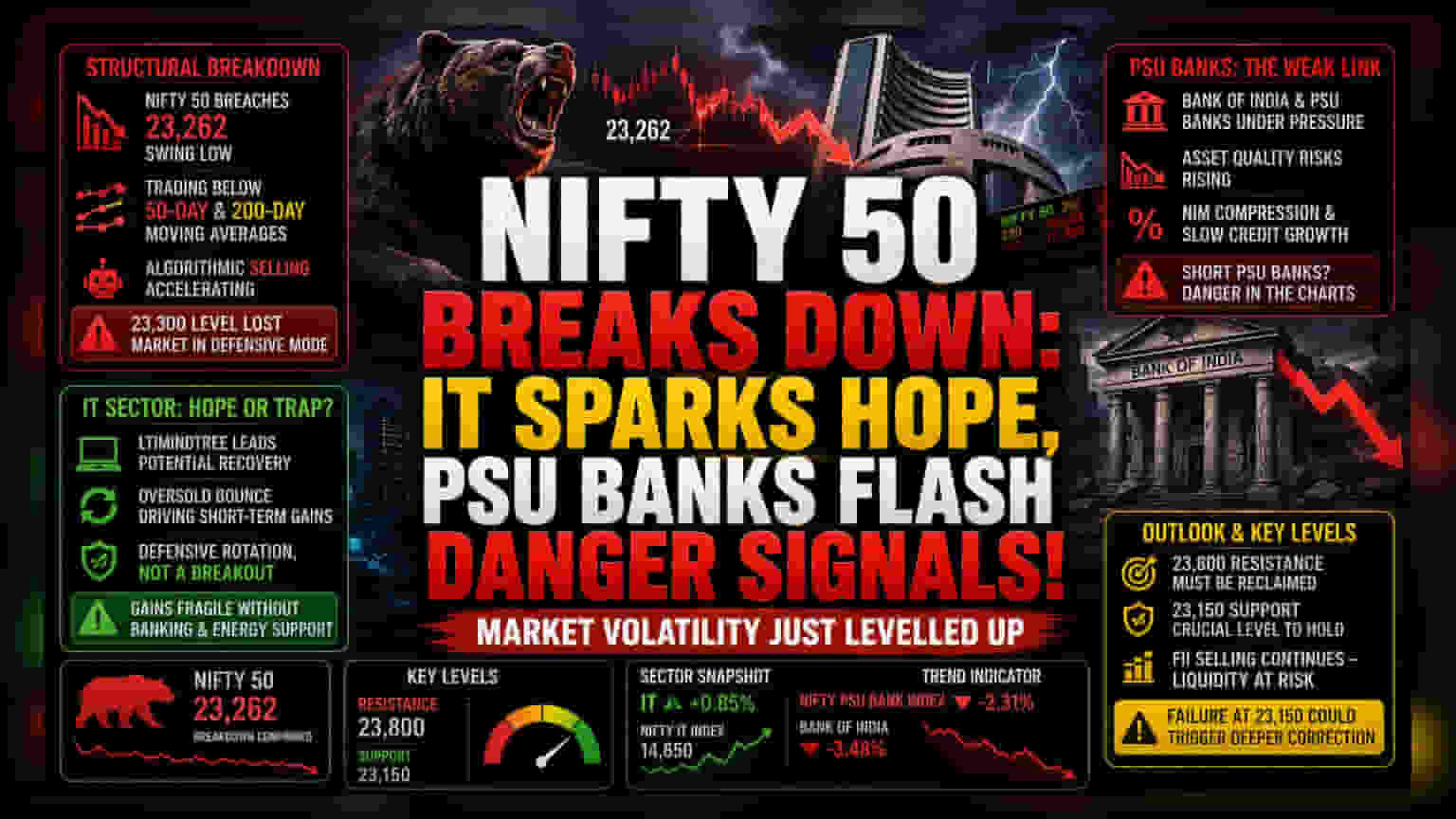


The Structural Breakdown
Market participants are currently grappling with a deterioration in the Nifty 50's technical health. The breach of the 23,262 swing low is not merely a momentary dip; it signifies that the index has lost its footing across all major short-term and long-term moving averages. Institutional algorithmic selling has intensified as the index slipped below its 50-day and 200-day averages, a phenomenon that historically precedes extended periods of volatility. The inability of the index to maintain its 23,300 handle suggests that the current market environment is driven more by capital preservation than by accumulation.
IT Sector: A Defensive Rotation or Value Trap?
The reliance on Information Technology to prop up the benchmark index reflects a tactical rotation rather than a fundamental breakout. While sector-specific strength in companies like LTIMindtree indicates a potential rebound from oversold conditions, the broader IT index remains sensitive to currency fluctuations and global spending slowdowns. This defensive pivot highlights a market searching for stability rather than growth. Investors are effectively parking capital in high-beta IT stocks, betting that historical oversold levels will trigger a mean reversion. However, without a synchronized rally in the banking and energy sectors, these gains remain fragile and highly susceptible to macro-led reversals.
The Forensic Bear Case: PSU Bank Vulnerability
Behind the headline index volatility lies a specific concern regarding Public Sector Undertaking banks, most notably represented by Bank of India. The persistent technical weakness in the PSU space serves as a leading indicator of liquidity drying up in mid-cap segments. Unlike private lenders that have benefited from higher net interest margins, PSU banks face mounting pressure from potential asset quality slippage and a cooling credit growth cycle. Shorting these instruments at current levels reflects a bet that the cost of capital will continue to weigh on margins. Management teams within this sector are navigating a tightening regulatory environment, and any disappointment in quarterly provision coverage ratios could catalyze a sharper drawdown in share prices, effectively neutralizing any sentiment gains made in the IT sector.
Outlook and Tactical Risks
The market narrative remains tethered to the 23,800 resistance level. Until this threshold is reclaimed with high volume, the path of least resistance remains downward. Future performance hinges on whether foreign institutional investors shift from net sellers to net buyers or if the current local accumulation phase proves to be a liquidity trap. If the 23,150 support level fails to hold, the next leg of the correction could target liquidity pockets significantly lower, forcing leveraged traders to liquidate positions regardless of individual stock fundamentals.