

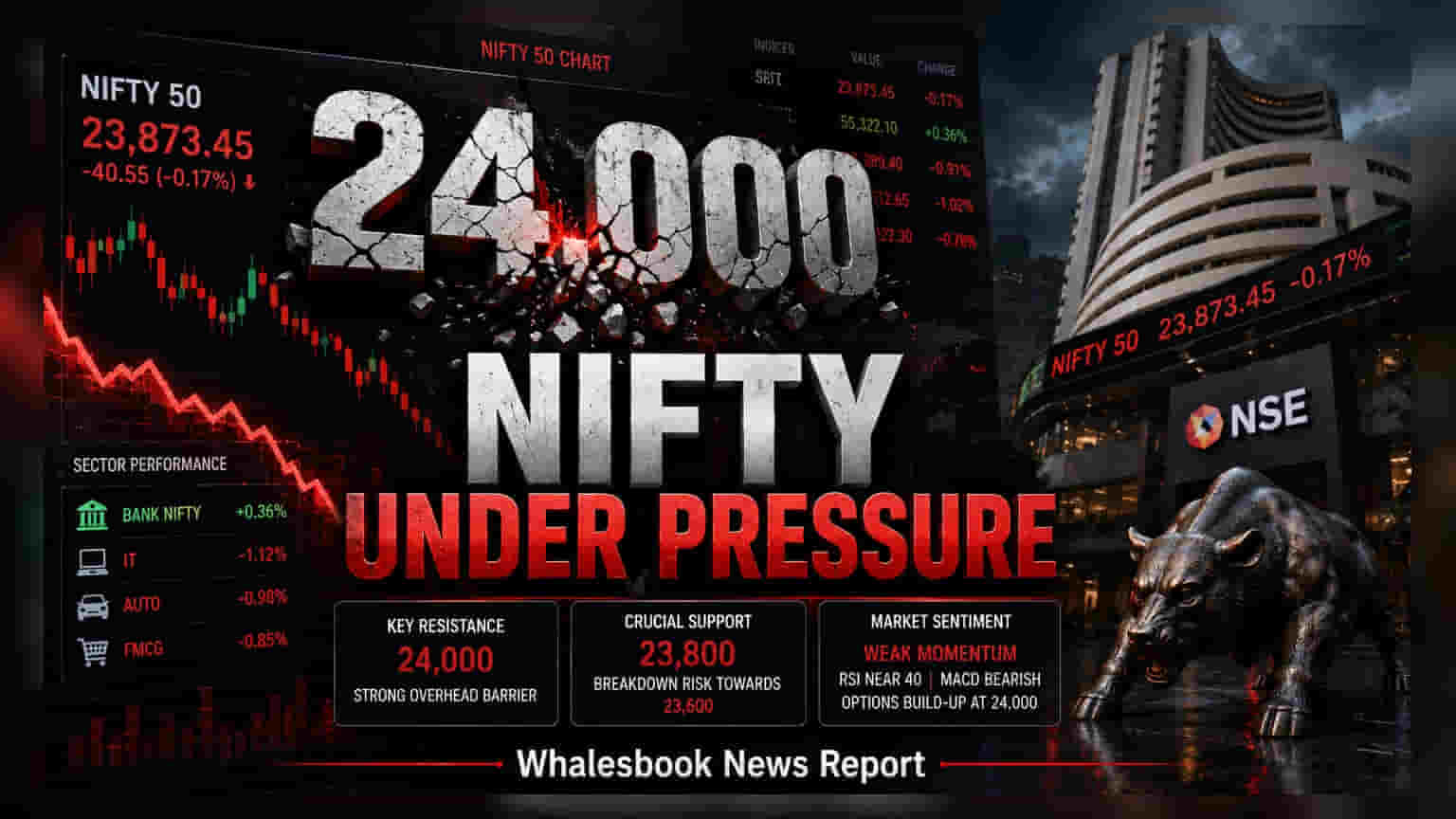
Nifty 50 dipped to 23,873.45 on September 3, 2026, struggling to stay above the 24,000 mark. While technical signs point to selling pressure, Bank Nifty managed to gain 0.36%, highlighting a divergence in market performance. Investors are now watching sectoral trends closely, as weakness in IT and Auto sectors contrasts with gains in financial stocks.
The Nifty 50 closed at 23,873.45 on September 3, 2026, marking a 0.17% decline as the index faced difficulty sustaining levels above the psychological 24,000 mark. This level has effectively shifted from being a support zone to a key overhead barrier, where selling interest remains high. The recent trading pattern reflects a cautious mood among market participants, with the index unable to maintain its footing during intraday attempts at recovery.
Technical Hurdle at 24,000
Technical indicators continue to signal a weak structure for the broader market. The daily Relative Strength Index (RSI), which helps gauge momentum, is hovering near the 40 mark, reflecting a lack of buying strength. Additionally, the Moving Average Convergence Divergence (MACD) remains in a pattern that suggests sellers currently hold more influence than buyers. Market data confirms that options trading activity is concentrated around the 24,000 strike price, meaning many investors are positioning their trades with the expectation that the index will face resistance in this area for the time being.
Sectoral Divergence
While the main index faced pressure, there was a clear split in performance across different sectors. Bank Nifty showed relative resilience, closing with a gain of 0.36% as banking heavyweights provided some stability to the market. In contrast, other key sectors such as IT, Auto, and FMCG faced notable selling pressure, which limited the Nifty 50's ability to hold its ground. This two-speed market indicates that investors are becoming more selective, rotating money into specific defensive or financial segments rather than buying into the broader market.
Macro Factors and Support Zones
Investors are also tracking broader macro pressures, including elevated global crude oil prices, which have remained near the $90 to $95 per barrel range. Such energy costs often create a cautious environment for sectors that rely heavily on fuel or input costs. Moving forward, the primary focus for market participants will be the 23,800 support zone. If the index fails to sustain this level, it risks a potential slide toward the 23,600 range. Conversely, any sustained move above 24,000 would be required to shift the current momentum. The next few sessions will likely reveal whether the financial services sector can continue to carry the index or if broad-based selling will return to weigh on the overall market.