

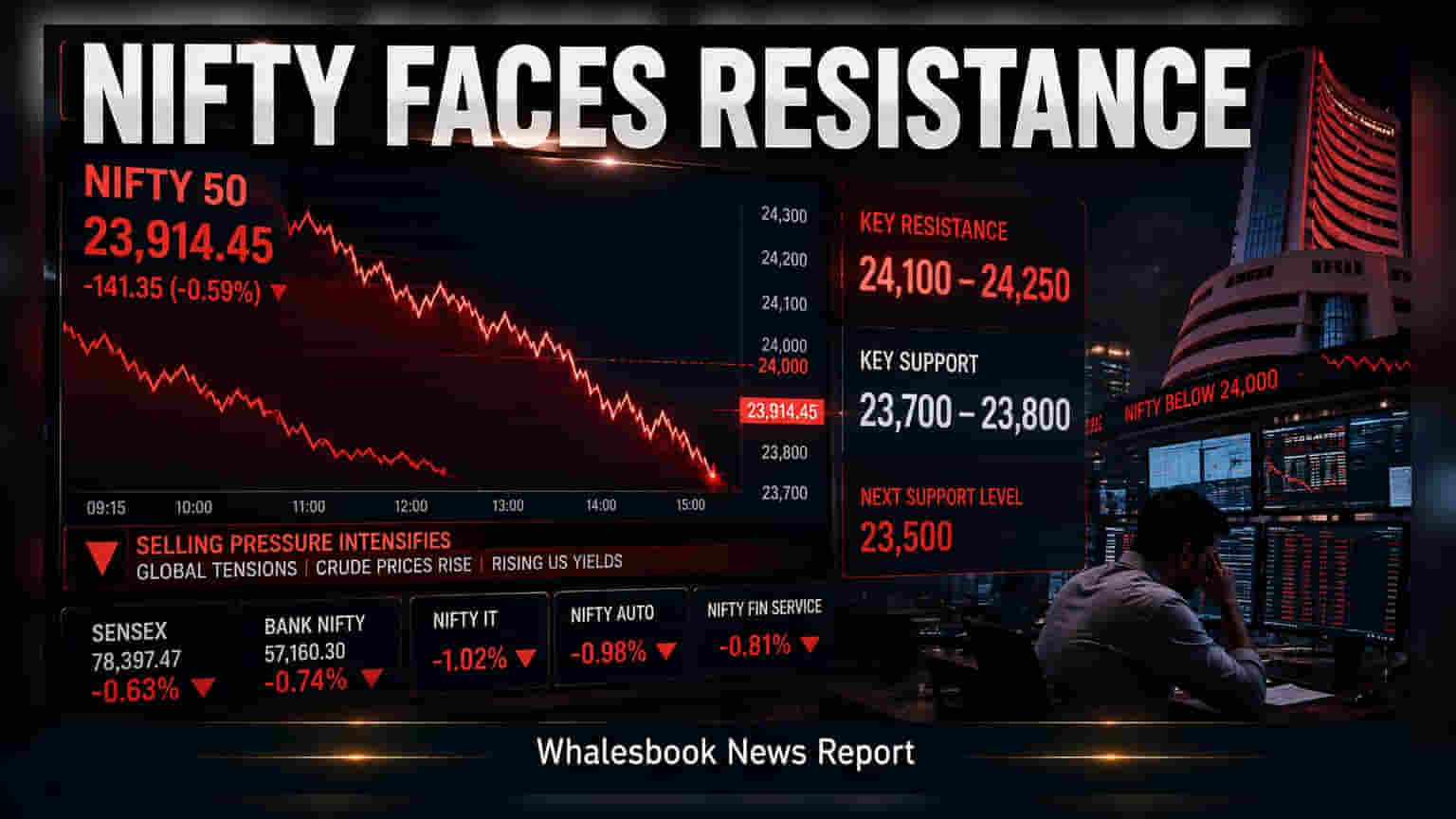
The Nifty 50 closed at 23,914.45 on September 2, slipping below the critical 24,000 level. Rising geopolitical tensions in the Middle East have pushed crude oil prices higher, adding pressure to the Indian market. Investors are now focused on immediate support zones as the index deals with technical and macroeconomic headwinds.
The Indian stock market showed signs of stress on September 2, 2026, with the Nifty 50 index closing at 23,914.45. The index dropped by 141.35 points, or 0.59%, as selling pressure pushed it below the psychological level of 24,000. This shift marks a challenging period for traders and investors, as the index struggles to regain momentum in the face of global uncertainty.
Impact of Global Factors
The main pressure stems from rising geopolitical tensions between the US and Iran. This conflict has disrupted energy supply chains, causing Brent crude oil prices to climb toward six-week highs. For the Indian economy, higher crude prices often lead to concerns about inflation and fiscal health, as the country is a significant importer of oil. These macroeconomic worries have naturally made investors more cautious about holding risky assets, contributing to the recent decline.
From a technical perspective, the 24,000 mark has acted as a key pivot point for the market. By falling below this level, the index has triggered concerns about further downside. Analysts are now looking at the 23,700 to 23,800 range as the next critical support zone. If the index cannot hold these levels, it could signal a deeper correction. On the upside, the index faces resistance in the 24,100 to 24,250 range, meaning any attempt at a rebound could face renewed selling pressure.
Banking and Sector Trends
The Bank Nifty index is also struggling, remaining in a consolidation phase without a clear direction. With immediate support near 57,000 and resistance around 57,400, the banking sector reflects the overall nervousness in the broader market. This negative sentiment is also visible in sectors like Auto, IT, and Financial Services, where volatility has increased alongside a reduction in the number of advancing stocks.
Beyond domestic technicals, the global macro environment remains a vital factor for the market. Rising US bond yields have historically reduced the appeal of emerging market stocks for foreign institutional investors. As market breadth weakens, meaning more stocks are declining than advancing, the index's ability to hold its current support levels will be a primary focus. Investors may monitor whether the market can find stability near 23,700 or if the downward trend persists in the coming sessions.