

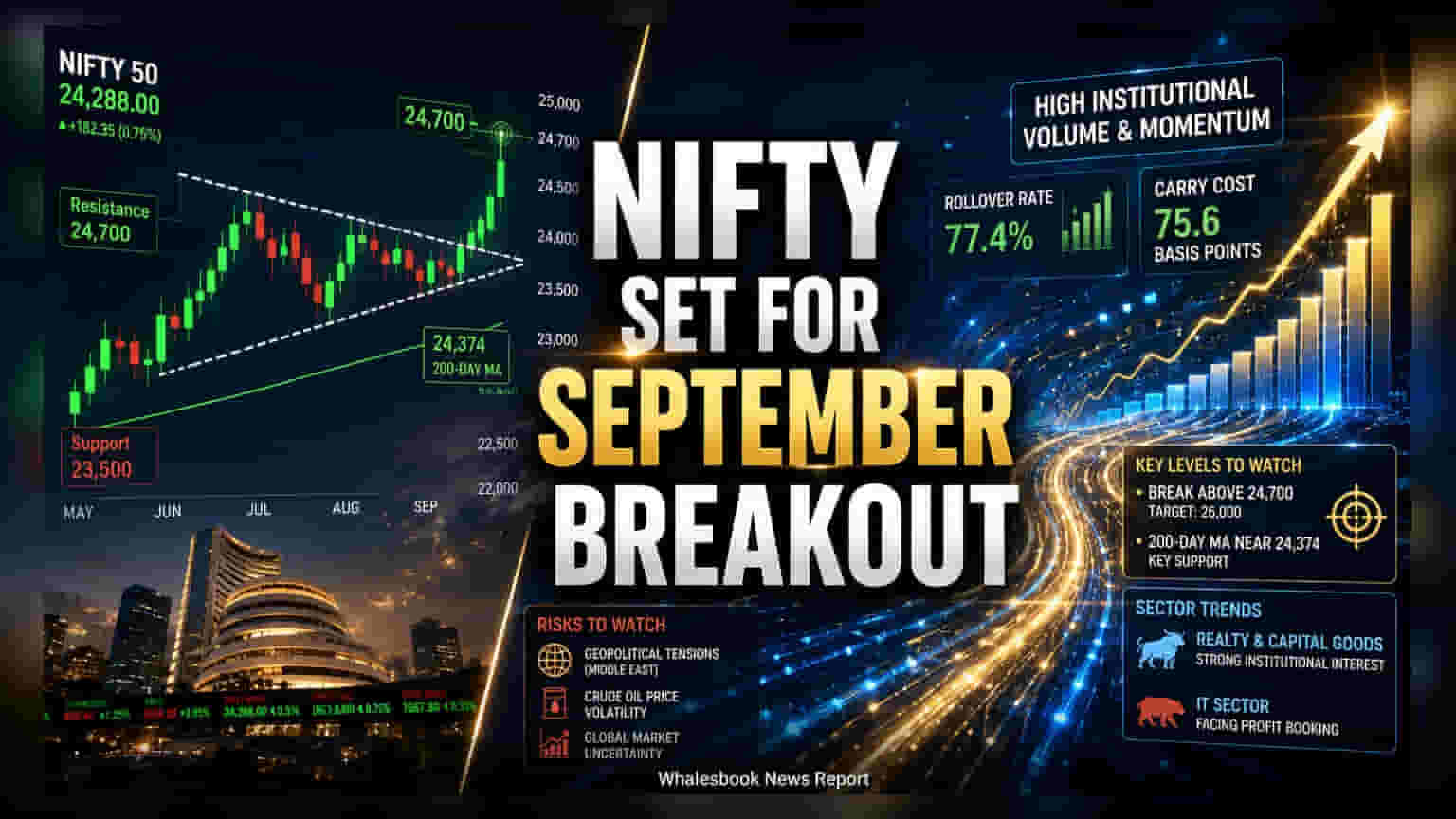
The Nifty 50 closed the August trading series at 24,288, with strong rollover rates suggesting increased investor confidence. Analysts are now looking for a potential breakout above the 24,700 level, which could set the path toward 26,000. While market sentiment remains positive, investors are watching for global risks like crude oil price changes and geopolitical tensions.
The Nifty 50 has concluded its August trading cycle on a positive note, closing the session at 24,288. This performance is being viewed as one of the stronger finishes for the index in recent months. The successful conclusion of the August series has brought more clarity to the market, with investors showing greater confidence as they move their positions into the September cycle.
Market Positioning and Confidence
One of the key indicators of this renewed confidence is the rollover rate, which reached 77.4%. In simple terms, a rollover rate shows how many traders chose to carry their current bets forward into the next month rather than closing them out. A rate of this level suggests that market participants are willing to hold onto their positions, anticipating further gains. Additionally, the cost of carrying these positions into the next month has risen to 75.6 basis points. This generally reflects that traders are paying a higher price to maintain their bullish bets, which is often seen as a sign of underlying strength in the trend.
The 24,700 Hurdle
From a technical perspective, the Nifty has been moving within a specific range, often described as a symmetrical triangle. This pattern happens when the index trades between two converging levels—in this case, 23,500 and 24,700—creating a squeeze in price action. As the index nears the upper end of this range, market analysts are closely watching the 24,700 mark. A clear, sustained move above this level would be a major signal for the market, potentially opening the door for a rally toward 26,000. Another important level to track is the 200-day moving average, which is currently near 24,374. This average acts as a long-term benchmark for the index's price, and maintaining levels above it is important for the current trend.
Sector Trends and External Risks
While the broader index is showing strength, the performance has been uneven across different sectors. The realty and capital goods sectors have seen increased interest from institutional investors, signaling potential strength there. On the other hand, the IT sector has faced some pressure, with investors pulling back from their positions following a recent run-up.
Even with this optimism, the market is not without its challenges. The India VIX, which acts as a gauge for expected market fluctuations, is currently low at around 11.08. While a low VIX generally suggests a calm market, it also means that any sudden shift in news could lead to quick and sharp changes in stock prices. Investors should also keep an eye on external factors. Ongoing geopolitical tensions in regions like the Middle East and the fluctuation in global crude oil prices remain significant risks that could influence foreign investment flows and market sentiment. Whether the Nifty can successfully break through its current resistance will largely depend on how these global factors and domestic demand hold up in the coming weeks.