

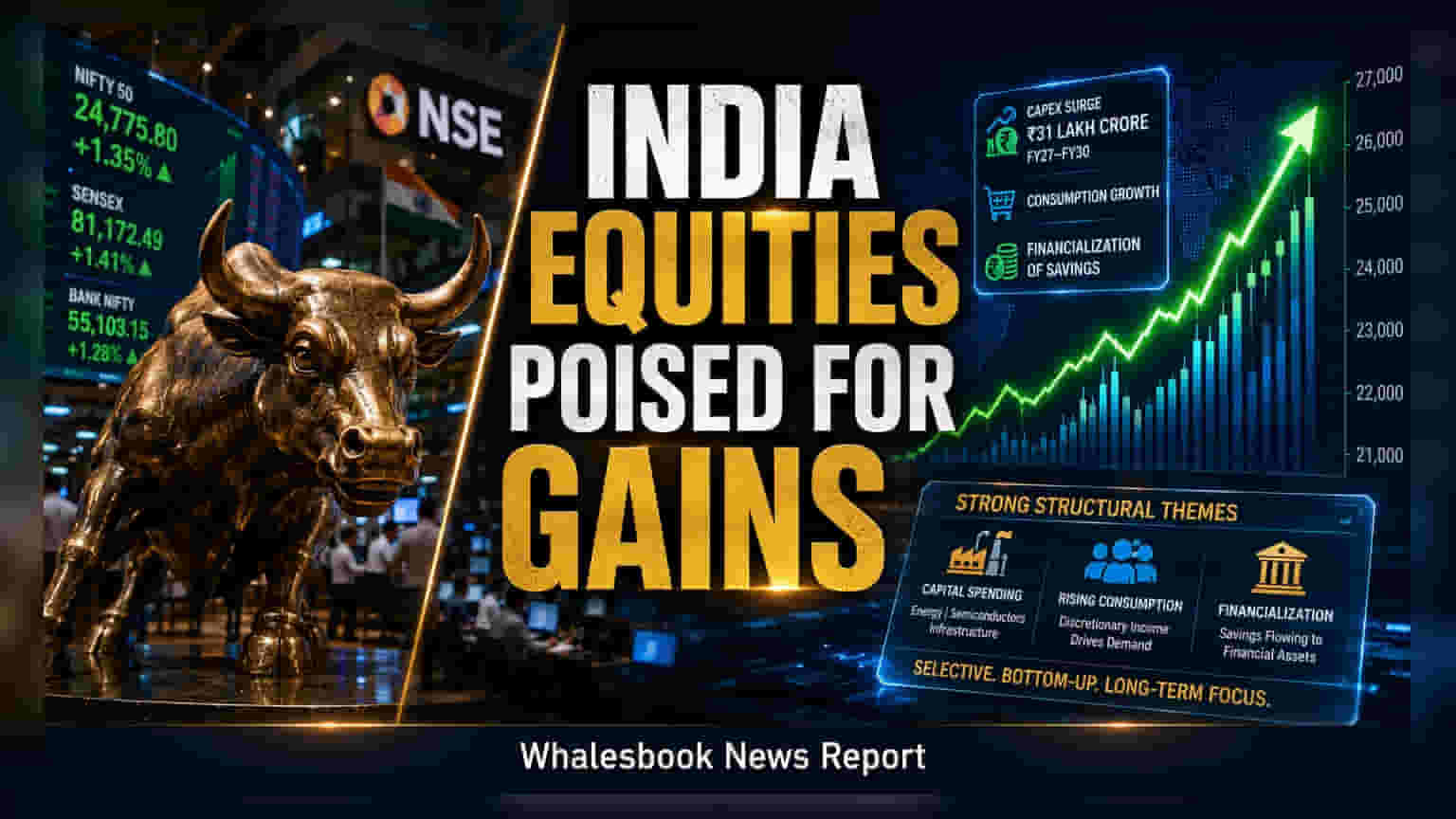
Narnolia Financial Services’ CIO Shailendra Kumar maintains a positive long-term outlook for Indian stocks, supported by strong earnings and a projected ₹31 lakh crore capital spending drive by FY30. Investors are advised to remain selective, focusing on consumption and financial growth while navigating global risks like volatile interest rates.
Indian equity markets continue to offer a healthy risk-reward balance for medium- to long-term investors, according to Shailendra Kumar, Chief Investment Officer at Narnolia Financial Services. Despite recent market volatility and global uncertainty, the brokerage suggests that the fundamental strength of the domestic economy provides a necessary buffer for portfolios.
The investment outlook hinges on three primary structural themes: capital spending, consumption, and the financialization of savings. The most significant of these is the aggressive expansion in capital spending. Projections indicate that annual spending in India could reach ₹31 lakh crore between FY27 and FY30. This wave of investment is expected to span multiple areas, including energy transition, semiconductor manufacturing, and infrastructure development, rather than being limited to a single sector.
Simultaneously, consumption is evolving from a temporary bounce into a lasting trend, supported by rising discretionary income across the country. As the economy becomes more formal, this shift is providing steady support to businesses catering to household demand.
While the long-term outlook remains positive, the brokerage emphasizes the importance of a selective, bottom-up approach to stock picking. This is particularly relevant in the financial sector, where interest rate volatility remains a key factor that could impact profit margins. Similarly, investors are observing margin pressure across traditional sectors like Information Technology and Fast-Moving Consumer Goods (FMCG). While these sectors have faced challenges, some franchises now appear more attractively valued than they did previously.
Management and execution also remain central to investor confidence. For instance, the leadership transition at major financial institutions like HDFC Bank is a key monitorable. The focus here is on ensuring that internal expertise provides continuity and minimizes execution risks.
Looking at the broader global environment, the firm noted that concerns regarding international tariffs are largely already reflected in current stock valuations. This suggests that both the government and large corporations are better prepared to handle policy shifts than they were in past cycles. For investors, the next steps involve tracking how companies manage their operational costs amid fluctuating demand and how effectively they navigate the ongoing shift toward higher-value products in the consumption space.