

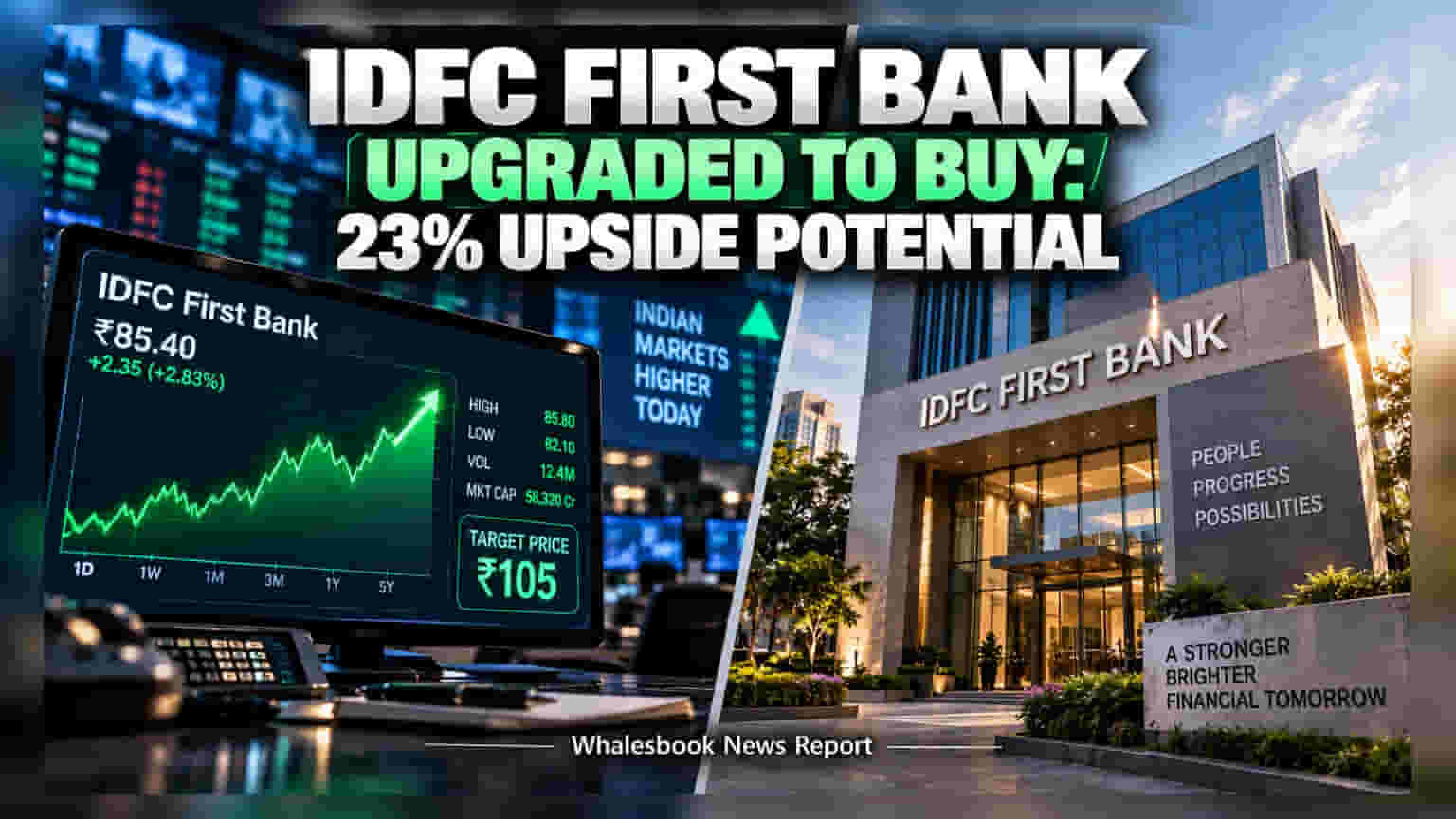
Motilal Oswal has upgraded IDFC First Bank to 'Buy' with a target of ₹105, anticipating improved financial health by 2028. The brokerage points to stronger deposit collection and better operational efficiency as key drivers. Investors are monitoring how the bank manages intense competition while maintaining asset quality.
Motilal Oswal has updated its rating for IDFC First Bank to 'Buy,' setting a target price of ₹105. This follows the bank's efforts to build a more stable deposit base and improve its overall efficiency. The brokerage expects these changes to help the bank show a clearer recovery in its profitability over the next few years.
A central part of the brokerage's analysis is the bank's focus on its deposit franchise. In the competitive Indian banking sector, the ability to gather low-cost savings and current account money is vital for profitability. By growing this base, the bank is looking to reduce its reliance on costlier funds, which historically pressured its margins. The report highlights that management has successfully rebalanced the business model, reducing risk and focusing on sustainable growth.
Looking ahead to fiscal year 2028, the brokerage anticipates improvements in key financial metrics. The cost-to-income ratio—a measure of the cost to run the bank as a percentage of its income—is expected to decline to roughly 65% by 2028. This reflects the bank’s goal of growing its income faster than its operating expenses. Projections also suggest the bank could achieve a return on assets of 1.2% and a return on equity of 11.9% by that time.
However, operating in the private banking space involves significant challenges. Indian banks are currently facing intense competition for retail deposits, which can impact interest margins if not managed carefully. Additionally, the Reserve Bank of India maintains strict oversight on how banks manage their loans and assets. While the brokerage is optimistic about the bank's credit cost management and expects non-performing assets to moderate to 1.4% (gross) and 0.4% (net) by 2028, investors should keep a close eye on quarterly results to confirm that these trends are actually playing out.
For investors, the key monitorables moving forward will include the bank's quarterly updates on deposit growth, the stability of its net interest margins, and its success in keeping bad loans under control. As the bank continues its transformation, the ability to execute these plans while navigating a dynamic regulatory environment will be the deciding factor for its long-term performance.