

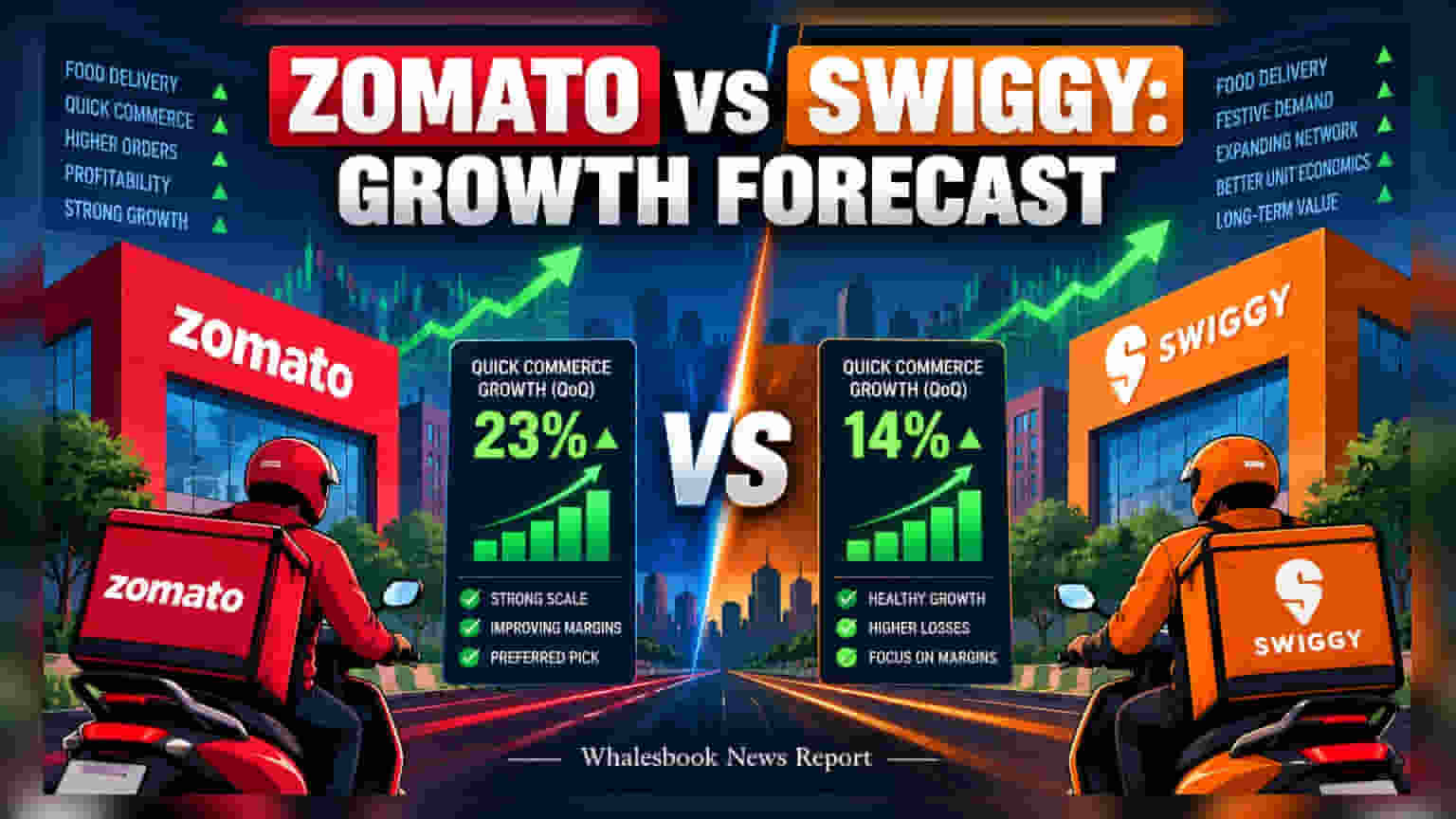
Motilal Oswal expects Zomato’s Blinkit to see 23% growth in order value this quarter, outpacing Swiggy Instamart’s projected 14%. The brokerage favors Zomato due to its clearer path to profit, while Swiggy faces pressure from higher losses in its quick-commerce segment.
Motilal Oswal has released its latest assessment of the food-tech sector ahead of the September quarter results for FY27. The brokerage expects the quick-commerce market to show strong growth, boosted by the upcoming festive season and a more stable pricing environment among major players. The sector is moving away from aggressive spending to acquire customers toward a focus on long-term profit margins.
The brokerage report estimates a 23% sequential increase in net order value for Blinkit, which is Zomato’s quick-commerce arm. In contrast, Swiggy Instamart is projected to grow by 14%. While both companies are expected to report healthy year-on-year growth in their primary food delivery businesses, the difference in the quick-commerce performance has influenced the brokerage's preference.
For investors, the distinction lies in profitability. Zomato is currently viewed as having a more predictable path to sustainable profits. The brokerage noted that Swiggy’s quick-commerce operations are still reporting higher losses, which remains a key concern for investors compared to its rival. While the brokerage has issued 'Buy' ratings for both, Zomato is currently cited as the preferred choice in the segment due to its scale and financial trajectory.
It is important to remember that quick commerce is a capital-intensive business. The sector is facing intense competition, not just between these two, but also from other players like Zepto and established grocery retail chains. Success depends heavily on unit economics—the actual profit or loss made on each order after delivery and operational costs are covered. If a company burns too much cash to acquire customers or keep delivery times low, it can hurt the bottom line. Investors should track whether these companies can balance rapid expansion with actual profit margins.
The next important monitorable for shareholders will be the actual performance in the upcoming September quarter results. Investors will specifically watch for management commentary on delivery costs and whether the festive demand truly leads to better margins or if promotional spending continues to keep the business loss-making. The final outcomes will rely on how well these companies manage their expenses while scaling up their delivery networks.