 Whalesbook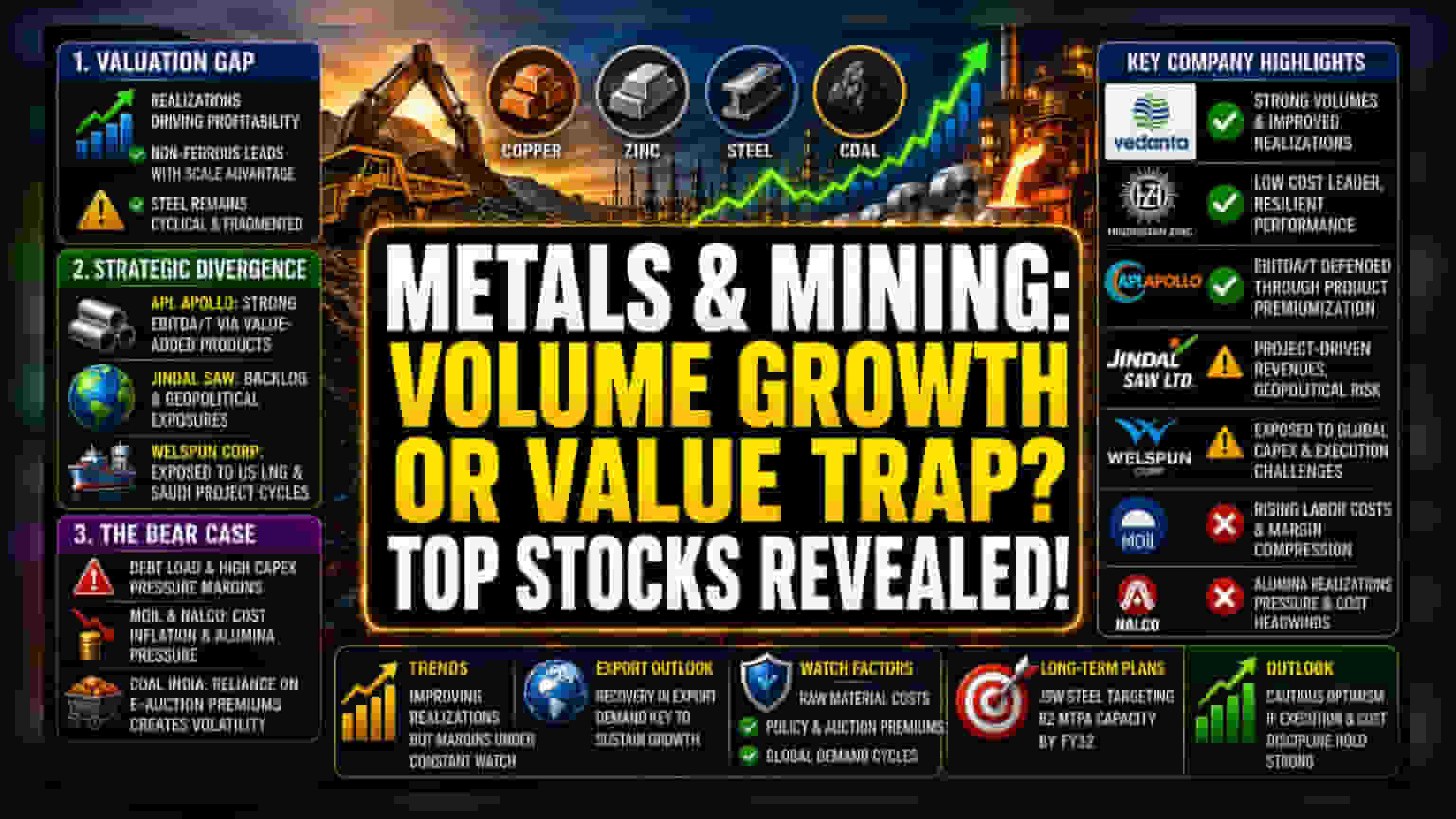


The Valuation Gap
Market optimism surrounding the metals and mining sector appears anchored in immediate volume growth rather than long-term margin predictability. While brokerage sentiment highlights improved realizations as a primary driver of recent profitability, the divergence in performance between non-ferrous and steel segments suggests a fragmented recovery. Non-ferrous giants such as Vedanta and Hindustan Zinc have effectively leveraged production scale to combat input cost volatility, yet the steel sector remains tethered to the cyclical nature of infrastructure spending and global pricing fluctuations. For investors, the distinction lies in the capacity to maintain EBITDA-per-tonne thresholds against a backdrop of potentially softening global demand for industrial inputs.
Strategic Divergence in Steel and Pipes
Operational efficiency has become the primary metric for distinguishing winners from laggards in the steel pipe and tube space. APL Apollo’s ability to defend its EBITDA-per-tonne floor indicates a successful focus on value-added product mix, which serves as a hedge against the broader cyclicality of the steel market. Conversely, companies like Jindal Saw and Welspun Corp operate with different risk profiles, where project-specific backlog and geopolitical logistics influence revenue more than sheer volume. Welspun, for instance, remains exposed to the capital expenditure cycles of the US LNG and Saudi infrastructure markets, meaning their success is less about domestic consumption and more about international project execution capabilities.
The Forensic Bear Case
Institutional confidence often overlooks the persistent fragility of debt-laden balance sheets within this sector. Despite the touted improvements in operational performance, several firms continue to grapple with elevated capital expenditure requirements and the inherent volatility of commodity markets. Specifically, MOIL and NALCO face acute challenges, ranging from rising labor expenses to the compression of margins due to unfavorable alumina realizations. Moreover, the reliance on e-auction premiums for players like Coal India creates an unpredictable revenue stream that is highly sensitive to policy shifts and industrial output levels. Investors should remain wary of companies whose profitability hinges on temporary logistical gains or short-term commodity price spikes rather than sustainable cost leadership or technological moat creation.
Future Outlook
Moving forward, the sector’s trajectory will likely be determined by the intersection of raw material cost stability and the ability of domestic producers to maintain export competitiveness. While capacity expansion plans, such as JSW Steel’s pursuit of a 62 million tonne target by FY32, demonstrate long-term commitment, the immediate concern remains the sustainability of current spreads. Market participants should monitor whether the anticipated recovery in export markets materializes to offset any softening in domestic demand. Analyst consensus remains cautiously optimistic, provided that project execution timelines remain unencumbered by inflationary pressures.