 Whalesbook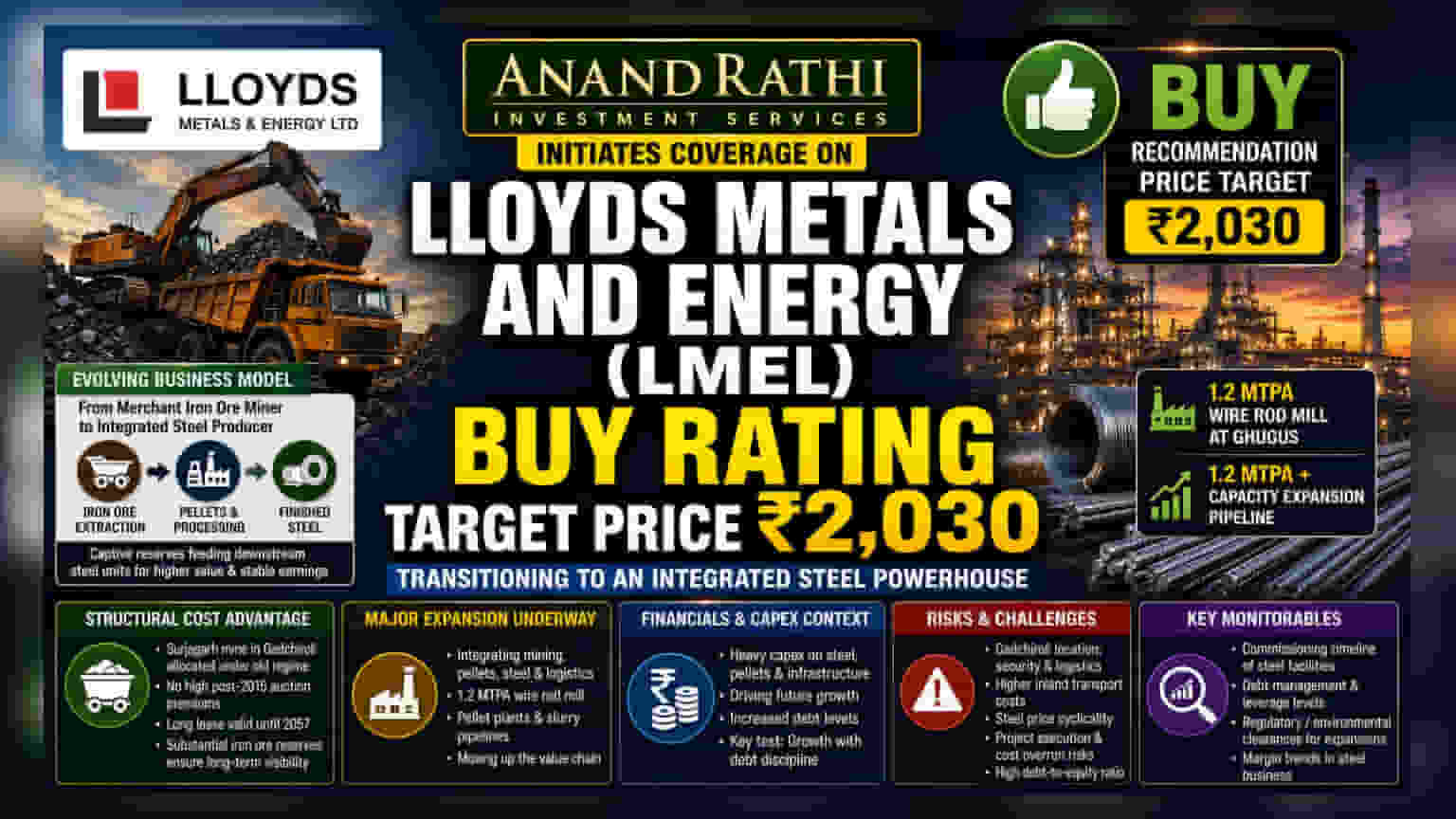


Anand Rathi has initiated coverage on Lloyds Metals and Energy with a 'BUY' rating and a target of Rs 2,030, highlighting the company’s strategic shift from a mining-only firm to an integrated steel producer. Investors should note the company's aggressive capital spending and debt levels amid its expansion plans.
What Happened
Anand Rathi has initiated research coverage on Lloyds Metals and Energy Limited (LMEL) with a 'BUY' recommendation and a price target of Rs 2,030. The brokerage’s report centers on the company’s evolving business model, as it moves from being a merchant iron ore miner to an integrated steel manufacturing entity. The analysis emphasizes the company's long-term growth potential driven by planned expansion into value-added products and non-ferrous metals.
The Shift to Integrated Steel
Lloyds Metals is currently executing a major transition. Historically known as a merchant miner, the company is ramping up its processing capabilities. The strategy involves leveraging its captive iron ore reserves in Gadchiroli, Maharashtra, to feed its downstream steel units. The company has been setting up integrated steel facilities, including a 1.2 million tonne per annum (MTPA) wire rod mill at Ghugus. By processing raw iron ore into pellets and finished steel, the company aims to move up the value chain. This strategy is designed to stabilize earnings, which were previously tied closely to the cyclical nature of iron ore prices.
The Cost Advantage
A key pillar of the brokerage's thesis is the company's structural cost advantage. The Surjagarh iron ore mine in Gadchiroli is a critical asset. Because the mining lease was allocated under older regulatory frameworks, the company does not have to pay the high auction premiums that newer, post-2015 leaseholders must pay. This provides a significant cost edge in raw material sourcing compared to many peers in the steel industry. The mine holds substantial iron ore reserves and has a lease valid until 2057, offering long-term visibility on raw material supply.
Financials and Capex Context
Lloyds Metals has been undertaking significant capital expenditure to support its expansion. The company’s financial profile shows heavy investment in projects like the wire rod mill, pellet plants, and slurry pipelines to enhance logistical efficiency. While these projects aim to drive growth, they have also led to increased debt on the balance sheet. Investors should note that maintaining this growth trajectory while managing debt levels will be a key financial test for the management.
Risks and Challenges to Watch
While the company has a unique cost advantage, there are notable risks. The location of its mining and processing operations in Gadchiroli, a region with historical security concerns, poses operational and logistical challenges. Transporting raw materials and finished goods from this inland region can be more expensive and complex compared to coastal steel producers. Additionally, as a primary steel maker, the company is sensitive to global steel demand and pricing cycles. Any delay in the commissioning of new projects or cost overruns could also impact financial performance. Investors should also remain aware of the company’s high debt-to-equity ratio, which is a common feature of capital-intensive expansion but requires careful monitoring.
What Investors Should Track
Investors may want to monitor several key indicators as the company executes its plan. First, the timeline for the commissioning of the integrated steel facilities at Ghugus and Konsari is vital. Second, management’s ability to manage debt levels while continuing to fund large capital projects will be critical. Third, any updates on regulatory or environmental clearances for further mine capacity expansions or new project sites should be followed. Finally, the company’s ability to maintain its profit margins while transitioning to a larger steel manufacturing footprint will indicate whether the integrated model is delivering the expected efficiencies.