

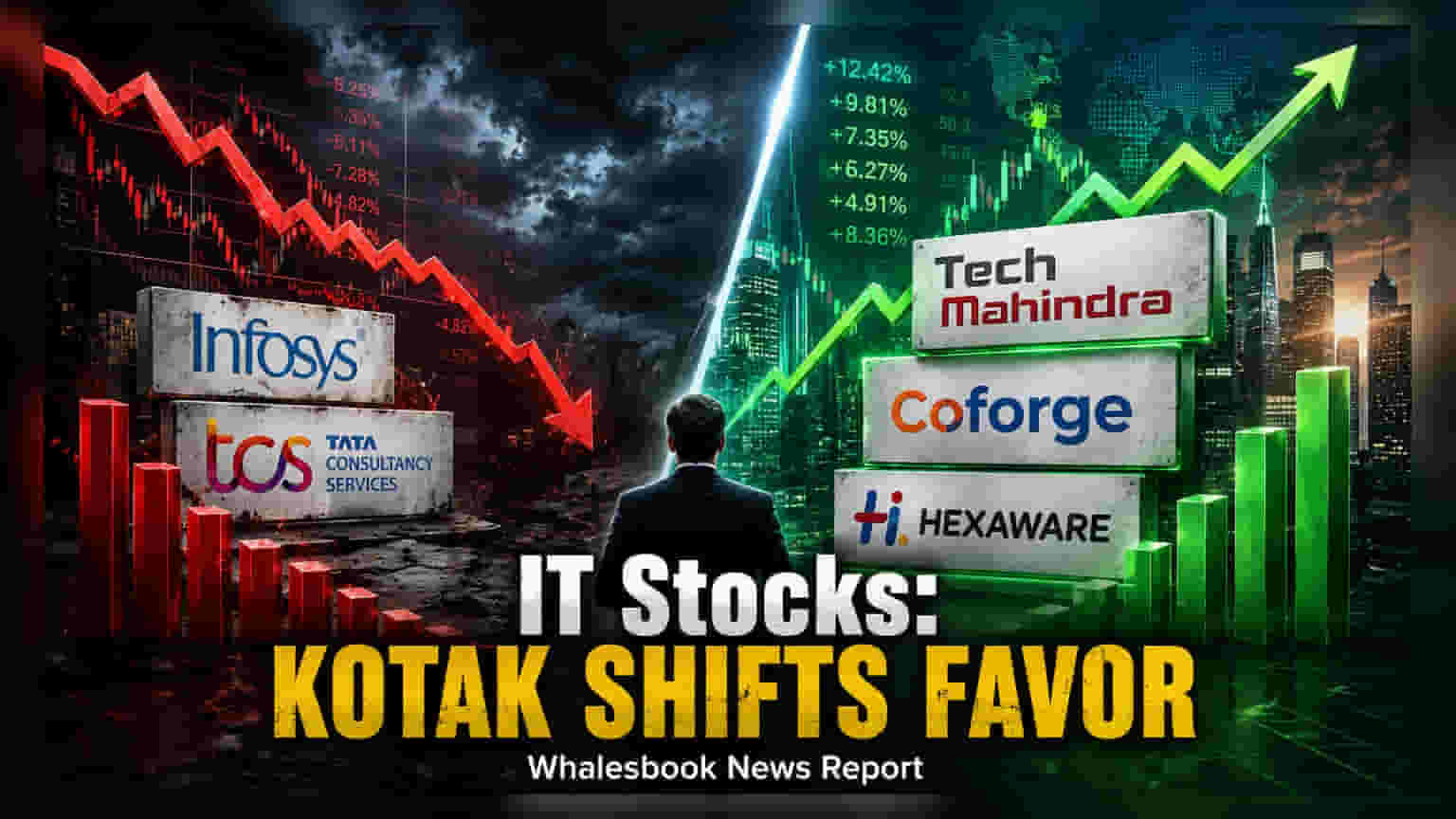
Kotak Institutional Equities has downgraded Infosys, TCS, and LTIMindtree, citing limited upside after a strong recent market rally. The brokerage now favors smaller 'challenger' IT firms, warning that AI-driven deflation could cap sector growth at 4-5% annually through FY2028.
Kotak Institutional Equities has revised its outlook on major Indian IT services companies, downgrading market leaders Infosys and TCS to 'Add' ratings. The brokerage also moved LTIMindtree to a 'Sell' rating. This change comes after a significant 15-35% rise in IT sector stocks from their recent lows, which the firm believes has made the current risk-reward balance less attractive for investors.
The brokerage notes that the conversation around Artificial Intelligence (AI) in the IT sector has shifted. While earlier fears focused on AI replacing IT services entirely, the focus is now on how AI affects pricing and profit margins. Kotak expects AI-led deflationary pressures to limit annual sector growth to 4-5% until fiscal year 2028.
Why Challengers are Favored
While the brokerage has turned cautious on incumbents, it has highlighted a preference for 'challenger' firms, specifically naming Tech Mahindra, Coforge, Hexaware, and Indegene. The analyst view suggests that these companies might be better positioned to navigate the changing market landscape.
The core of this preference lies in how different companies handle AI productivity. Kotak warns that an era of 'undisciplined pricing'—where companies compete aggressively—could lead to margin pressure as older, higher-value contracts are renegotiated. Challenger firms, which may be more willing to pass on AI-driven cost savings to clients to gain volume, are seen as potentially more adaptable in this competitive environment.
The Impact of AI on Unit Economics
The report highlights that while AI tools help IT companies by supporting tasks like data engineering and security integration, they also change the underlying economics. The use of 'open-weight' models—AI tools accessible to many—is expected to increase the volume of work. However, this accessibility also compresses 'unit economics,' meaning that because clients and competitors can access similar tools, the pricing power of IT service providers may diminish.
Kotak views an 11-12 times earnings multiple as a floor for incumbent IT firms, assuming no long-term growth. Conversely, a higher multiple of 18 times is seen as a ceiling, requiring consistent 4-5% revenue growth. With most major vendors currently competing for the same deals, the opportunity for historical share gains is narrowing.
For investors, the key area to track moving forward is how these IT companies manage their profit margins amidst intense competition. The market will be watching to see if large firms can maintain their profitability while AI technology forces changes in how they price their services.