

Jefferies notes Indian auto-component manufacturers are outperforming car makers, reporting strong earnings growth despite sector challenges. Nine of 20 tracked firms received earnings upgrades in the September quarter, signaling a positive shift. However, investors should be cautious as stock valuations are currently trading above long-term historical averages amid supply chain and geopolitical risks.
Indian auto-component manufacturers are showing a distinct performance advantage over original equipment manufacturers (OEMs), according to a recent report by brokerage firm Jefferies. While the broader automotive manufacturing sector has faced economic pressure, component makers have successfully maintained their profit margins by managing rising commodity costs and passing them on to customers.
Profitability Divergence Between Components and OEMs
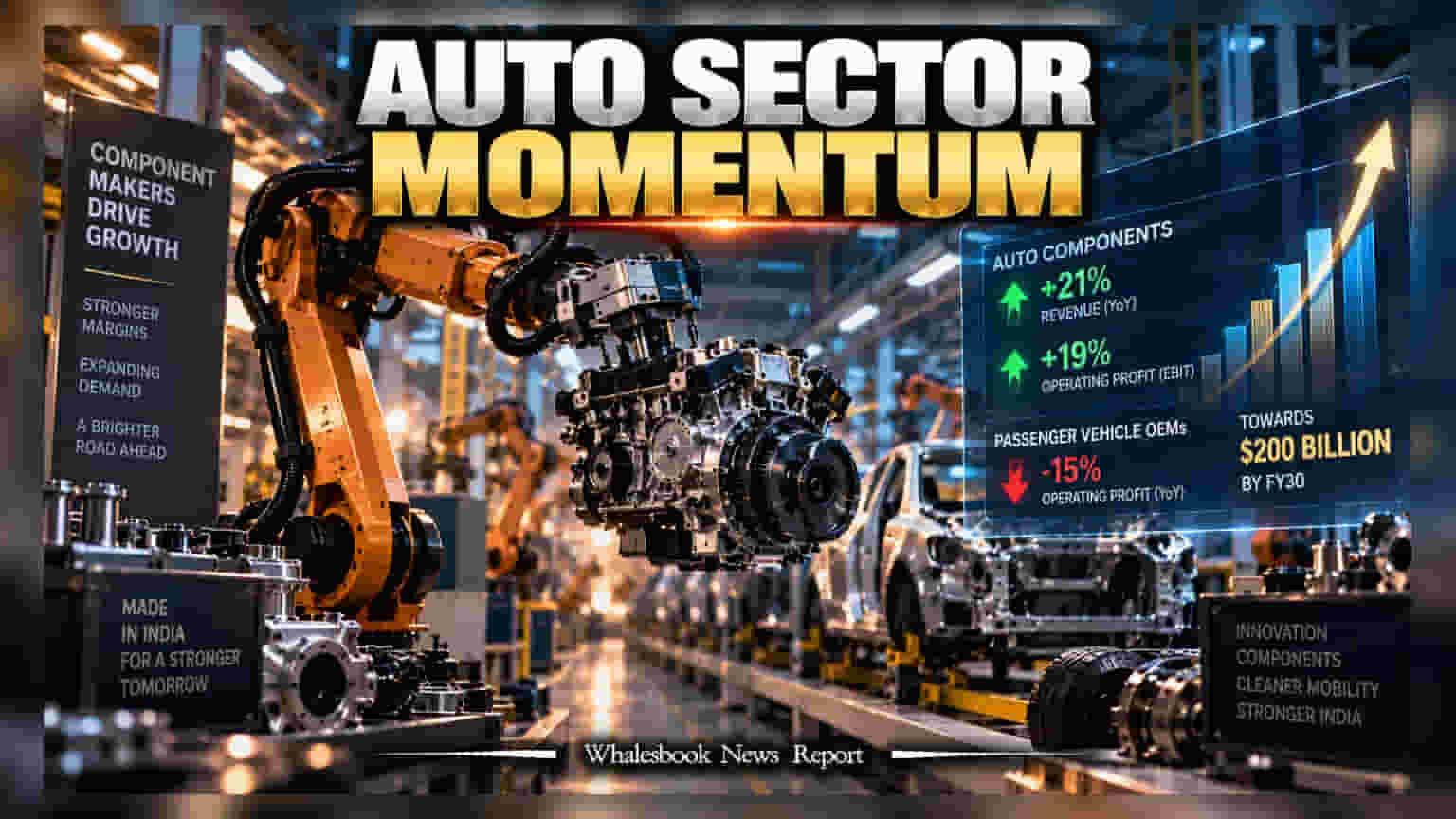
Data from the June quarter highlights a stark contrast in performance. While auto-component firms, excluding Motherson, recorded a 21% year-on-year revenue growth and a 19% increase in operating profit (EBIT), passenger vehicle OEMs struggled. In the same period, the operating profit for the passenger vehicle segment declined by 15% year-on-year. This indicates that component suppliers are better positioned to protect their core business margins than vehicle manufacturers, who have faced higher discount levels and competitive pricing pressure.
Earnings Revisions and Future Growth
The earnings outlook for the auto-component sector has shown a notable improvement as the year progresses. In the September quarter, nine out of 20 tracked auto-component companies received upgrades to their FY27 earnings per share estimates by more than 3%. This is a significant improvement from the June quarter, where only one company saw similar upgrades while 12 companies faced downgrades. This change in consensus expectations suggests that the industry is benefiting from broader client bases and geographic expansion. The sector is currently aiming to reach a total turnover of $200 billion by FY30, growing from $86 billion in FY26.
Risks and Valuation Concerns
Despite the positive earnings trend, investors should remain aware of potential challenges. Current valuations for many companies in the sector are trading above their long-term historical averages, which implies that a large part of the expected growth is already reflected in current stock prices.
Beyond valuations, the sector faces several structural and operational risks. Industry leaders have flagged concerns regarding supply chain volatility, which continues to be a point of stress. Additionally, the sector remains sensitive to geopolitical tensions, which can impact energy costs, raw material supplies, and currency stability. Other ongoing challenges include the structural transition from internal combustion engines to electric vehicles, which requires significant investment and adaptation, as well as potential pressure from equity supply, such as new IPOs or promoter stake sales, which could affect price performance.
Going forward, the key monitorables for investors will be how well these companies manage raw material price fluctuations, their ability to maintain margin stability in a competitive environment, and the pace of demand growth across both domestic and export markets. Analysts will also be tracking how individual companies navigate the shift toward newer vehicle technologies.