

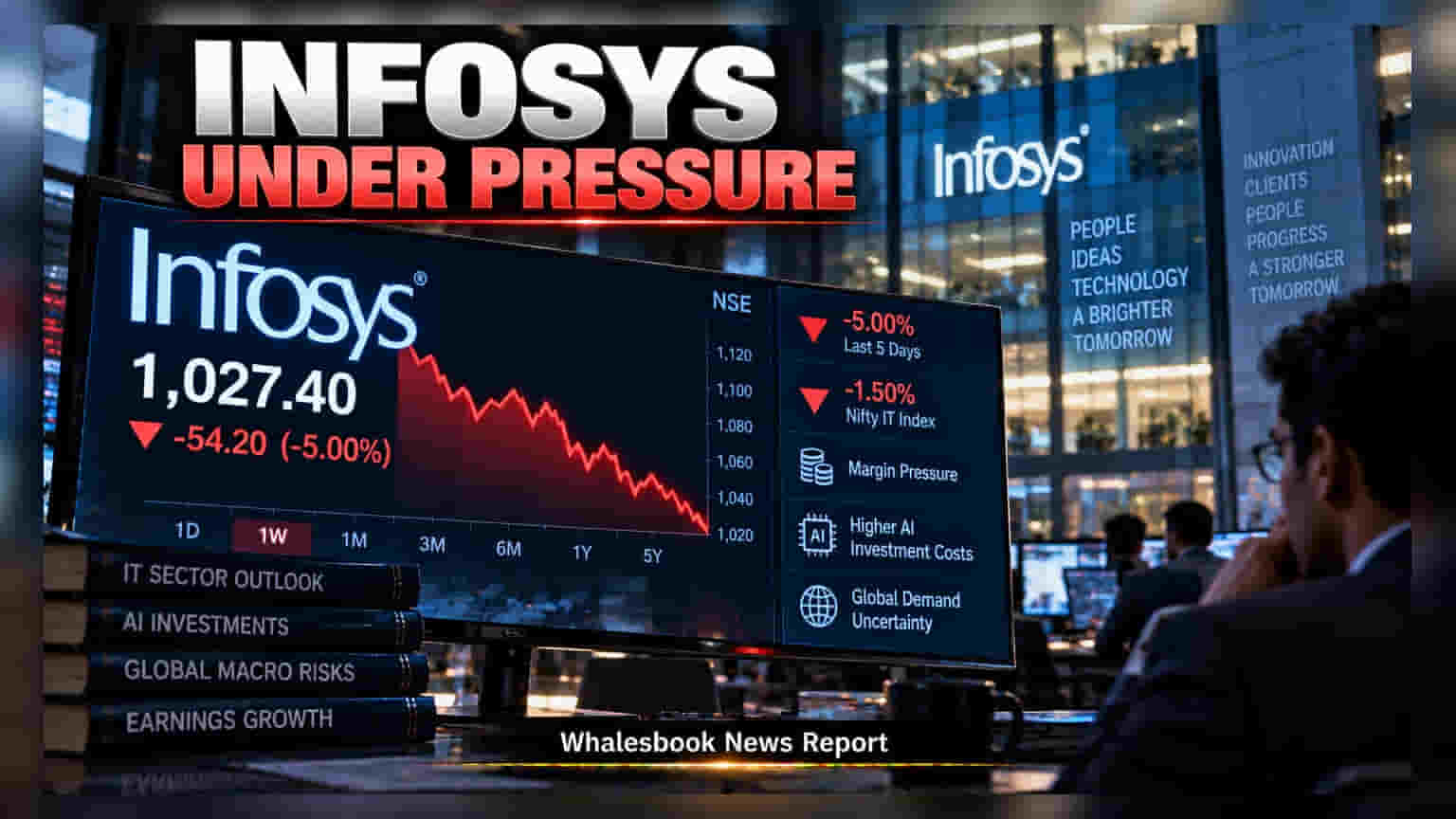
Infosys stock has declined 5% over five trading sessions as investors react to concerns over slowing IT spending and the costs associated with AI initiatives. While the company maintains stable margins, broad sector weakness and macroeconomic pressures are currently weighing on investor sentiment.
Infosys shares traded at ₹1,027.40 on the National Stock Exchange, marking a 5% decline over the last five trading sessions. This downward movement aligns with a wider struggle in the Nifty IT index, which saw a 1.5% fall as the market recalibrates its outlook for major software exporters. The drop reflects a cautious stance toward the sector as investors weigh long-term growth potential against current challenges.
AI Investment Costs and Margin Pressure
A key area for investors is the company's shift toward artificial intelligence. Infosys is dedicating significant capital toward building AI platforms and upskilling talent to stay competitive. While these moves are aimed at long-term gains, they are currently creating pressure on profit margins. The company reported a profit margin of 21.1% in the first quarter of fiscal year 2027, maintaining stability, but the market is carefully evaluating the short-term transition costs and the time required for these investments to contribute to revenue growth.
Sector Outlook and Macro Headwinds
Beyond the specific challenges of AI adoption, the broader IT industry is facing pressure from a slowdown in discretionary spending. Global clients are becoming more selective with their IT budgets, which limits the immediate growth opportunities for software companies. Factors such as elevated global interest rates and geopolitical uncertainty are creating a difficult environment for revenue expansion. Analysts from firms like CLSA have flagged these issues as primary risks for earnings-per-share growth in the near term. Despite these macro headwinds, the banking, financial services, and insurance (BFSI) vertical has demonstrated relative resilience, providing a level of operational stability for the company.
Investors may monitor management commentary on future spending plans and the timeline for AI-led revenue growth. Tracking how efficiently the company manages its technology-related costs while balancing profit margins will be important for understanding its financial health in the coming quarters.