

Domestic steel prices for HRC and CRC reached four-year highs in September, driven by rising input costs. While larger firms with captive raw materials may handle these costs better, the sector's profitability depends on whether demand holds up post-monsoon. Investors should watch for the sustainability of these price hikes and the impact on margins in upcoming results.
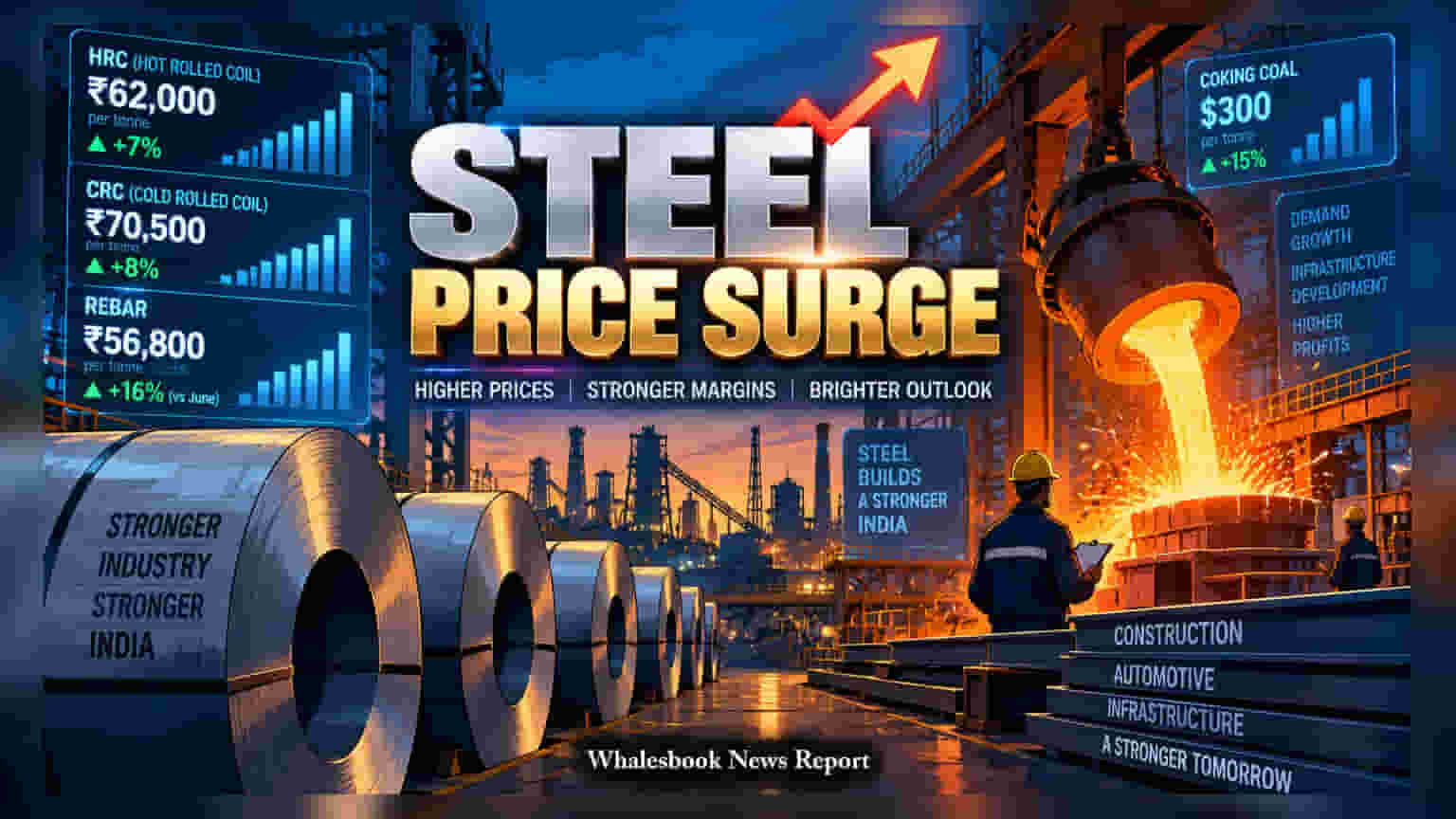
Domestic steel prices have climbed to four-year highs in September 2026, creating a new scenario for Indian steelmakers. Hot Rolled Coil (HRC) prices have risen to ₹62,000 per tonne, showing a 7% increase compared to the previous month. Similarly, Cold Rolled Coil (CRC) prices have moved up by 8% to ₹70,500 per tonne, while rebar prices have recovered to ₹56,800 per tonne from ₹48,850 in June. This trend indicates that the industry is trying to move beyond just selling more volume and is now focusing on improving profit margins by passing higher costs to buyers.
This pricing strength comes amid rising input costs. The price of Australian coking coal, a critical raw material for steel production, has increased to $300 per tonne from $260 in June 2026. Industry data suggests that for every $10 rise in coking coal prices, steel companies face an additional production cost burden of about $7 to $8 per tonne. While iron ore prices have remained steady despite the monsoon season, the ability to protect profit margins now depends entirely on whether companies can sustain these higher selling prices in the market.
Market analysts have highlighted large steel manufacturers like JSW Steel and Tata Steel as companies that may be better positioned to handle this situation. The key reason for this observation is their business structure. Unlike smaller manufacturers, these large players often own their own raw material sources—a setup known as vertical integration. This provides a natural buffer against the volatility of raw material prices, allowing them to manage production costs more effectively when external prices fluctuate.
However, the outlook for the sector is not without risks. The primary challenge for investors is the sustainability of this price hike. If post-monsoon demand does not pick up as expected, mills may find it difficult to maintain these higher prices. There is also the risk that if steel prices remain too high, they could eventually dampen demand from major consuming industries like construction and auto. Smaller steel companies, which lack captive raw materials, could face significant margin pressure if they are unable to pass on the increased coal and iron ore costs to their customers.
For investors, the coming months will be critical. The key monitorable will be the quarterly financial results, which will reveal whether the higher selling prices have successfully protected profit margins against rising input costs. Tracking post-monsoon demand trends, along with any changes in global commodity prices, will provide a clearer picture of whether this profitability trend can continue through the second half of the fiscal year.