

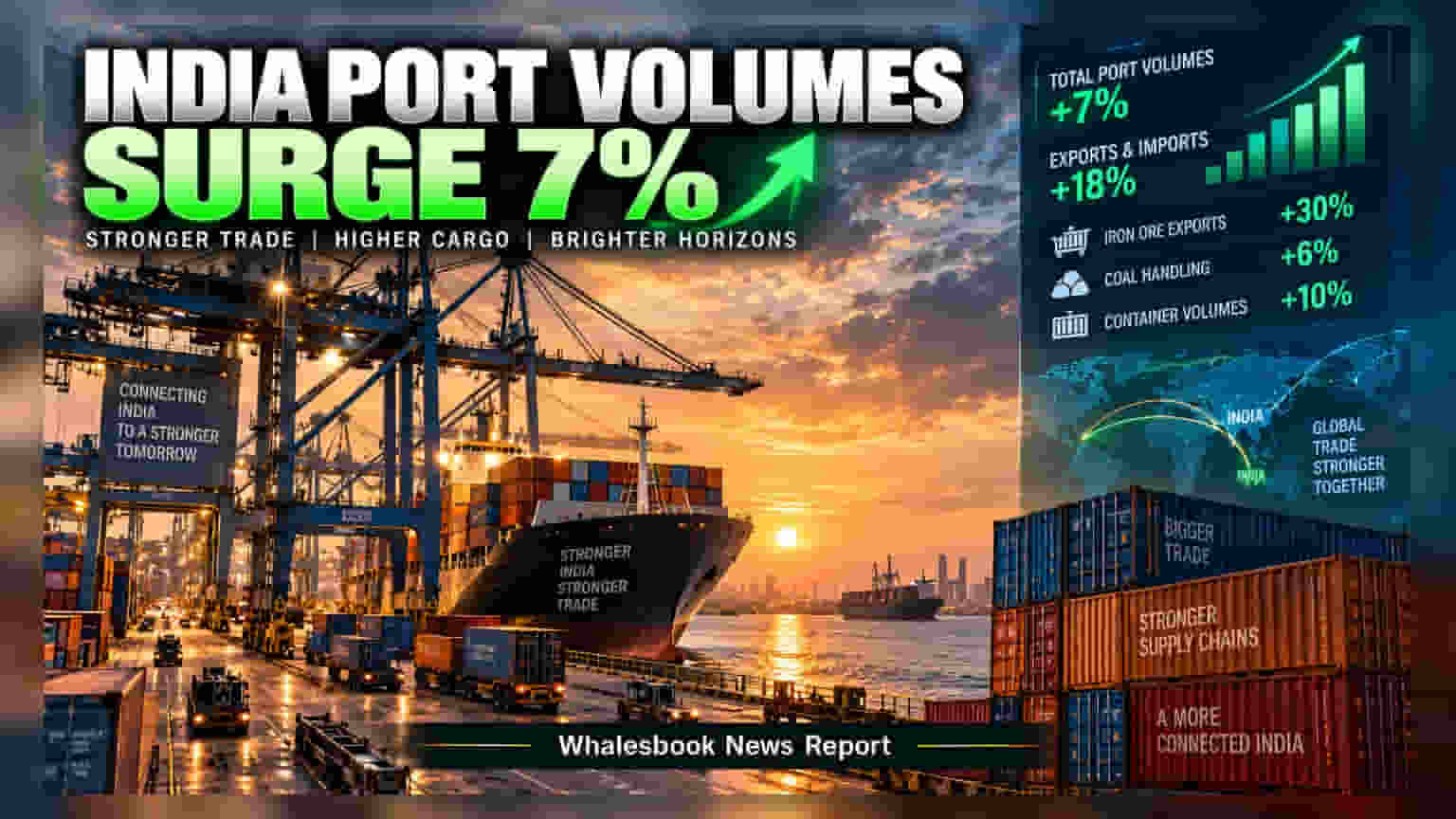
India's major ports reported a 7% year-on-year volume increase in August 2026, driven by an 18% surge in export-import trade. While maritime activity remains strong, Indian Railways faced a 3% decline in container traffic. Adani Ports outperformed the sector with a 19% volume growth, highlighting a clear shift in how goods are moving across the country amid high global freight costs.
August 2026 data reveals a clear trend in Indian logistics, with total port volumes growing 7% compared to the same month last year. This increase was supported by an 18% rise in overall trade across exports and imports. While global shipping costs have spiked—rising 132% since February due to international tensions and early peak-season demand—Indian maritime hubs appear to be absorbing the pressure effectively so far.
Specific cargo categories showed distinct growth patterns. Iron ore exports were a standout, climbing 30% year-on-year. Coal handling and container volumes also grew by 6% and 10% respectively. This suggests robust demand for both raw materials and manufactured goods, even with the high cost of global shipping.
Adani Ports and Logistics Divergence
Adani Ports and Special Economic Zone Limited significantly outperformed the broader industry average, reporting a 19% increase in volumes. This performance suggests that the company is successfully capturing a larger share of the traffic, likely due to infrastructure capacity and efficient handling. However, the wider logistics sector shows a divergence. While ports thrived, the rail network struggled, with container volumes dipping 3% year-on-year. This weakness suggests that geopolitical instability and supply chain shifts may be impacting rail-based freight differently than maritime hubs.
On the domestic front, road logistics showed resilience. With freight tariffs rising 2% month-on-month in early September and registrations for heavy commercial vehicles surging 40% year-on-year, road transport remains a strong pillar of domestic distribution, perhaps absorbing some demand that rail or other channels could not meet.
Regional Trade Shifts
Regional performance was mixed across India. Ports in Odisha led with 39% growth, while Maharashtra ports rebounded to an 8% increase after previous contractions. Investors may note that trade exposure is influencing these numbers. While shipments to the United States grew by 22%, trade with the UAE and Saudi Arabia faced notable declines ranging from 17% to 26%. Future volume growth will depend on whether this US-led export demand can continue to offset the slower trade activity with Middle Eastern partners, alongside the company's ability to navigate high freight costs.