

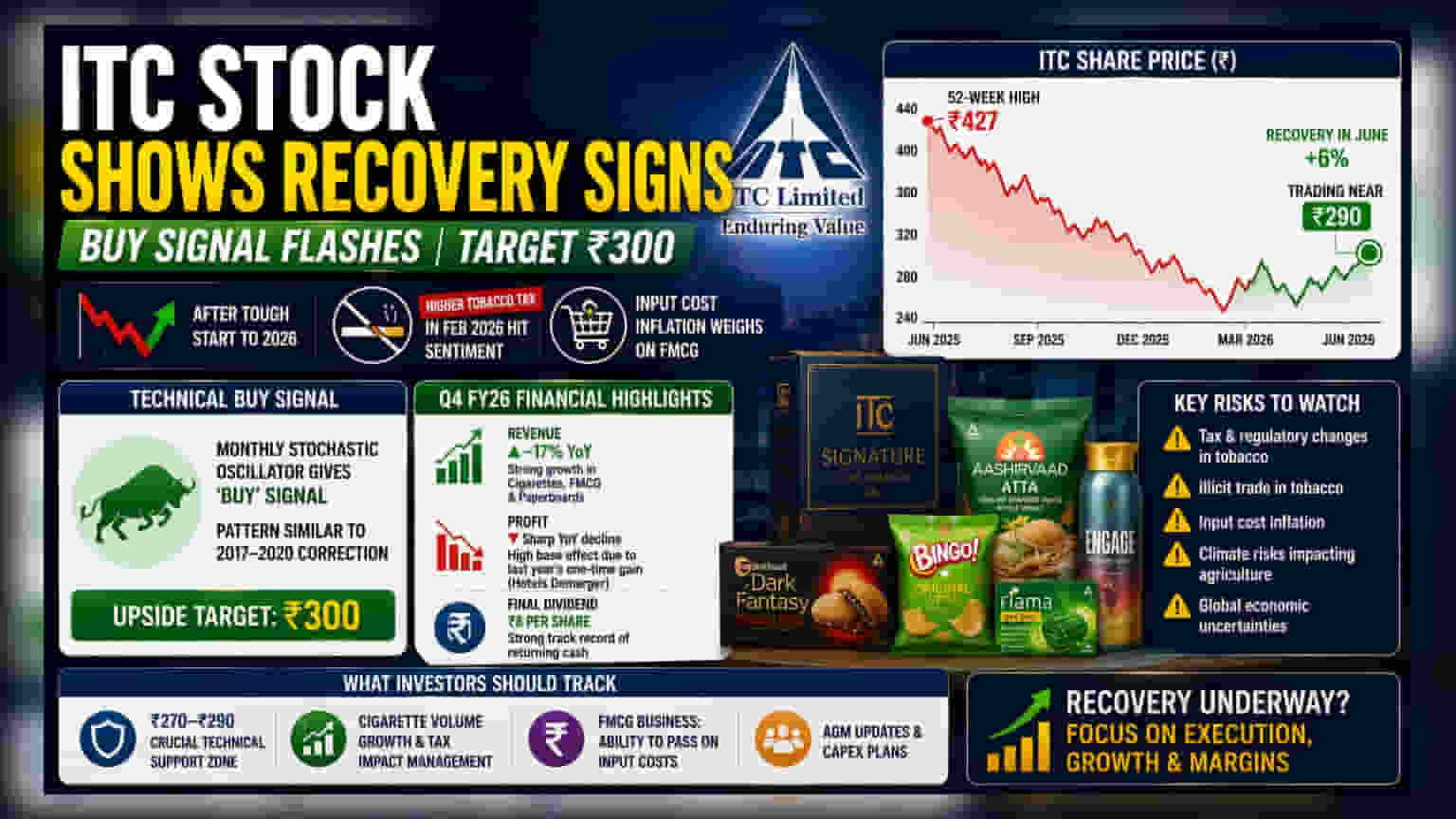
ITC shares are showing signs of stabilization after a challenging first half of 2026, with technical indicators hinting at a potential reversal. While the stock has faced pressure due to tobacco tax hikes earlier this year, analysts are now closely watching key support levels as the company maintains its dividend track record.
What Happened
ITC Limited’s stock has shown signs of a potential recovery in June 2026, gaining approximately 6% as it trades near the ₹290 level. This movement comes after a difficult start to the year, where the stock faced significant volatility and a decline of over 25% from its 52-week high of around ₹427. Analysts at Bajaj Broking have recently highlighted a 'Buy' signal emerging from the monthly stochastic oscillator—a technical tool used to identify if a stock has been 'oversold' or 'overbought.' The brokerage has projected a potential upside target of ₹300 for the shares, citing similarities between the current price correction and historical patterns observed between 2017 and 2020.
Why the Stock Faced Pressure
Investors have had a cautious outlook on ITC for much of 2026. The primary driver of this sentiment was the government's decision in February 2026 to increase taxes on tobacco products. This regulatory shift created uncertainty regarding cigarette volumes and margins, causing the stock to trade lower for several months. Additionally, the broader market volatility and concerns over input cost inflation for the FMCG segment—such as edible oils and wheat—also weighed on investor sentiment. As of late June 2026, the stock has been navigating these challenges, finding a base in the ₹270–₹290 price range.
Financial Context
Despite the recent stock price correction, the company’s underlying business performance remains a key focus for long-term investors. In its Q4 FY26 results released in May 2026, ITC reported a revenue increase of nearly 17% year-on-year, driven by steady growth in its cigarettes, FMCG, and paperboards segments. While the consolidated profit figures showed a sharp year-on-year decline, this was largely due to a high base effect from the significant one-time gain recorded in the previous year following the demerger of the hotels business. The company continues to prioritize capital allocation and has maintained its track record of returning cash to shareholders, recently recommending a final dividend of ₹8 per share.
Risks and Market Realities
While technical indicators suggest a potential recovery, the stock remains sensitive to external factors. The company’s management has flagged that while there is no immediate economic slowdown, global inflationary pressures and climate-related concerns, such as the impact of El Niño on agriculture, remain key monitorables. Furthermore, the risk of illicit trade in the tobacco segment continues to be a concern for analysts. Investors often watch how the company balances its cigarette tax exposure with the growth of its FMCG-others and digital-first portfolio to protect margins.
What Investors Should Track
Moving forward, the key factor for investors will be the sustainability of this recovery. The ₹270–₹290 price band acts as a critical technical support zone. Beyond price charts, shareholders are watching for management commentary on cigarette volume growth in the coming quarters and the company’s ability to pass on rising input costs in its non-cigarette FMCG businesses. Upcoming developments regarding the company's annual general meeting and any updates on capital expenditure plans will also provide a clearer picture of the firm's growth trajectory.