

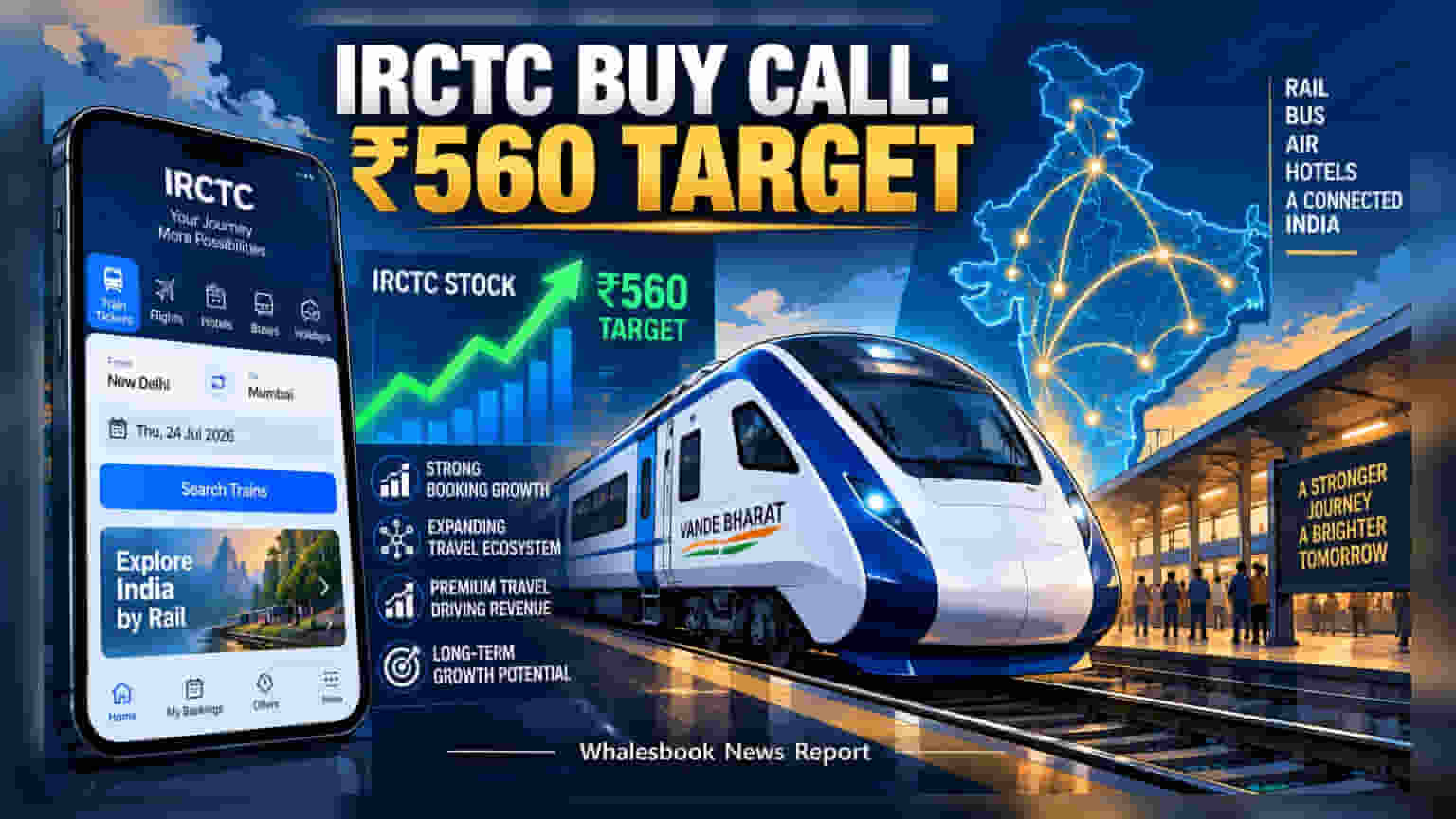
A brokerage firm has initiated coverage on IRCTC with a target price of ₹560, citing its strong digital ticketing dominance and the growth of premium train services. While the company benefits from a near-monopoly in rail booking, investors should monitor the impact of regulatory changes on its fees and the capacity challenges in its packaged water division.
Indian Railway Catering and Tourism Corporation (IRCTC) has received a 'Buy' rating from a brokerage, which has set a target price of ₹560 for the stock. This assessment is based on the company's ongoing transition into a broad mobility platform and its strong control over the digital ticketing market. The brokerage applied a 25x multiple to the estimated earnings for the 2028 and 2029 fiscal years to reach this valuation.
The core of the company's business remains its internet ticketing portal, which now handles 89% of all reserved train bookings in India. This dominance creates a stable revenue stream through convenience fees. Beyond standard ticketing, the company is attempting to monetize this user base by expanding into advertising and cross-selling travel services. The plan to launch a unified travel platform that integrates rail, bus, air, and hotel bookings is a key strategy for future growth, though the success of this move will depend on how effectively it can capture market share from established private travel aggregators.
Premium train travel, particularly with the introduction of Vande Bharat and other higher-tier services, has helped improve the revenue mix. Air-conditioned travel now makes up over half of total rail traffic. As more passengers choose these premium options, IRCTC stands to benefit from higher convenience fees and catering revenues. This shift toward higher-value products is a positive trend for the company's top-line performance.
Investors should also consider the operational challenges and risks that may impact profitability. The company’s packaged drinking water division, known as Rail Neer, often faces capacity constraints that can limit its ability to meet rising demand. Additionally, the business relies heavily on the Ministry of Railways for policy decisions. Since IRCTC operates with a significant government footprint, its margins are directly influenced by regulations regarding convenience fee sharing and catering pricing. Any shift in government policy regarding these fees or the revenue-sharing model remains a major monitorable for shareholders.
The long-term financial health of the company will depend on its ability to scale new business lines while managing the regulatory environment. Future updates to track include the successful deployment of its unified travel app, the outcome of any changes to ticketing or catering fee regulations, and improvements in the capacity utilization of its water bottling plants. These factors will determine whether the company can maintain its current profit margins as it looks to diversify its revenue sources.