

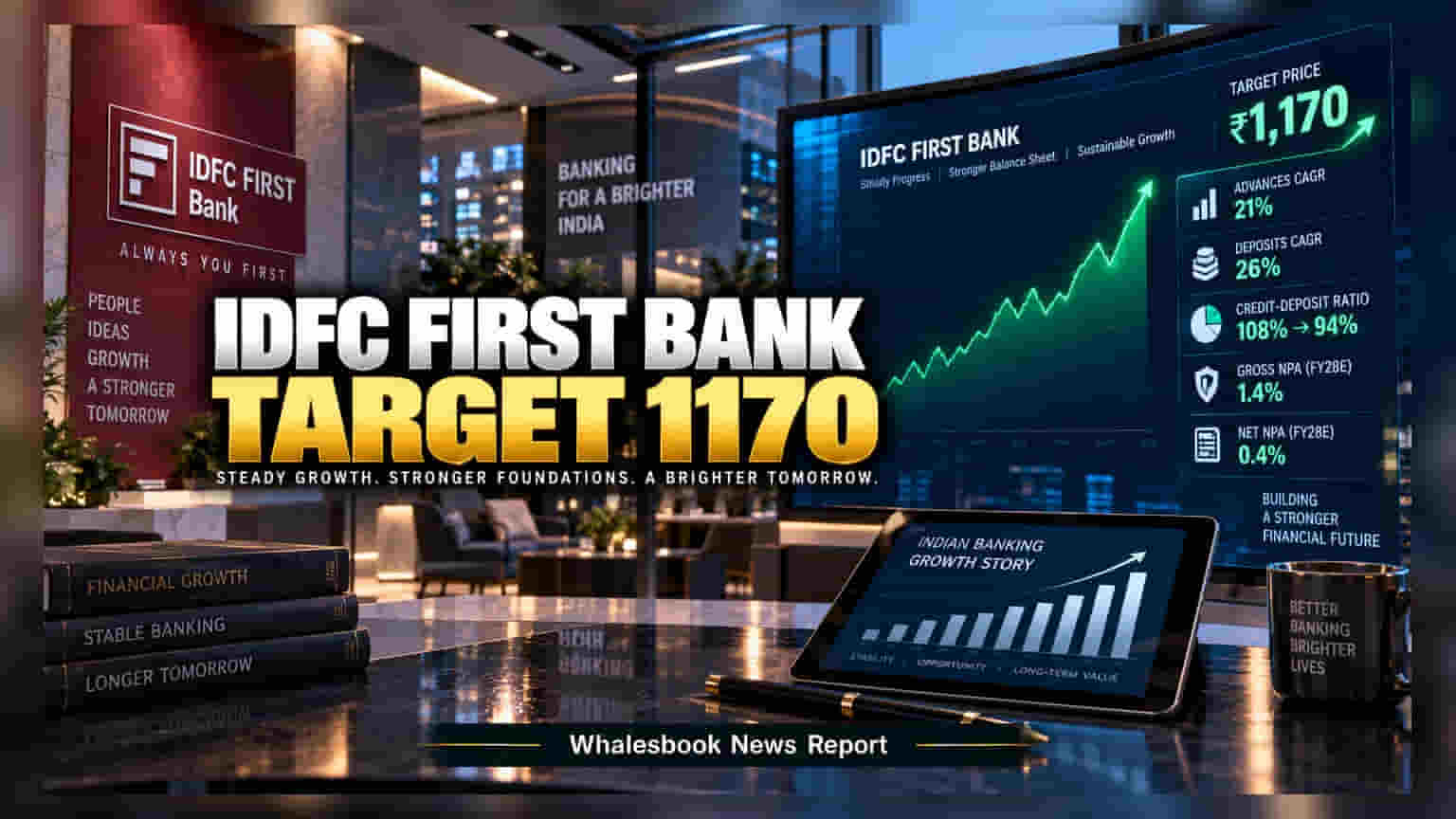
Motilal Oswal maintains a neutral stance on IDFC First Bank, citing strong growth but noting temporary pressure on profit margins. While the bank is seeing healthy gains in advances and deposits, high-cost foreign currency funding is expected to impact short-term interest margins. Analysts have set a price target of ₹1,170 as the bank aims to improve its asset quality by FY28.
Motilal Oswal has maintained a neutral rating on IDFC First Bank, balancing the lender's solid business growth with upcoming challenges in its profit margins. The brokerage set a target price of ₹1,170 for the stock. This neutral view suggests that while the bank is showing good operational progress, there are specific factors that may limit immediate upside or create short-term volatility.
Growth and Stability Improvements
IDFC First Bank has shown significant momentum in its core business, with advances growing at an annual rate of 21% and deposits at 26% over the last three years. A major positive change for the bank has been the improvement in its credit-deposit (CD) ratio. The CD ratio measures how much a bank lends for every rupee of deposit it holds. By bringing this ratio down from 108% in fiscal year 2023 to 94%, the bank has reduced its reliance on expensive short-term borrowings, making its balance sheet more stable and self-reliant.
Margin Pressure and Outlook
The bank faces a short-term hurdle due to the mobilization of roughly USD 3.57 billion in Foreign Currency Non-Resident (FCNR) deposits. While these deposits help the bank build its liability base, they introduce volatility. Analysts expect this to lead to a compression in net interest margins—the difference between what the bank earns from loans and what it pays to depositors—by 7 to 12 basis points. To counter this, the bank is adjusting its savings account pricing and term deposit rates. If these strategies work alongside planned reductions in operational costs, analysts project an earnings boost of 4.1% to 6.8% by fiscal year 2027.
Asset Quality and Future Focus
Governance and internal controls at the bank have seen noticeable improvements, contributing to a better outlook for asset quality. The bank has lowered its expected credit costs, which is the amount set aside to cover potential loan losses. Projections indicate that the bank’s gross non-performing assets, or bad loans, could moderate to 1.4% by fiscal year 2028, with net non-performing assets dropping to 0.4%.
Investors will likely track the bank’s ability to manage its net interest margins during this period of high-cost funding. The final benefit of the current strategy will depend on how effectively the bank can optimize its deposit costs and maintain the projected decline in bad loans. Analysts are also factoring in contributions from the bank's various segments, including the business from the Voltbek division, into their valuation models.