

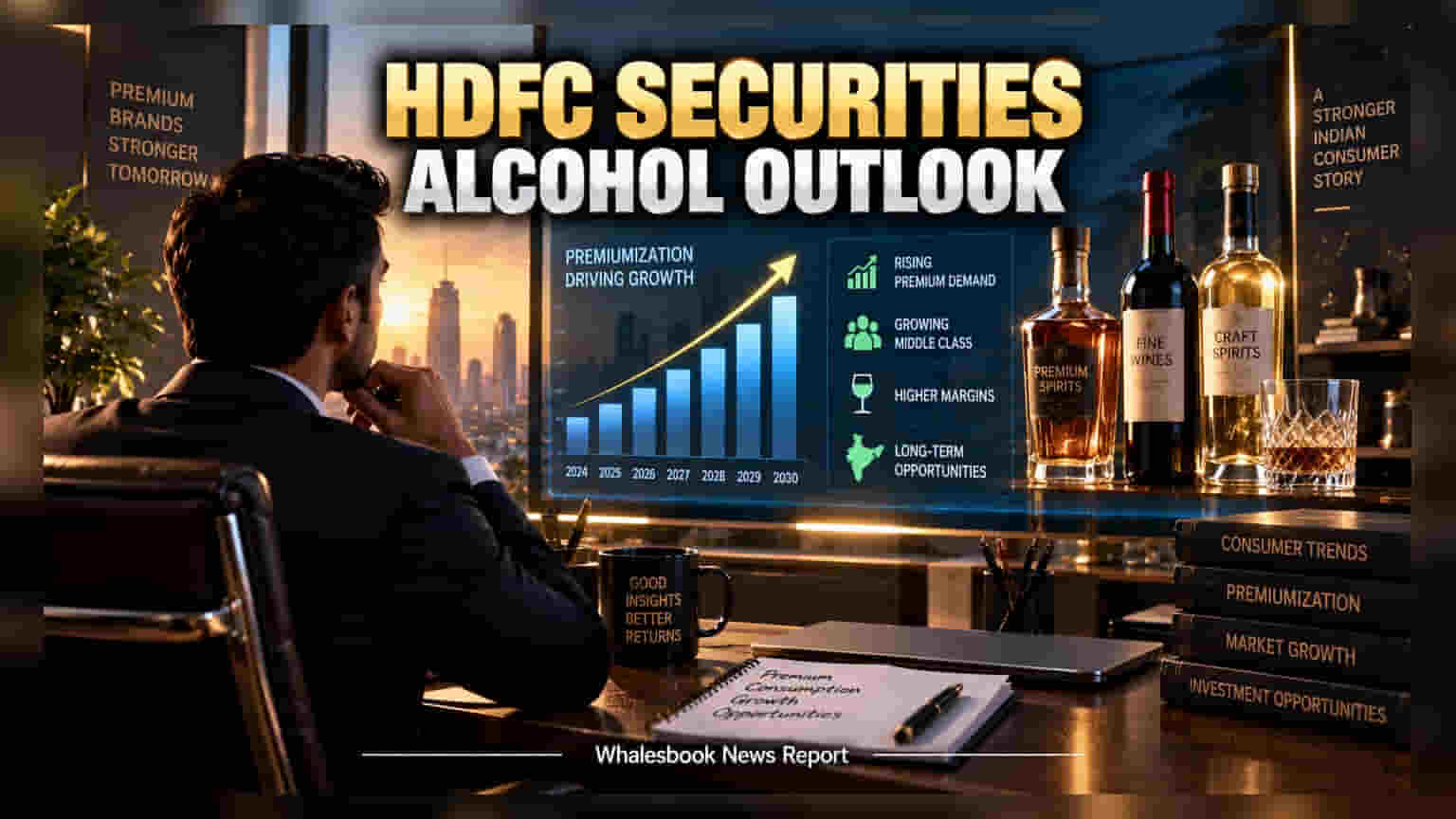
HDFC Securities has started tracking the Indian alcoholic beverages sector, issuing 'Buy' ratings for companies like Radico Khaitan, United Spirits, and Tilaknagar Industries. Analysts expect growth from a shift toward higher-value products, though they note that rising costs and state-level policy changes remain significant risks for investors to monitor.
Domestic brokerage firm HDFC Securities Institutional Equities has released a new research report initiating coverage on the Indian alcoholic beverages industry. The brokerage expects the sector to undergo a structural transformation over the next decade, driven by favorable demographics and a growing middle class with more disposable income to spend on premium products.
The Shift Toward Higher-Value Products
The research report highlights a key trend in the industry known as premiumization—a shift where consumers move away from cheaper, mass-market products to higher-value, premium spirits. This trend is central to the brokerage's optimistic outlook for several players. Major companies in this space have already demonstrated strong performance in their recent quarterly results, particularly in the 'Prestige & Above' segments, which generally offer better profit margins.
Based on this analysis, the brokerage assigned 'Buy' ratings to Tilaknagar Industries, United Spirits, and Radico Khaitan, projecting potential upside ranging from 16% to 29% for these stocks. Additionally, the firm gave an 'Add' rating to Allied Blenders & Distillers, citing a projected 12% upside. However, the outlook is not uniformly positive across the sector. United Breweries received a 'Reduce' rating with a more conservative 4% upside projection, as the brokerage raised concerns regarding its current valuation levels relative to its growth expectations.
Brokerage Cautions on Policy and Costs
While the long-term outlook for premium brands remains positive, the report includes a cautionary note regarding the challenges that could impact financial performance. The most notable risks identified are inflationary pressures, which could compress profit margins if companies are unable to pass on higher input costs to consumers.
Furthermore, the alcohol industry in India remains highly sensitive to regulatory environments. The brokerage specifically highlighted the risk of unpredictable, regressive policy shifts at the state level. Because alcohol taxation and distribution are controlled by state governments, changes in policies or sudden tax hikes in key volume-generating states can directly impact the financial stability and sales volumes of these companies. Investors monitoring this sector should keep a close watch on how these companies manage their pricing strategies to offset cost inflation, as well as any developments in state-level excise policies that could alter the competitive landscape or demand trends in the coming quarters.