 Whalesbook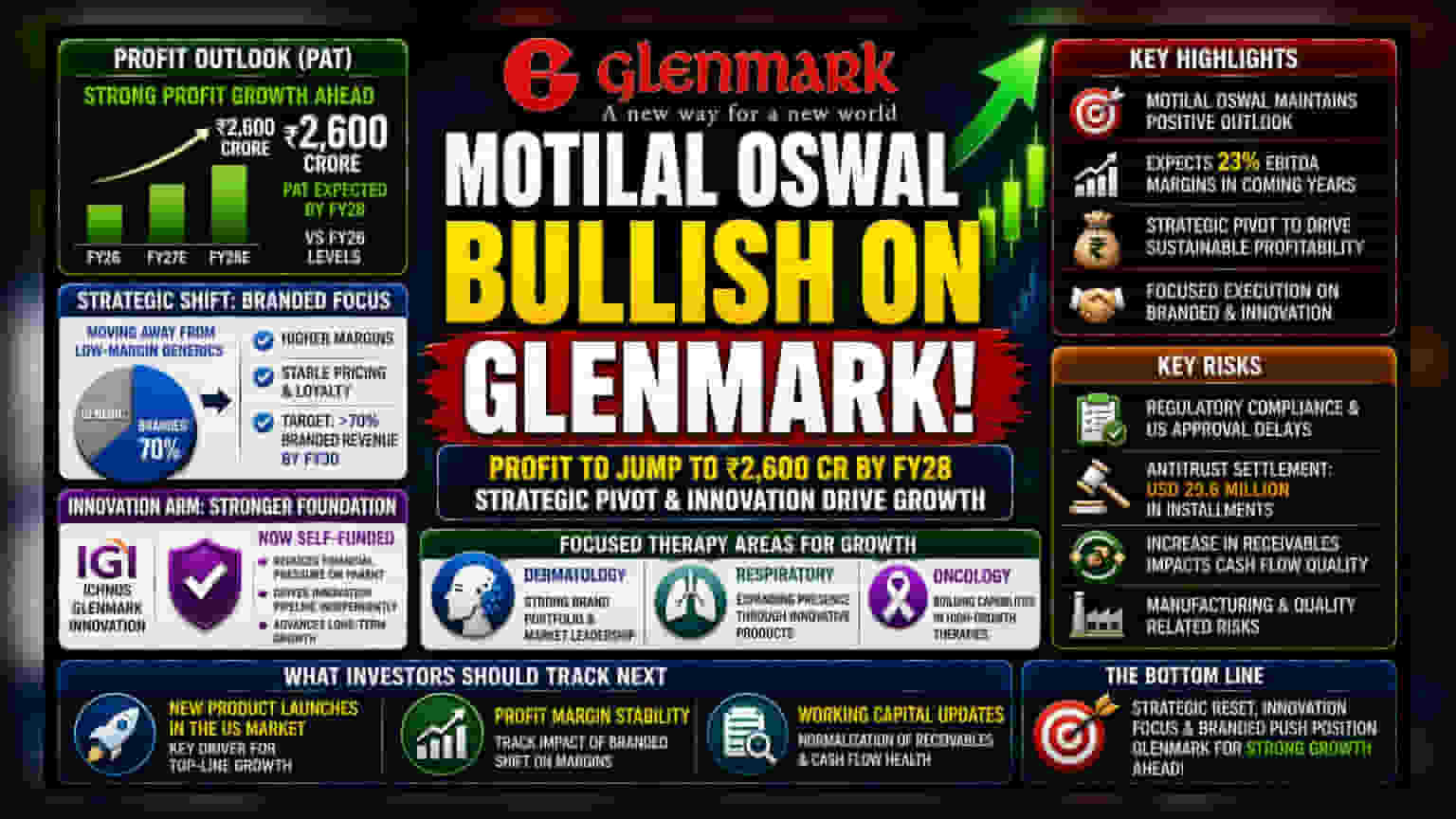


Motilal Oswal recently shared a positive outlook on Glenmark Pharmaceuticals, projecting earnings growth by FY28. The view is based on the company's shift toward high-value branded products and a self-funded innovation arm, though investors are keeping an eye on regulatory risks and market competition.
What Happened
Domestic brokerage firm Motilal Oswal recently updated its outlook on Glenmark Pharmaceuticals. The firm maintains a positive stance, projecting a significant increase in profit over the next few years. The brokerage expects the company’s profit after tax (PAT) to grow substantially from FY26 levels to roughly Rs 2,600 crore by FY28. This expectation is driven by a strategic pivot in the company's business model and a focus on expanding its presence in specialized therapy areas like dermatology, respiratory, and oncology.
The Shift Toward Branded Products
Glenmark has been actively working to change its revenue mix. The company is moving away from a heavy reliance on traditional generics—where pricing competition is often intense—toward a higher share of branded products. This strategy aims to improve profit margins, as branded drugs typically offer more stable pricing and better customer loyalty. The company’s own recent guidance targets a transition to over 70% branded revenue by FY30. This shift is intended to reduce vulnerability to the intense price wars often seen in the US generics market.
The Role Of The Innovation Arm
A key development supporting this outlook is the status of Ichnos Glenmark Innovation (IGI), the company’s innovation-focused subsidiary. The arm is now self-funded, which is a major shift from previous years. This setup is important for investors because it alleviates the financial pressure on the parent company’s balance sheet. By becoming self-funded, the innovation arm can continue to advance its pipeline of drugs without constantly draining the core business's cash reserves. This structural change allows Glenmark to focus on its commercial performance while the innovation wing pursues long-term growth through independent clinical trials.
Verified Risks And Market Challenges
While the outlook is positive, the pharma sector and Glenmark specifically face real-world challenges that investors monitor closely. Regulatory compliance in the US market remains a significant factor, as any delay in approvals or manufacturing issues can directly impact revenue growth.
Furthermore, the company recently navigated a settlement in antitrust litigation related to generic drug pricing in the United States, agreeing to pay approximately USD 29.6 million in installments. Such legal settlements, while resolving specific issues, require cash outflows that affect the bottom line. Investors also monitor the company's working capital management; some financial reports have highlighted an increase in receivables, which can impact the quality of cash flow. Maintaining a disciplined working capital cycle is essential to support the company's expansion plans.
How Investors May Read This
Analysts often look for signs of a turnaround in companies undergoing a strategic pivot. In Glenmark’s case, the "reset" year (FY26) was characterized by heavy focus on clearing regulatory hurdles and rebalancing the portfolio. For investors, the upcoming quarters will be a test of whether these changes translate into sustained margin expansion. The company’s target of reaching EBITDA margins of around 23% in the coming years will depend heavily on its ability to execute its launches in the US and maintain its market share in the branded segments in India and emerging markets.
What Investors Should Track Next
Looking ahead, investors may focus on a few key areas to measure the company's progress. First, the execution of new product launches in the US market remains critical, as this is a primary driver for top-line growth. Second, the stability of profit margins will indicate whether the shift to branded products is yielding the expected results. Finally, updates on the working capital cycle and any management commentary regarding the normalization of receivables will provide a clearer picture of the company's operational cash health.