

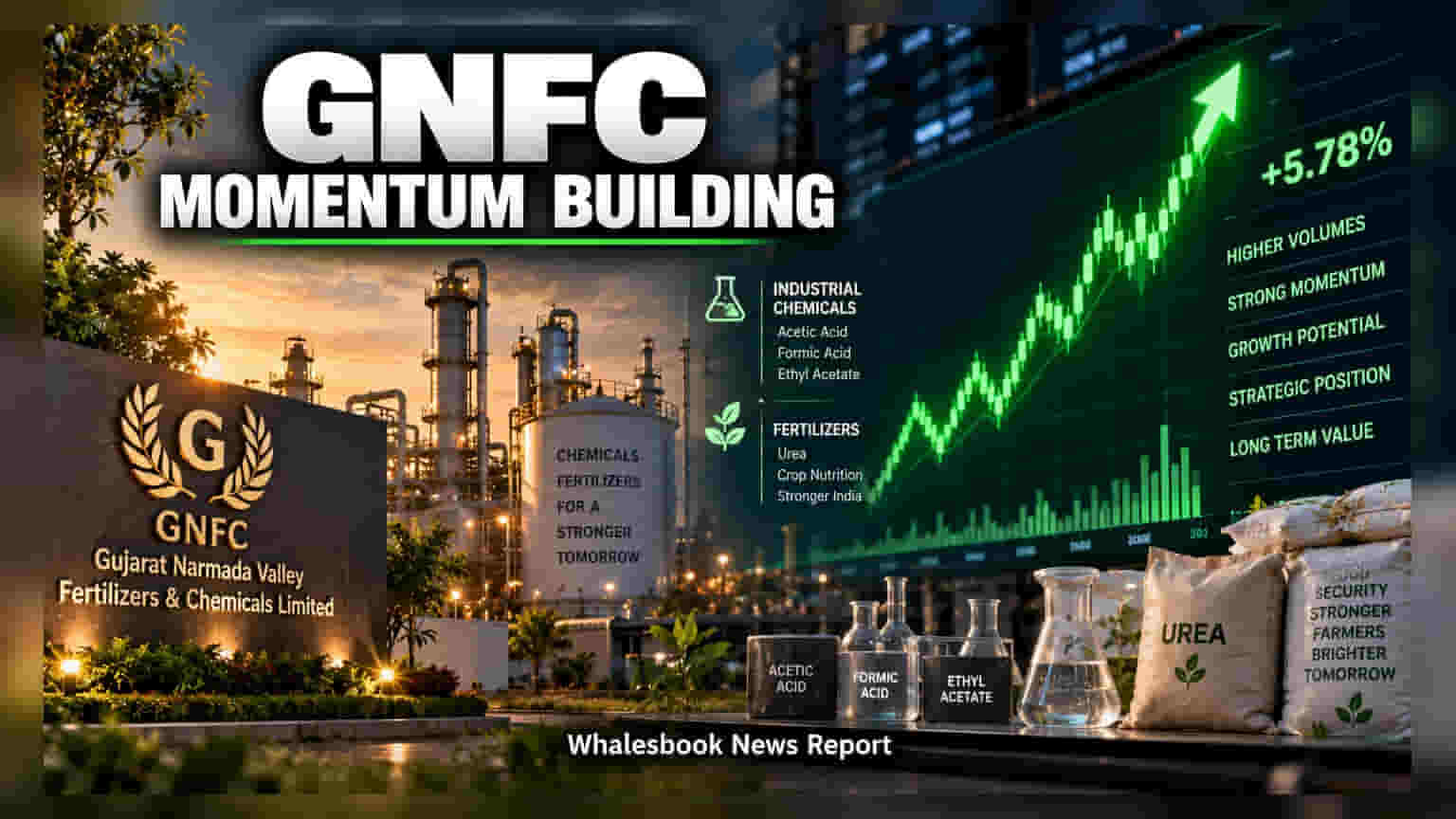
Gujarat Narmada Valley Fertilizers & Chemicals (GNFC) has seen increased trading interest recently. The company's performance in the chemicals and fertilizers sector is heavily linked to raw material prices and government subsidy policies. Investors are assessing whether this recent momentum reflects long-term business fundamentals or short-term market sentiment.
Gujarat Narmada Valley Fertilizers & Chemicals (GNFC) has recently captured investor attention with active trading. While market commentary often highlights short-term price movements and technical indicators, the company's long-term health is driven by its performance across two primary business segments: industrial chemicals and fertilizers.
GNFC operates in a competitive landscape where both segments are sensitive to external economic factors. The industrial chemical segment, which produces goods like acetic acid, formic acid, and ethyl acetate, is cyclical. This means the company’s revenue in this division depends heavily on global demand from downstream industries such as textiles, pharmaceuticals, and automobiles. When global demand weakens or international prices for these chemicals drop, producers often face pressure on their profit margins, making cost control a critical operational factor.
In the fertilizer segment, the company’s operations are shaped by government policy. As a significant producer of urea and other fertilizers, GNFC relies on the government’s fertilizer subsidy framework. Any changes in government policy regarding subsidy caps, allocation, or payment timelines can directly impact the company's cash flow. Furthermore, the cost of natural gas, which is a key raw material for fertilizer production, remains a major variable. High or volatile global gas prices can squeeze the company’s operating margins if they cannot be passed on to customers or recovered through government support.
For investors, distinguishing between technical stock movements and operational reality is important. A rising share price does not change the inherent risks of the chemical and fertilizer sectors, such as import competition, raw material price volatility, and regulatory shifts.
Looking ahead, market participants typically monitor several factors to gauge the company’s performance. These include the trend in chemical product prices, any major updates to government fertilizer subsidies, and the management's ability to maintain healthy profit margins amidst fluctuating input costs. Quarterly financial results will be the primary source of truth for investors to assess whether the company is effectively navigating these sector pressures or if it is facing operational headwinds.