

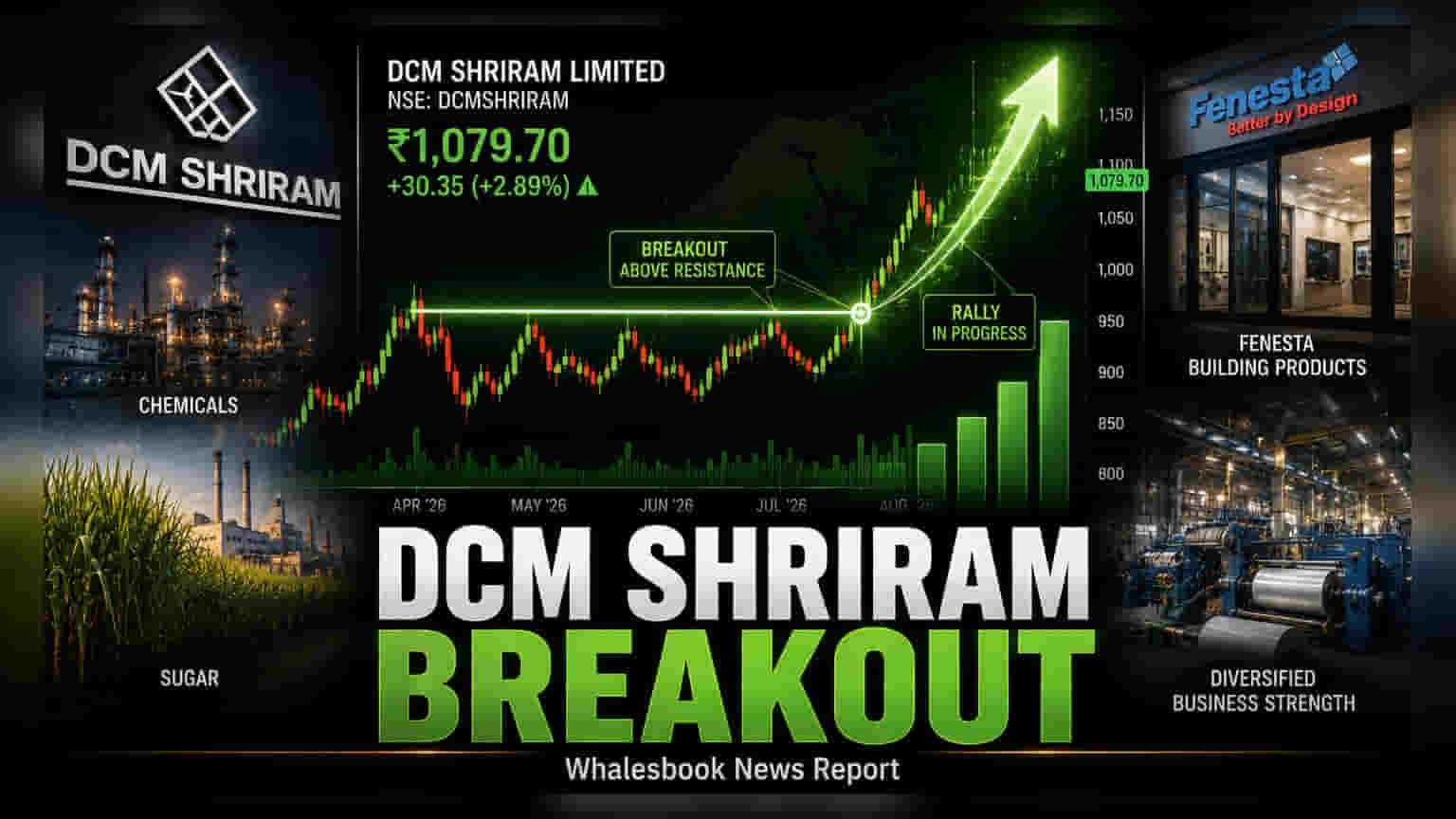
DCM Shriram shares closed at ₹1,079.70, ending a period of sideways trading that began in June 2026. While technical charts suggest positive momentum, investors are also tracking the company’s recent Q1 FY27 earnings and the impact of commodity price cycles on its diversified business model.
DCM Shriram Limited shares ended the trading session on August 20, 2026, at ₹1,079.70, reflecting a gain of 2.89%. This upward movement marks a notable shift for the stock, which had been trading in a flat, consolidation phase since early June 2026. Technical analysis indicates that the stock has moved past recent resistance levels, a signal that often draws attention from market participants tracking price trends.
DCM Shriram operates as a diversified conglomerate with interests spanning chemicals, sugar, and the Fenesta building products division. Because the company serves multiple industries, its financial performance is frequently influenced by varying economic cycles, ranging from agricultural demand to industrial chemical pricing. Following the release of its Q1 FY27 results in early August, investors have been closely reviewing the management’s commentary to understand how these segments are performing amid current market conditions.
In recent corporate developments, the company has seen changes within its board and promoter group. This includes the appointment of independent directors and recent activity involving promoter stake consolidation, such as the 5.48% stake acquisition by Suman Bansi Dhar. These governance updates are often watched by market analysts for signs of internal stability and long-term strategic direction.
While the recent stock price movement points to improved sentiment, the company faces inherent risks tied to its operational model. One primary factor is the volatility in commodity prices, which directly affects the sugar and chemical divisions. Input cost fluctuations can pressure profit margins, and investors often monitor the company's ability to pass on these costs or manage production efficiency. Additionally, regulatory policies regarding sugar and ethanol pricing remain a significant external factor for the agri-rural segment.
Another key area for shareholders to monitor is the company's debt position. Like many capital-intensive manufacturing firms, DCM Shriram’s debt-to-equity ratio remains a point of focus. Maintaining a manageable debt load is important for the company as it balances expansion in its various business lines. Moving forward, the most important updates for investors will include the company's ability to maintain operational margins, the impact of any changes in government sugar policies, and sustained performance across its key revenue-generating business units.