

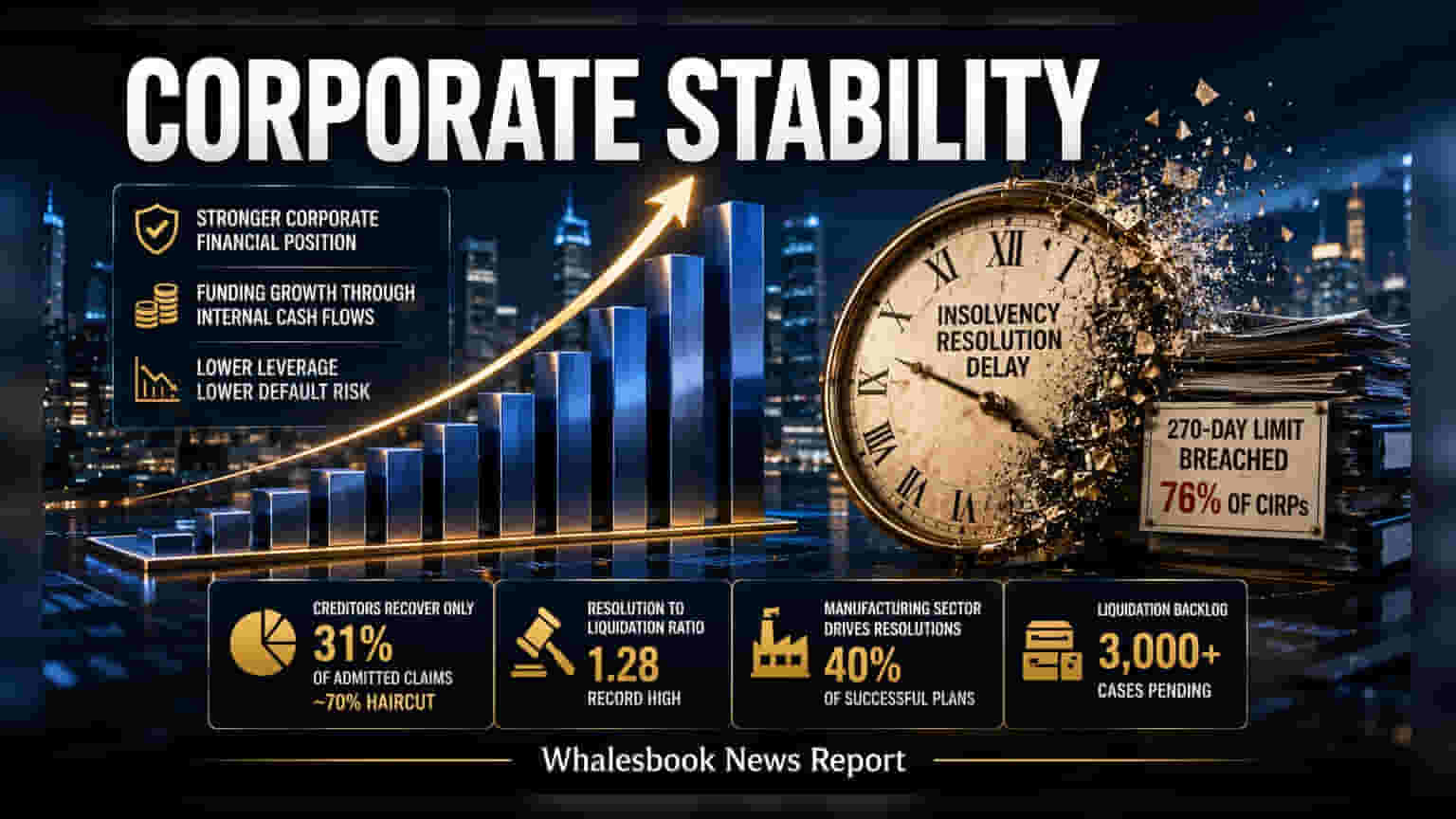
Corporate India’s credit cycle remains healthy due to strong balance sheets and low reliance on external debt. However, the insolvency resolution process faces significant hurdles, with creditors losing an average of 70% on claims. While systemic risk is low, the persistent delays and high haircuts under the Insolvency and Bankruptcy Code remain key monitorables for lenders.
The overall credit outlook for Indian corporations remains stable, supported by solid financial positions and a shift toward funding expansion through internal cash flows rather than fresh debt. This financial discipline helps companies navigate economic cycles better and reduces the risk of default, providing a buffer for the broader financial system.
Despite this stability in corporate health, the process for resolving stressed assets remains inefficient. Data as of June 2026 shows that 76% of ongoing Corporate Insolvency Resolution Processes (CIRPs) have breached the statutory 270-day timeline. These procedural delays often erode asset value, ultimately affecting the amount recovered by creditors.
Recovery metrics highlight the difficulty in managing insolvency cases. Creditors have, on average, realized only 31% of their admitted claims, resulting in a significant haircut of approximately 70%. Recent high-profile cases have reinforced this trend, where the actual money recovered by lenders remained a small fraction of the total debt owed.
There are, however, signs of adjustment in how stressed companies are handled. The resolution-to-liquidation ratio has hit a record 1.28, signaling that creditors are increasingly choosing to restructure businesses rather than sell off assets. This shift is most visible in the manufacturing sector, which now makes up 40% of all successful resolution plans.
While the current environment does not pose an immediate threat to the wider credit market, the combination of high haircuts and slow resolution speeds impacts the risk appetite for lending to stressed entities. For investors and lenders, the key monitorable remains future regulatory reforms that might help speed up asset admissions and resolutions, along with how the system manages the existing backlog of over 3,000 cases currently in liquidation.